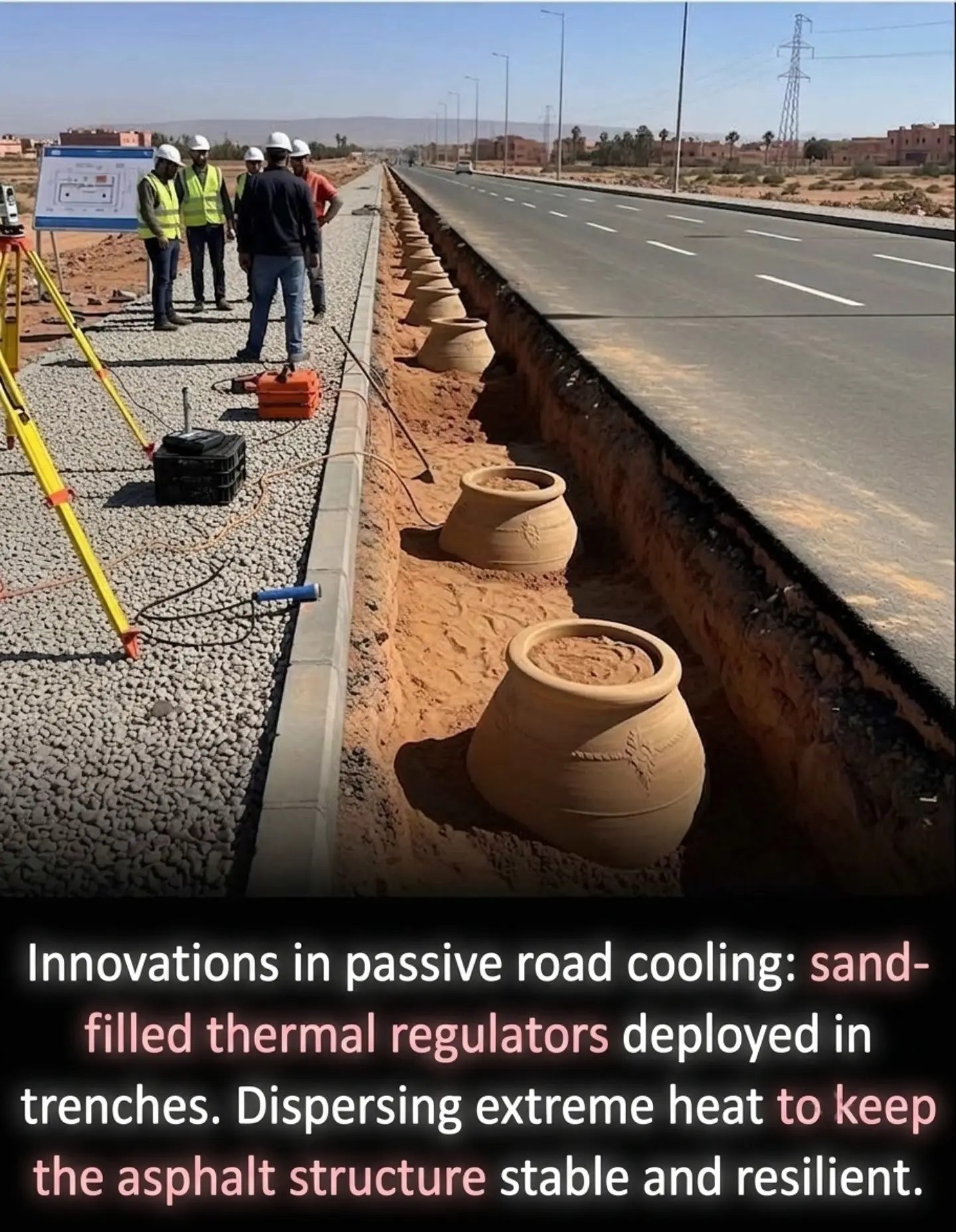
Passive Road Cooling
Extreme desert heat poses a significant challenge to road construction, particularly to asphalt surfaces that can soften, crack, and degrade under intense sun exposure. This issue is not new, but modern civil engineering is drawing inspiration from ancient wisdom to mitigate these problems. Passive road cooling systems, utilizing sand-filled thermal regulators, offer a sustainable and effective solution to maintaining road integrity in hot climates.
Context / Why This Matters
Asphalt roads are particularly vulnerable to extreme heat, especially in desert regions. The intense sun can cause the asphalt to soften, leading to cracks and other forms of degradation. Traditional cooling methods often require energy-intensive systems, but passive road cooling offers a more eco-friendly and cost-effective alternative. This innovation is crucial for infrastructure longevity and sustainability.
Main Discussion
How Passive Thermal Cooling Works
The principle behind passive road cooling is relatively simple yet highly effective. It involves the use of natural heat sinks, such as terracotta clay jars filled with sand or moist earth, embedded alongside or beneath road sub-bases. These materials act as thermal regulators, absorbing excess heat during peak daylight hours and releasing it safely when temperatures drop at night.
Natural Heat Sinks
Terra cotta clay jars filled with sand or moist earth are key components in this system. These jars are designed to absorb and store heat during the day. The natural properties of sand and clay make them excellent thermal regulators, providing a buffer against extreme pavement temperatures.
Thermal Buffering
During the hottest parts of the day, the sand and clay in these jars absorb the excess heat from the asphalt. This thermal buffering helps to keep the pavement at a more stable temperature, preventing it from softening and cracking. By acting as a natural heat sink, the system helps to maintain the structural integrity of the road.
Nighttime Release
When ambient temperatures drop at night, the stored thermal energy in the sand and clay is released safely. This nighttime release ensures that the asphalt surface above does not warp or degrade, maintaining its stability over time. The passive nature of this system means it requires no external energy, making it a highly sustainable solution.
Benefits of Passive Thermal Cooling
Passive thermal cooling offers several advantages, making it a game-changer in modern road construction.
Zero Energy Required
One of the most significant benefits of this system is that it operates entirely passively, requiring no external energy. Unlike traditional cooling systems that rely on electricity or other energy sources, passive road cooling is 100% eco-friendly and sustainable.
Low Cost and Sustainability
Another key advantage is its cost-effectiveness. The system is built using locally sourced materials like clay and sand, avoiding the need for complex and expensive synthetic systems. This not only reduces costs but also promotes sustainability by utilizing readily available resources.
Road Longevity
By protecting the road's structural integrity, passive thermal cooling extends the lifespan of highways. This is particularly beneficial in desert regions where roads are subject to extreme heat and rapid degradation. The system helps to maintain the road's resilience, reducing the need for frequent repairs and replacements.
Practical Tips
For civil engineers and construction professionals looking to implement passive road cooling, here are some practical tips:
Select the Right Materials
Choose materials that have good thermal conductivity and are readily available in the local area. Terracotta clay and sand are excellent choices due to their heat-absorbing properties and widespread availability.
Proper Installation
Ensure that the thermal regulators are properly embedded alongside or beneath the road sub-bases. Proper installation is crucial for the system's effectiveness, as it ensures that the heat is absorbed and released efficiently.
Maintenance
Regular maintenance is essential to keep the system functioning optimally. This includes checking the integrity of the clay jars and ensuring that the sand or moist earth within them is in good condition. Periodic inspections can help identify any issues early, preventing potential degradation of the road.
Monitoring
Monitor the road's temperature and structural integrity regularly. While the system is designed to be passive and self-sustaining, periodic checks can help ensure that it continues to perform as expected.
Important Takeaways
Passive road cooling systems offer a sustainable and effective solution to the challenges posed by extreme desert heat. By utilizing natural heat sinks and thermal buffering, these systems help maintain the stability and resilience of asphalt roads, extending their lifespan and reducing the need for frequent repairs. The zero-energy requirement and low cost of this method make it a highly attractive option for modern civil engineering projects.
Conclusion
Passive road cooling is a game-changer in the field of road construction, particularly in desert regions. By drawing on ancient wisdom and modern engineering, this innovative solution addresses the significant challenges posed by extreme heat. With its eco-friendly, cost-effective, and sustainable design, passive road cooling is a promising avenue for maintaining infrastructure longevity and resilience. As more infrastructure projects adopt this low-tech, sustainable solution, we can expect to see longer-lasting, more resilient roads in even the harshest of environments.
Watch the Reel
Questions readers ask
How do sand-filled terracotta clay jars help in passive road cooling?
Sand-filled terracotta clay jars act as thermal regulators, absorbing heat during the day and releasing it slowly at night. This process helps to mitigate the extreme temperature fluctuations that cause asphalt roads to soften and crack, thereby extending the lifespan of the roads.
What makes passive road cooling systems eco-friendly?
Passive road cooling systems are eco-friendly because they do not require energy-intensive machinery or processes. Instead, they rely on natural heat absorption and release mechanisms, making them a sustainable solution for maintaining road integrity in hot climates.
Can passive road cooling systems be used in non-desert regions?
While passive road cooling systems are particularly beneficial in desert regions, they can also be used in other hot climates. They are effective in any environment where extreme heat poses a threat to asphalt road surfaces. However, their effectiveness may vary based on local temperature ranges and road materials.
How do passive cooling systems compare to traditional cooling methods?
Passive cooling systems differ from traditional methods in that they do not rely on electricity or mechanical systems. Instead, they use natural materials and processes to manage heat, reducing both operational costs and environmental impact. Traditional methods often require significant energy inputs, making them less sustainable.
What are the benefits of using thermal regulators for road maintenance?
Thermal regulators, such as sand-filled terracotta clay jars, help in maintaining road integrity by absorbing and releasing excess heat. This reduces the risk of heat damage, such as cracking and softening, and can extend the lifespan of the roads. Additionally, they provide a cost-effective and low-maintenance solution for road management.
How can natural road cooling techniques be integrated into existing road infrastructure?
Natural road cooling techniques, like passive cooling systems, can be integrated into existing infrastructure by incorporating thermal regulators, such as sand-filled terracotta clay jars, into the road design. This can be done during road construction or through retrofitting existing roads to include these regulators.
What role does terracotta clay play in passive road cooling systems?
Terracotta clay is crucial in passive road cooling systems due to its natural thermal properties. It is porous, allowing it to absorb and release heat efficiently. When filled with sand, terracotta clay jars act as effective thermal regulators, helping to maintain stable road temperatures and prevent heat damage.
Related deep dives
Similar reads based on topic and creator.



Recent articles
Fresh deep dives from the latest Reels we unpacked.




Comments
Be the first to comment.