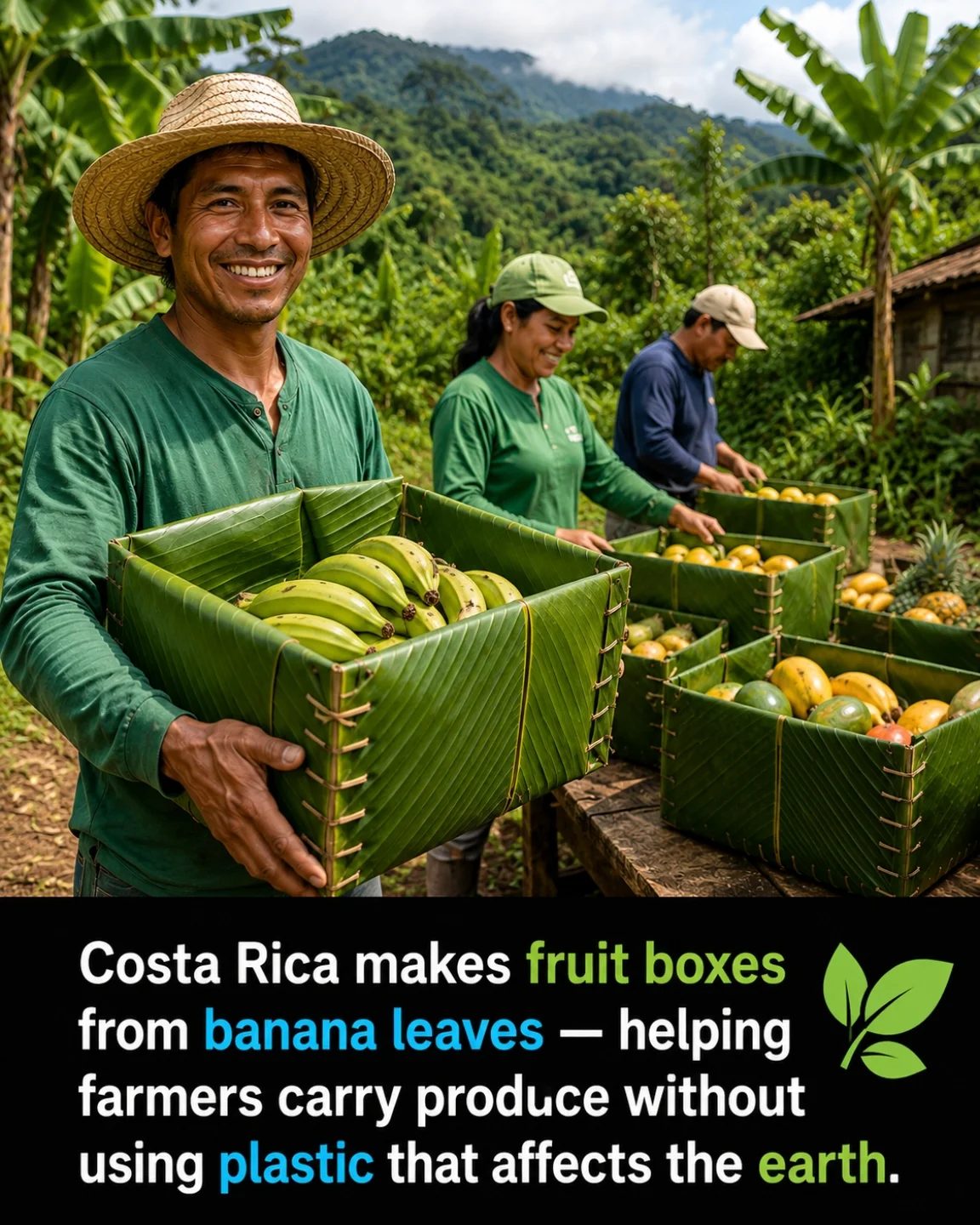
Sustainable Farming in Costa Rica: Using Banana Leaves for Fruit Transportation
Costa Rica is renowned for its lush landscapes and vibrant ecosystems, making it a natural haven for sustainable farming practices. One such practice that stands out is the use of banana leaves to create fruit boxes. This innovative approach not only helps farmers transport their produce but also minimizes the environmental impact by reducing the reliance on plastic.
Why This Matters
The environmental impact of plastic waste is a growing concern globally. The agricultural sector, known for its extensive use of plastic packaging, plays a significant role in this issue. By adopting eco-friendly alternatives, such as banana leaves, farmers in Costa Rica are setting an example for sustainable agriculture.
Main Discussion
The Benefits of Banana Leaf Fruit Boxes
Using banana leaves to create fruit boxes offers multiple advantages. Firstly, banana leaves are abundantly available in Costa Rica, making them a cost-effective solution for farmers. Secondly, they are biodegradable, ensuring that the packaging does not contribute to environmental pollution. Additionally, banana leaves provide natural insulation and moisture retention, keeping the fruits fresh during transportation. This is particularly beneficial for delicate produce that requires careful handling.
The Process of Making Banana Leaf Boxes
Creating fruit boxes from banana leaves involves a straightforward process. Farmers carefully select large, sturdy banana leaves and cut them into suitable sizes. These leaves are then folded and woven together to form a sturdy box. The natural adhesive properties of the leaves allow them to stick together, making the boxes durable enough to carry fruits without any additional binding materials.
Community and Collaboration
The practice of using banana leaves for fruit transportation is not just about sustainability; it also fosters a sense of community. Farmers in Costa Rica often work together to prepare these boxes, sharing knowledge and resources. This collaborative effort strengthens their bond and enhances their collective commitment to environmental conservation.
Practical Tips
If you are inspired by this sustainable practice and want to incorporate similar methods into your own farming or daily life, here are some practical tips:
1. Source Local Materials
Look for locally available, biodegradable materials that can replace plastic. This could be anything from banana leaves to other plant-based materials that are sturdy and abundant in your region.
2. Experiment with Designs
Different fruits have varying transportation needs. Experiment with different designs and sizes of banana leaf boxes to find what works best for the produce you are handling.
3. Collaborate with Others
Engage with your local farming community or even neighborhoods. Collaborating with others can help you share resources and knowledge, making the transition to eco-friendly practices smoother.
4. Promote Awareness
Spread the word about the benefits of using natural materials for packaging. The more people know about sustainable practices, the more likely they are to adopt them.
Important Takeaways
Environmental Benefits
By using banana leaves, Costa Rican farmers are significantly reducing their plastic waste, contributing to cleaner and greener environments. This practice not only benefits the local ecosystems but also sets a global example for sustainable agricultural practices.
Economic Viability
Banana leaf boxes are not only eco-friendly but also economical. The use of locally available materials keeps costs low, making this an affordable solution for farmers.
Community Strengthening
The collaborative nature of preparing these boxes strengthens community bonds. It encourages collective efforts towards a common goal, fostering a sense of unity and shared purpose.
Conclusion
Farmers in Costa Rica are leading the way in sustainable agriculture through the simple yet effective practice of using banana leaves to create fruit boxes. This approach not only reduces environmental impact but also supports local economies and strengthens community ties. By adopting similar practices, we can all contribute to a greener and more sustainable future.
Watch the Reel
Questions readers ask
Why do Costa Rican farmers choose banana leaves for packaging fruit?
Costa Rican farmers use banana leaves for packaging fruit due to their natural insulation properties, which help maintain the freshness of the produce. Additionally, banana leaves are biodegradable, making them an environmentally friendly alternative to plastic packaging. This choice aligns with the country's commitment to sustainable and eco-friendly farming practices, as well as the need to reduce plastic pollution.
How do banana leaves benefit the environment compared to traditional packaging methods?
Banana leaves offer several environmental benefits. They are a renewable resource, unlike plastic, which is derived from petroleum. Banana leaves biodegrade naturally, reducing waste in landfills and minimizing the risk of environmental pollution. Additionally, using banana leaves supports local agriculture by utilizing a byproduct that would otherwise go to waste, further promoting sustainability.
Are banana leaves as effective as plastic for transporting fruit?
Yes, banana leaves can be just as effective as plastic for transporting fruit. They provide natural insulation and can help regulate temperature and humidity, keeping fruits fresh. Farmers have developed techniques to securely pack and bundle fruits using banana leaves, ensuring that the produce remains intact during transit, even over long distances.
Can banana leaves be used for packing all types of fruit?
Banana leaves are versatile and can be used for packing a variety of fruits, though they are particularly well-suited for tropical and subtropical fruits. Fruits like bananas, mangoes, and pineapples, which are commonly grown in Costa Rica, are excellent candidates for banana leaf packaging. However, the effectiveness may vary depending on the size, shape, and characteristics of the fruit.
What are the cost advantages of using banana leaves for fruit packaging?
Using banana leaves for fruit packaging is a cost-effective solution for farmers. Banana leaves are readily available and often considered a waste product, making them virtually free to use. This reduces the need for farmers to purchase plastic packaging, lowering overall expenses, and increasing profitability. Additionally, the sustainable practice can attract environmentally conscious consumers, further enhancing market opportunities.
How do farmers in Costa Rica secure the fruit within the banana leaf packaging?
Farmers in Costa Rica use various techniques to secure fruit within banana leaf packaging. These methods include tying the leaves with natural fibers or strings, folding the leaves in a specific manner to hold the fruit in place, or using additional natural materials like plant fibers or twine. These techniques ensure that the fruit remains secure and protected during transportation.
What happens to the banana leaves after the fruit is delivered to the market?
After the fruit is delivered, the banana leaves can be composted or reused in various ways. They can be returned to the soil as organic matter, enriching it with nutrients. Alternatively, the leaves can be repurposed for other uses, such as mulch or animal bedding. This zero-waste approach maximizes the utility of the banana leaves, further supporting sustainable farming practices.
Related deep dives
Similar reads based on topic and creator.



Recent articles
Fresh deep dives from the latest Reels we unpacked.




Comments
Be the first to comment.