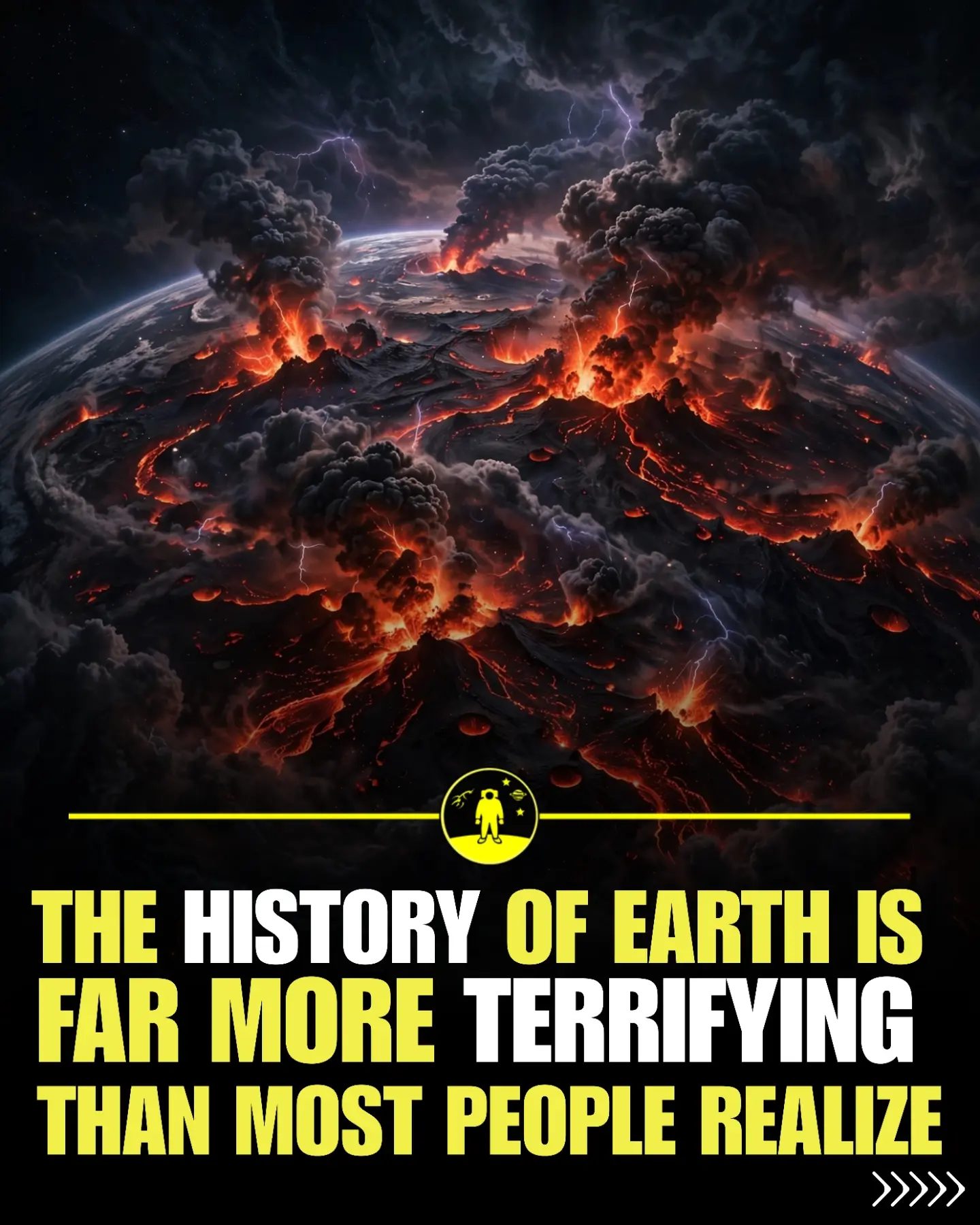
The dramatic history of Earth: volcanoes, ice ages, and collisions
Earth's history is a tumultuous tale of dramatic events that have shaped our planet over billions of years. From catastrophic collisions to global ice ages and mass extinctions, the Earth we know today is just the latest chapter in an extraordinary story.
Why this matters
Understanding Earth's history is crucial for appreciating the dynamic nature of our planet and the forces that have shaped it over time. These dramatic events have not only influenced the geology of Earth but also the evolution of life. By examining these historical events, we can gain insights into the planet's past, present, and future.
Earth’s dramatic history
Giant collisions
One of the most significant events in Earth's history was the massive collision with a Mars-sized protoplanet about 4.5 billion years ago. This impact, known as the Giant Impact Hypothesis, is believed to have formed the Moon. The collision was so powerful that it vaporized part of the young Earth and the impactor, ejecting debris into space that eventually coalesced to form the Moon. This event had profound implications for Earth's geological and biological evolution.
Global ice ages
Earth has experienced several periods of extreme cold, known as Snowball Earth events. During these times, the planet was almost entirely covered in ice, pushing life to the brink. The most severe of these events occurred around 717 to 635 million years ago and around 2.4 to 2.1 billion years ago. These ice ages had a dramatic impact on the planet's climate and the evolution of life, with only the hardiest organisms able to survive in such harsh conditions. The reduction in liquid water would have dramatically reduced the space for life to thrive. The causes of Snowball Earth events are still debated, but they are believed to be linked to changes in Earth's orbit, volcanic activity, and the composition of the atmosphere.
Mass extinctions
Mass extinctions have been a recurring theme in Earth's history, with more than 99% of all species that have ever lived now extinct. One of the most notable extinctions occurred during the Great Oxygenation Event, when the rise of oxygen in the atmosphere led to the extinction of many anaerobic organisms. Other significant extinction events include the Permian-Triassic extinction, which wiped out about 96% of all marine species and 70% of terrestrial vertebrate species, and the Cretaceous-Paleogene extinction, which marked the end of the dinosaurs.
Continents merging and separating
Over immense spans of time, Earth's continents have repeatedly merged and separated. One of the most well-known supercontinents is Pangaea, which formed around 335 million years ago and began to break apart around 175 million years ago. The movement of tectonic plates has caused continents to collide, form mountain ranges, and create new ocean basins. This dynamic process has significantly influenced Earth's climate, biodiversity, and geological features.
Catastrophic events and their impacts
Volcanic eruptions
Volcanic eruptions have played a significant role in shaping Earth's history. Large eruptions can release enormous amounts of ash and gases into the atmosphere, altering the climate and sometimes leading to mass extinctions. The eruption of the Toba supervolcano in Indonesia around 74,000 years ago, for example, is believed to have caused a volcanic winter and a significant reduction in global temperatures. This event may have contributed to a genetic bottleneck in human populations, leading to a dramatic reduction in genetic diversity.
Lightning storms
Lightning storms, while common today, were likely more frequent and intense in Earth's early history. These storms played a crucial role in the formation of early life by providing the energy needed to create complex organic molecules. The electrical discharges in lightning storms can break down atmospheric gases, leading to the formation of compounds essential for life, such as amino acids and nucleotides.
The role of oxygen
Oxygen, which we breathe and rely on for life, was once toxic to many early forms of life. The Great Oxygenation Event, which occurred around 2.4 billion years ago, dramatically increased the amount of oxygen in the atmosphere. This rise in oxygen levels led to the extinction of many anaerobic organisms that could not survive in an oxygen-rich environment. The increase in oxygen also paved the way for the evolution of complex, multicellular life forms, ultimately leading to the diversity of life we see today.
Practical tips for understanding Earth’s history
Engage with paleontology
Paleontology, the study of prehistoric life, provides invaluable insights into Earth's history. By examining fossils and ancient sediments, paleontologists can reconstruct past environments and the organisms that lived in them. This information helps us understand the processes that have shaped our planet and the evolution of life.
Explore geology
Geology, the study of the Earth's physical structure and composition, is essential for understanding the planet's dynamic history. By examining rocks, minerals, and geological formations, geologists can piece together the story of Earth's past. This includes the formation of mountains, the movement of continents, and the impact of catastrophic events.
Learn about climate science
Climate science helps us understand the complex interplay between Earth's atmosphere, oceans, and land. By studying past climate changes, we can gain insights into the factors that have influenced Earth's history and the potential impacts of future climate changes. This knowledge is crucial for making informed decisions about environmental conservation and sustainability.
Important takeaways
Earth's history is a story of dramatic and often catastrophic events that have shaped our planet over billions of years. From massive collisions to global ice ages and mass extinctions, these events have had profound impacts on the planet's geology and the evolution of life. By understanding these historical events, we can gain insights into the processes that have shaped Earth and the forces that continue to influence our planet today.
Conclusion
Earth's history is a testament to the dynamic and often dramatic forces that have shaped our planet. From the formation of the Moon to the rise of oxygen and the evolution of life, these events have left an indelible mark on Earth's geology and biosphere. By studying these events, we can better appreciate the complexity and interconnectedness of our planet's history and the importance of understanding the forces that have shaped it.
Watch the Reel
Questions readers ask
What were the Snowball Earth events and when did they occur?
Snowball Earth events refer to periods when the Earth was almost entirely frozen, with ice covering the oceans and continents. These events occurred at least twice, around 2.4 to 2.1 billion years ago and again around 716.5 million years ago. During these times, the planet's surface was primarily covered in ice, which had profound impacts on the environment and the evolution of life.
What are some significant examples of mass extinctions in Earth's history?
Several mass extinctions have occurred throughout Earth's history, the most well-known being the Cretaceous-Paleogene extinction event 66 million years ago, which wiped out the non-avian dinosaurs. Others include the End-Permian extinction around 252 million years ago, the largest in Earth's history, and the Ordovician-Silurian extinction about 444 million years ago. These events significantly altered the course of life on Earth.
How have giant collisions shaped Earth's geological history?
Giant collisions have played a pivotal role in Earth's geological history. The most notable is the collision with a Mars-sized body around 4.5 billion years ago that led to the formation of the Moon. Other collisions have contributed to the formation of mountain ranges and the development of Earth's core and mantle.
What is the timeline of Earth's major ice ages?
Earth's major ice ages have occurred in several significant periods. The earliest known ice ages took place around 2.4 to 2.1 billion years ago (Huronian glaciation) and 716.5 million years ago (Sturtian and Marinoan glaciations). More recent ice ages include the Andean-Saharan glaciation around 450 million years ago and the Quaternary glaciation, which began about 2.6 million years ago and continues to the present.
How have volcanoes influenced the development of Earth and life on it?
Volcanoes have been a key driver of Earth's geological and biological development. They have shaped landscapes, formed new land masses, and contributed to the atmosphere's composition. Volcanic activity has also influenced climate change and facilitated the creation of nutrient-rich soils, which have supported the evolution and diversity of life on Earth.
What is the connection between Earth's dramatic events and the evolution of life?
Earth's dramatic events, such as volcanic eruptions, ice ages, and mass extinctions, have significantly influenced the evolution of life. These events have created new habitats, altered ecosystems, and driven the emergence of new species. For instance, the mass extinction of dinosaurs opened ecological niches for the rise of mammals and ultimately led to the evolution of humans.
What key events on Earth's timeline led to the formation of our present-day geology?
Several key events have shaped our present-day geology. The formation of the Moon due to a giant collision, the uplift of mountain ranges through volcanic activity and tectonic movements, and the continental drift have all contributed to the Earth's current geological landscape.
Related deep dives
Similar reads based on topic and creator.

Recent articles
Fresh deep dives from the latest Reels we unpacked.




Comments
Be the first to comment.