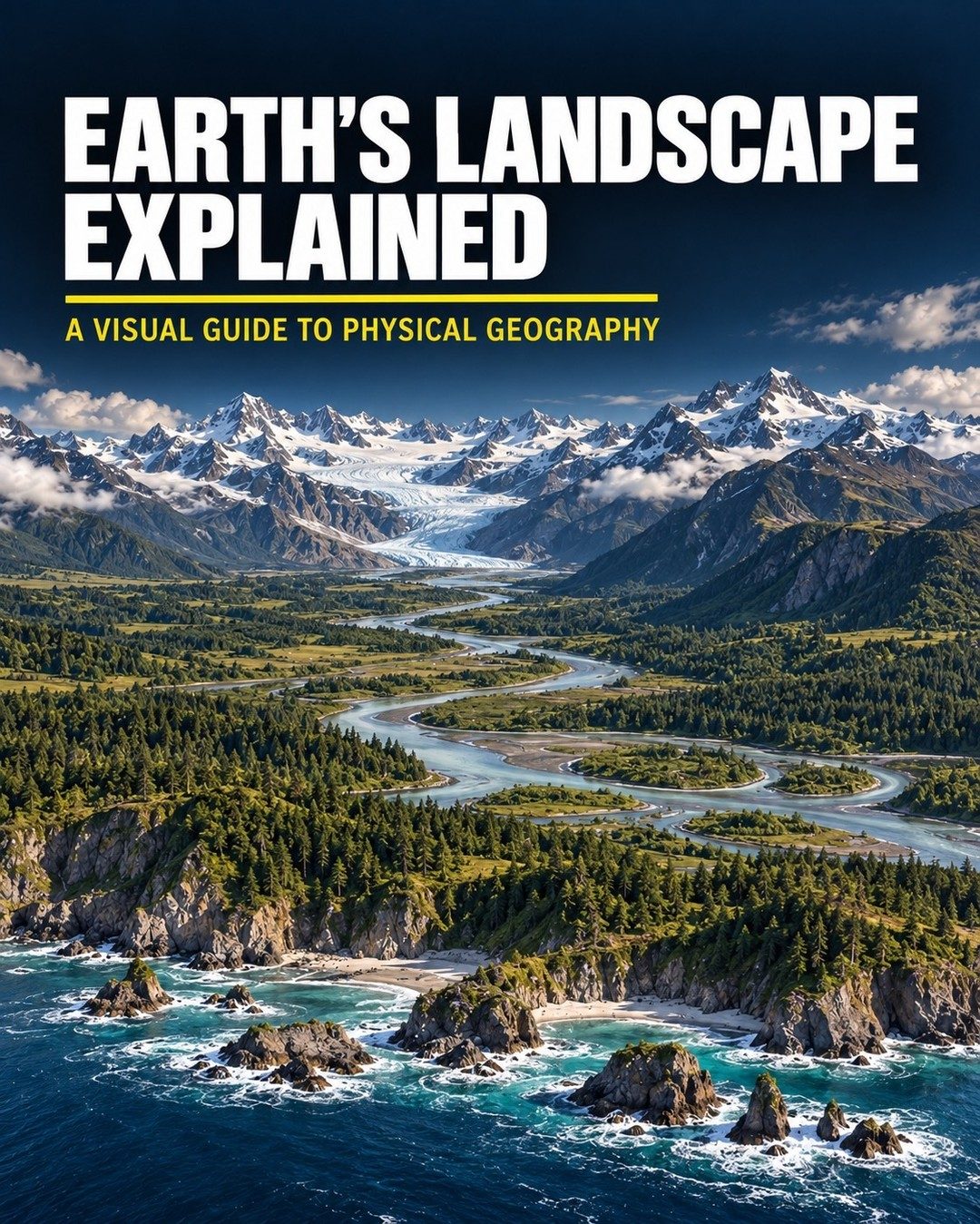
The Beauty of Diversity
Earth's landscape is nothing short of spectacular, offering such a vast variety, it can almost be daunting. It’s evident that the Earth’s surface is sculpted by natural forces, creating an intricate tapestry of diverse geographical features. A mountain range, for instance, begins as simple, formless rock being pushed statically, but over time it's crumpled and uplifted. Moving water hones the rocks, but moss and lichen with photosynthesis and mineral extraction also contribute to their erosion. This much is clear: the beauty of our planet lies in the fact that it’s never just one thing and every inch of its surface is a result of countless factors over geological time. Physical geography is a lens through which we can view the planet's dynamic history. Unlike the rigid maps that hang in classrooms, the real world is ever-changing. Deserts for example, are treacherous, sandy landscapes with extreme temperatures. But they can be found every desert on Earth, even the Arctic. These soil conditions are found only in polar deserts. Some polar deserts, like the Antarctic Desert, and some northern deserats, such the Greenland Ice Sheet, are both deserts and polar deserts. Their existence was formerly a mystery. Now that the study of permafrost and glacial features is more accepted, scientists are learning about these features,, alongside tundra and other icy terrains.
The Making of Diverse Terrain
In physical geography, erosion plays a crucial role in shaping the planet's surface. It loosens and moves soil, rock, and sediment. Weathering, the process by which physical and chemical forces break down rock, is a critical part of erosion. This powerful force is the planet’s relentless sculptor. Weathering transforms rock and sediment into materials that water and wind can move. Erosion also forms new landscapes. The forces of water, ice, and wind chip away at the Earth’s surface, gradually reshaping it into various forms like valleys and plateaus. Wind creates features like dunes and deserts. The wind transports sand particles, creating intricate patterns and sculpting the terrain. As the wind blows, it deposits loose sediment, creating different shapes and forms. This creates deserts, which are vast, windswept regions with very little precipitation. Deserts are found in every corner of the globe. Antarctica, the Arabian Peninsula, Australia, the Southwest United States, South America, and Africa all have extensive desert areas. Draconic erosion is the basic fault line that makes deserts possible. One beats out the other. Water's movement, be it in streams, rivers or glacier melts, also contributes to the creation of diverse landscapes. A variety of landscapes are created by water's movement, such as rivers, valleys, and plains. The movement of water carves these structures. Glaciers can even create new features as they move.
The Ocean: Woven into Physical Geography
The Earth’s ocean, which is the result of extensive dynamic forces, plays a key role in sculpting the planet’s surface. The movement of water from the ocean creates diverse geological features such as beaches, bays, and deltas. These structures result from the ongoing process of water movement. The ocean’s water movement is the primary force that shapes the Earth's surface. The movement of water also helps to shape coastal features such as lagoons, archipelagos, and straits. It also contributes to the creation of peninsulas, isthmuses, and capes.
Watch the Reel
Related deep dives
Similar reads based on topic and creator.
Recent articles
Fresh deep dives from the latest Reels we unpacked.

Comments
Be the first to comment.