Earth's close encounters
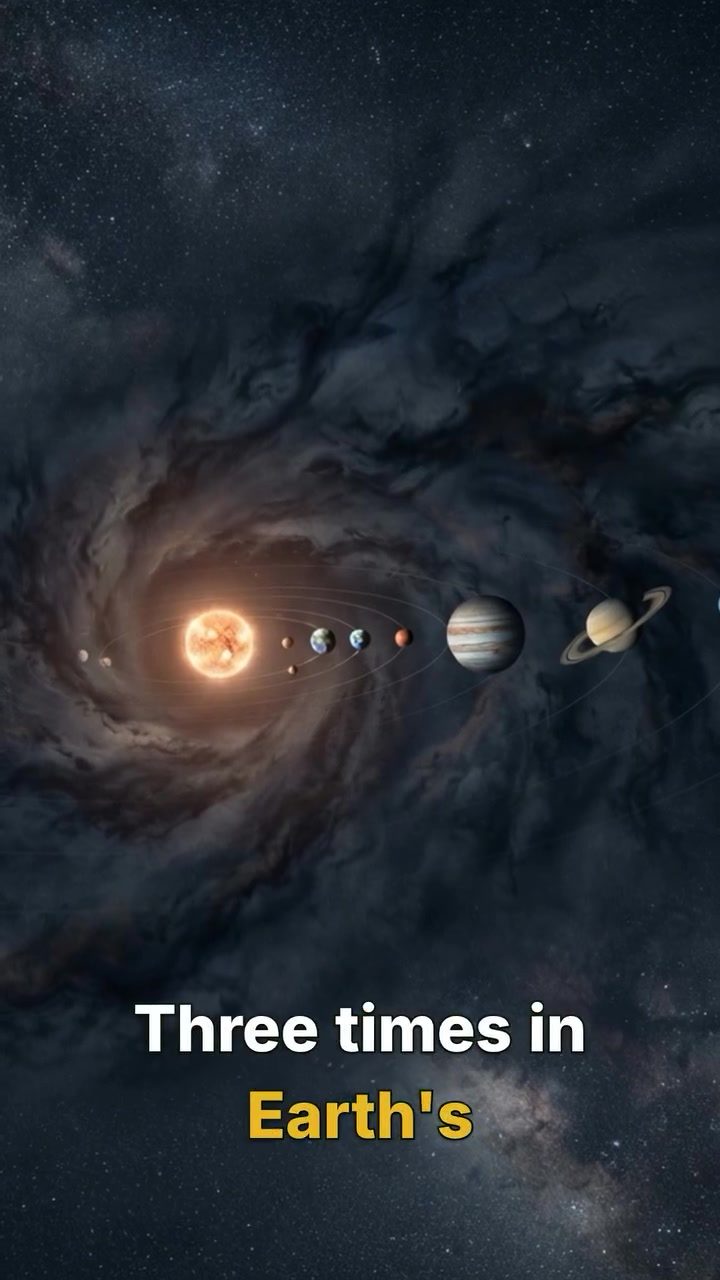
The solar system has been on a celestial journey, moving through the cosmos, a path marked by exposure to dense interstellar clouds. Three times in Earth's deep past, astronomers believe, this journey took the solar system through dense gas formations. Nearby and dense enough that the boundary of the solar system — the sun’s protective bubble — was compressed beyond Earth’s orbit. This compression exposed Earth to interstellar space. “NASA researchers say these encounters compressed the sun's protective bubble past Earth's orbit, exposing our planet directly to raw interstellar space," dramatizes the consequences of this cosmic proximity. The sun's heliosphere is a vast area of solar wind confined by magnetic fields, and it typically extends far past the reaches of Earth’s atmosphere.
An era of ice
Without the protective bubble from cosmic rays, scientists have speculated such encounters might have triggered major climate changes. The transience of interstellar encounters could have mirrored events where massive ice sheets could form on Earth. This is a working theory, where ancient ice ages may have been triggered by solar encounters. Yet the term "working theory" implies these ideas have not yet been conclusively proven. The "evidence sits in Antarctic ice and ancient seafloor sediment", awaiting more precise research and data.
The cosmic connection
One explanation for Earth’s ice ages could be this chain of cosmic events. But these theories are still works in progress, pending a full account of our planetary history.
Deep past: Possible cellular reactivation
Unusually, this encounter has been purported to result in "theory-specific ice ages." Such an encounter might have prompted the climate shift. It could have also had drastic implications for past life on Earth. The ice ages might have triggered cellular reactivation, a form of biological dormancy. The presence of ice core sedimentary proponents could enable us to genetically trace these past periods. The ice layers, once melted, are already productive, but the scientific evidence is not yet extensive.
Watch the Reel
Related deep dives
Similar reads based on topic and creator.


Recent articles
Fresh deep dives from the latest Reels we unpacked.


Comments
Be the first to comment.