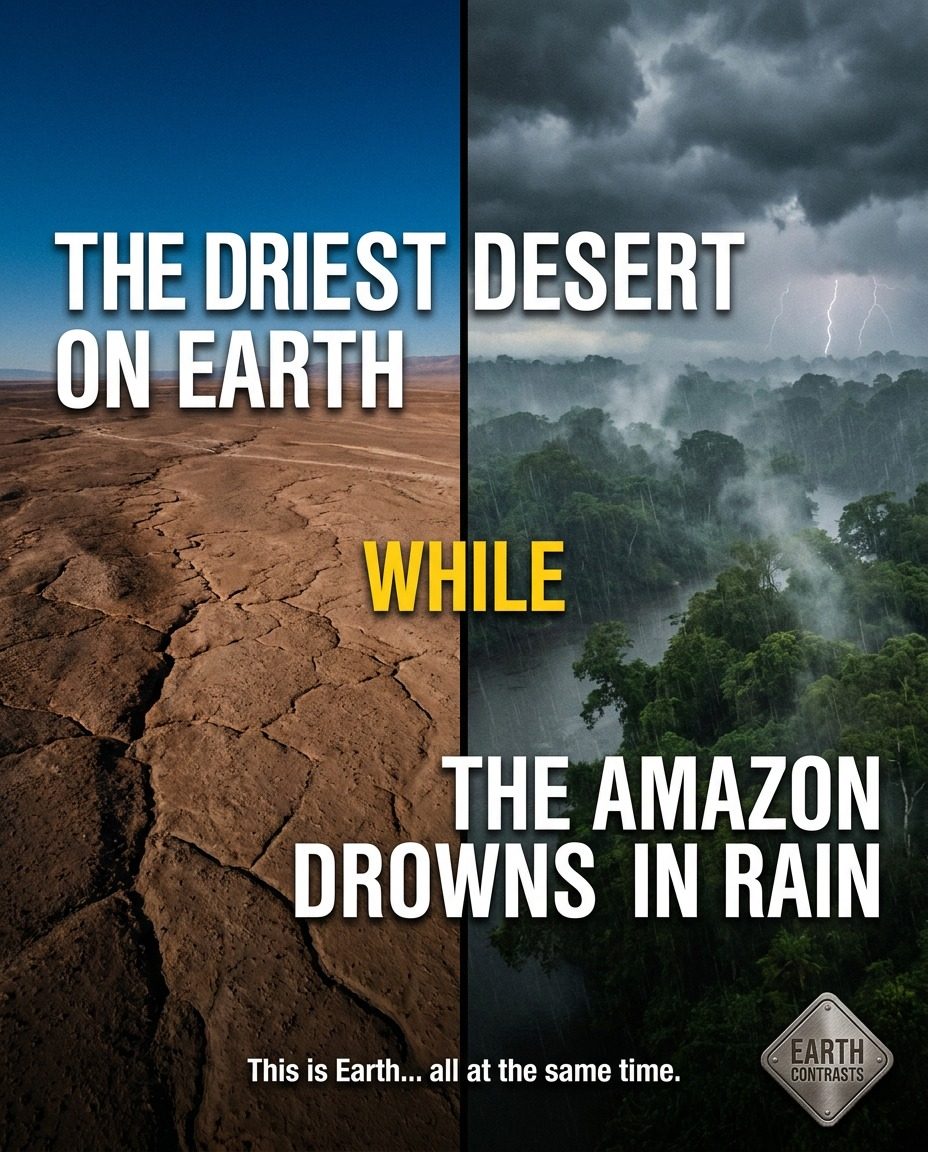
Earth's contrasting extremes
The Earth is both a parched expanse and a lush oasis. The driest place on Earth and the Amazon rainforest exist concurrently. The Atacama Desert in Chile is the world's driest desert. Its surface is craggy, barren, and inhospitable, with some areas receiving no rain for decades. These conditions produce a landscape that appears almost alien — a far cry from the image of Earth as a teeming, verdant planet. Contrast this with the Amazon rainforest. The Amazon, often called the "lungs of the Earth", receives around 4000 millimeters of rain per year. Every square inch is teeming with plant and animal life. This vibrant ecosystem ensures constant regeneration, sustaining its biological diversity. This is Earth, simultaneously hosting both extremes. The Amazon rainforest may have been formed by a natural process known as "ecological succession." This process occurs when a new habitat forms over a period of millions of years. In the Amazon rainforest, the original vegetation settles and decomposes, forming soil. This rich soil harbors water, nutrients, and bacteria that facilitate the growth of new vegetation. Simultaneously, the carbon dioxide that is absorbed from the atmosphere creates moisture, which fuels the ecosystem. Over time the ecosystem becomes so dense and rich that it can drive rainfall. This cycle establishes the rainforest as Earth's own rain-cycling machine. The Amazon’s dense canopy traps moisture and drives its own weather system, producing rainfall even in drought conditions. The forest's role in generating its own climate may explain why its petrichor permeates much of South America, making the rainforest a critical environmental player.
The extremes are contrasting. They are also interconnected.
The Atacama Desert may seem disconnected from the Amazon's vibrant water cycle. However, the two ecosystems are linked by intricate climate patterns. The Earth's atmosphere distributes heat and water, creating a web of interactions between seemingly separate environments. The Andes Mountains, for example, serve as a key factor in both environments. Acting as a barrier, the Andes prevent the dry, cold air masses from the Pacific Ocean from advancing into the Amazon River, causing the exact opposite of what the Amazon needs for growth. Instead, air masses loaded with moisture from the ocean are forced to rise, cooling and condensing into clouds. These clouds supply the vast majority of rain to the Amazon. In a linked process, atmospheric rivers — intense corridors of moisture in the sky — can transport vast amounts of water from one region to another. These rivers, known for causing severe weather conditions, can drag torrential rain to the Atacama's deserts, rendering the desert barren.
The future of the Amazon
The Amazon rainforest's survival is vital. The delicate balance maintaining the Amazon can be easily disrupted. This delicate balance could be easily disrupted by climate change. The Amazon is potentially facing a tipping point. Climate change could intensify drought conditions. If this occurs, the Amazon could transform into a degraded savanna. Studies have shown that the Amazon may already be losing its ability to recirculate water. This change is a result of deforestation, which removes the thick canopy that traps moisture. When deforestation occurs, the absence of trees reduces the amount of water vapor trapped in the atmosphere, causing less precipitation. Sorieux about what this means for the Amazon. Although the Amazon could dry up, the region has a chance of survival. A transition in climate from wet to dry could establish a stable environment. The Amazon rainforest has a high resistance and resilience to climate change.
Watch the Reel
Related deep dives
Similar reads based on topic and creator.
Recent articles
Fresh deep dives from the latest Reels we unpacked.
Comments
Be the first to comment.