Earth in Distant Past
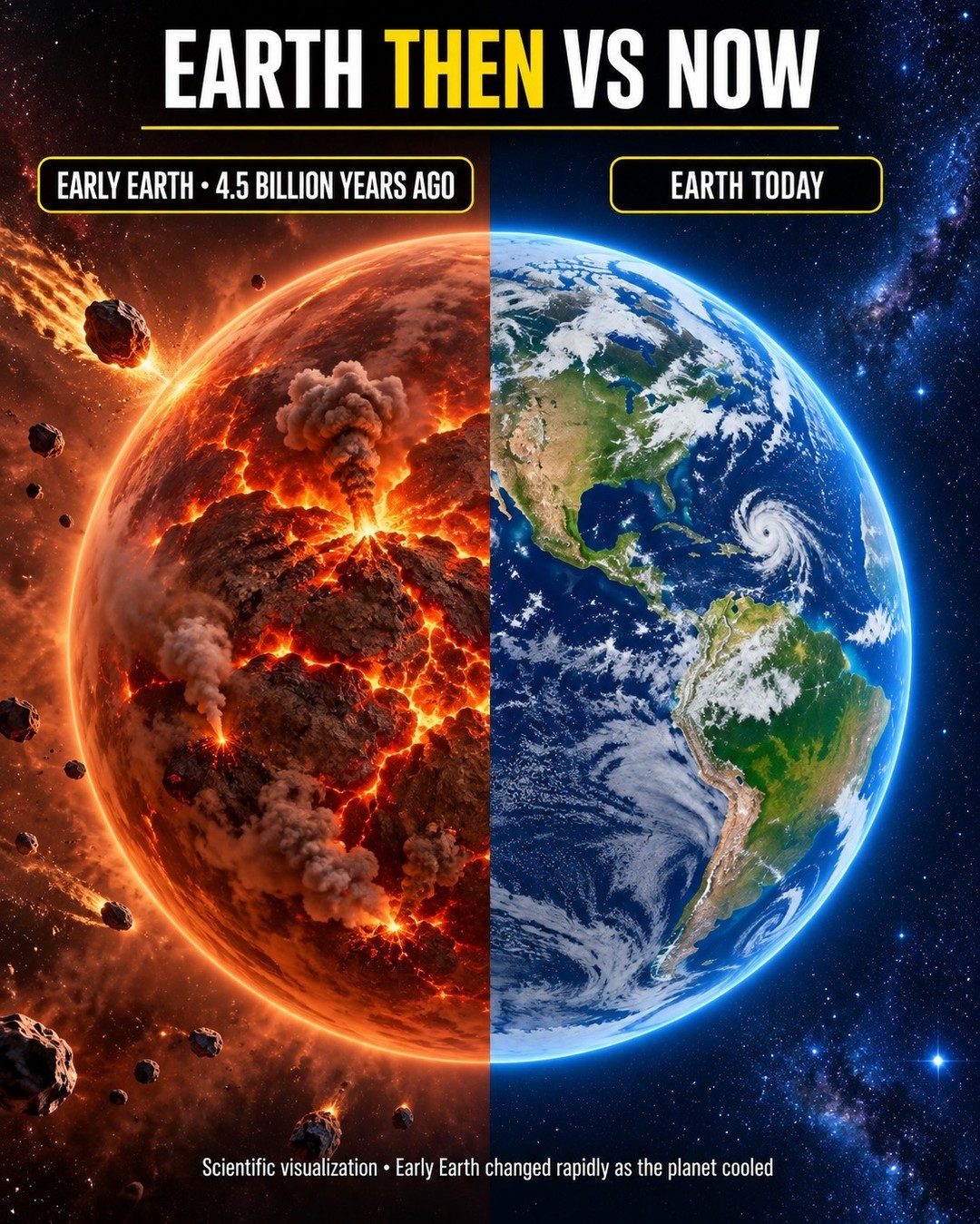
Early Earth was a far cry from the serene blue planet we inhabit today. Billions of years ago, its surface was a chaotic blend of fiery volcanos, intense heat, and frequent asteroid impacts. The harsh conditions stand in stark contrast to our current world, defined by continents, oceans, and a relatively temperate climate. These differences are nothing short of dramatic and tell the story of a planet evolving through the eons. We, humans, live in a mere blink of an eye in the history of this planet, and a prism through which to view the billions of years of Earth’s history. The visual contrast is jarring — a fiery, molten landscape on one side versus a calmly rotating blue marble on the other. The left depicts our planet during its infancy — a blistering, hostile, and volatile world, marked particularly by intense volcanic activity. The right portrays the more familiar Earth today, teeming with life.
A Planet in Transition
Rapid cooling over billions of years dramatically altered Earth’s surface. Volcanic activity and asteroid impacts significantly transformed the planet’s topographical and atmospheric conditions. This cooling period was pivotal; it paved the way for the formation of the first continents and the eventual accumulation of oceans. The transformation demonstrates the dynamic nature of our planet which continues to evolve over millions of years. The cooling process created the Earth’s craters, mountains, and valleys, establishing the base structure for modern continents. These vast volcanic events built up Earth’s landforms over billions of years. Atmospheric changes during this transition period laid the groundwork for the oxygen- rich environment that supports life today. In the most basic terms, Earth’s turbulent past is a prerequisite for the life it hosts in the present.
From Volcanoes to Oceans
Earth’s intense volcanic activity helped shape both the surface and the atmosphere. Volcanic eruptions released gases that contributed to the formation of Earth’s atmosphere, which initially was rich in carbon dioxide. Alongside the violent volcanic eruptions and the impacts of asteroids, the cooling period defined this early volatile era. Planet’s lava flows, volcanic eruptions, and the gaseous releases from the Earth’s crust transformed the atmosphere. This transformation likely set in motion the series of events that led to the formation of the Earth’s oceans. The cooling of the planet led to the condensation of water vapors, forming the Earth’s first pools of water. Over time, these pools grew into the vast bodies of water we see today. Volcanic activity likely contributed to these water levels, as well.
Watch the Reel
Related deep dives
Similar reads based on topic and creator.
Recent articles
Fresh deep dives from the latest Reels we unpacked.

Comments
Be the first to comment.