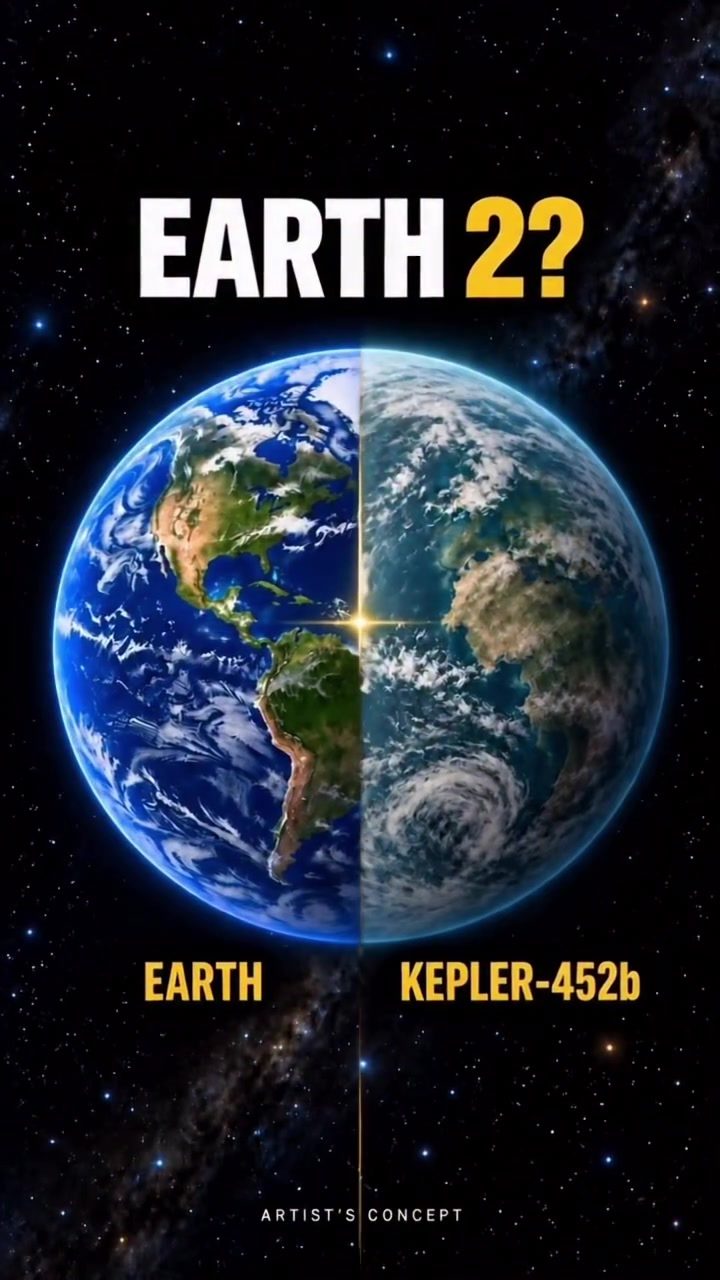
The Hunt for Habitable Worlds
To glimpse a planet light-years away is to imagine more than our realm. It is to speculate about life, water, and everything. NASA is methodically mapping the cosmic seas. Kepler-452b is just one of the 5000+ planets. Its sun is similar to our own. It is more massive and orbiting a yellow dwarf star, but it is 1.6 times wider than our own planet. Kepler-452b is among the first small planets to be found in the Goldilocks zone or the habitable area. The habitable area around a star is the zone that receives the right amount of solar energy for the existence of water on a planet's surface. A planet with similar size and orbit to Kepler-452b could potentially be rocky. Kepler-452b is 1.6 billion years older than Earth, and the light it receives is similar to that of Earth's.
Distance and Age
It is vital to remember that Kepler-452b is a whopping 1,600 light-years away. Therefore, it might take us thousands of years to get there. Kepler-452b is reminiscent, almost a spitting image, of the late 1950s's Earth. The planet might have already harboured life for billions of years. Our heavens could hold a tapestry of worlds, each one fulfilling an Earth-like story to explore. As an astronomer puts it, “Each and every star we find could be the next big find”. Realistically we will only get the answer by searching and exploring. There is nothing better to explore, and it will help us understand our own planet. Everything evolves from “True exploration is about the journey itself” in answering our first big question: "Are we alone in the cosmos?".
Watch the Reel
Related deep dives
Similar reads based on topic and creator.

Recent articles
Fresh deep dives from the latest Reels we unpacked.

Comments
Be the first to comment.