Earth and Venus: A Tale of Two Planets
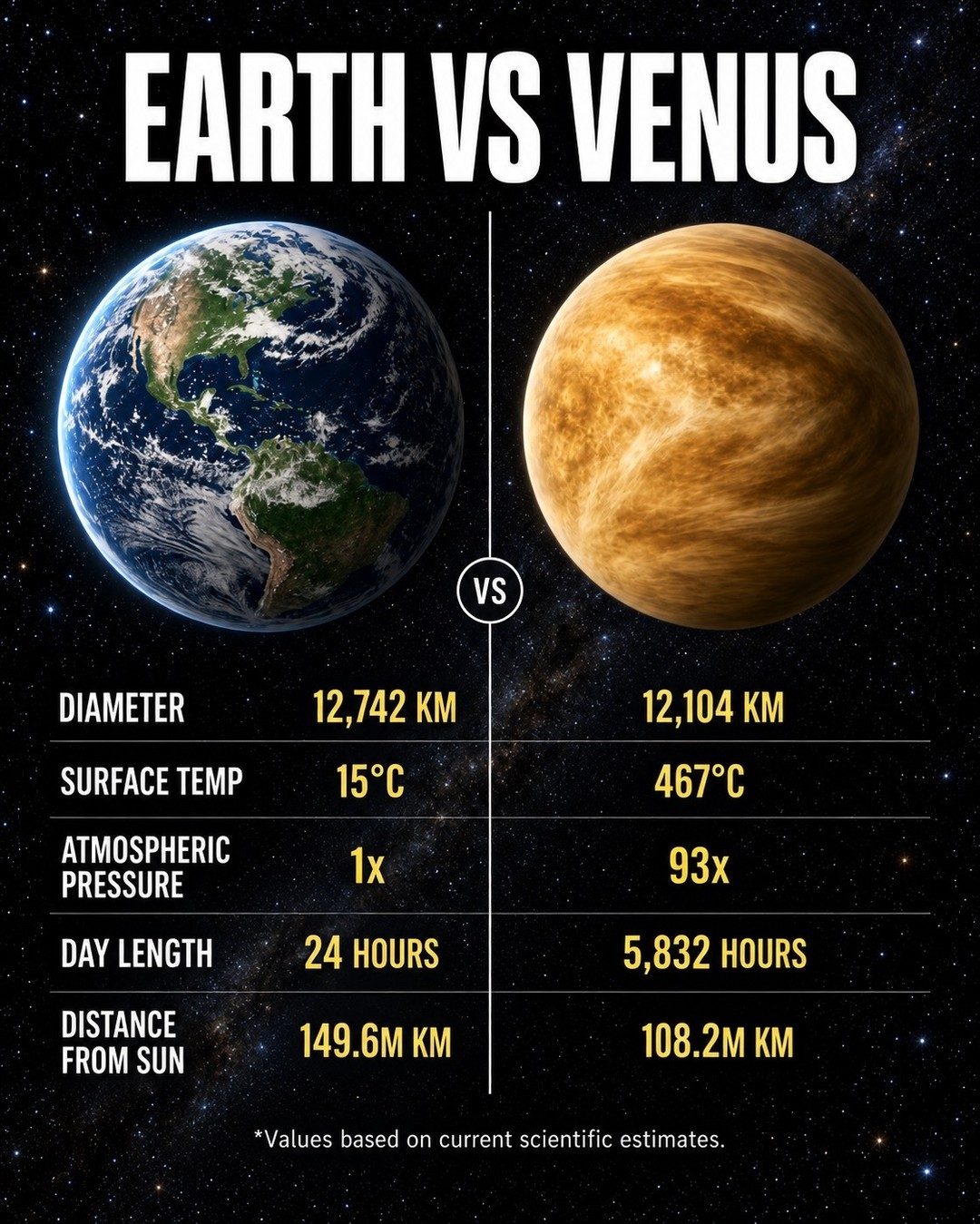
The solar system is a diverse collection of celestial bodies, and few comparisons are as stark as that between Earth and Venus. The two planets are often compared due to their similarities, but the differences in their environments make them almost diametrically opposed. Earth, with a surface temperature averaging around 15°C, is home to a vast array of life forms. The temperature on Venus, however, is a scorching 467°C, making it the hottest planet in the solar system. This extreme heat is due in part to the dense atmosphere which traps heat through a runaway greenhouse effect. This makes Venus inhospitable to life as we know it. This vast difference in habitability is what sets the stage for understanding the stark contrast between the two planets. Earth teems with life, while Venus remains barren. The planets also differ significantly in their rotational periods. While Venus's day lasts 5,832 hours, the Earth's day is a mere 24 hours. Unlike the Earth, which rotates counter-clockwise on its axis, Venus actually rotates clockwise. This retrograde rotation was a surprising discovery when viewed through telescopes. This slow and retrograde rotation is an essential factor contributing to the extreme conditions on Venus.
Atmospheric Pressure: The Great Divide Between Life and Death
Atmospheric pressure is another key difference between the two planets. Earth's atmospheric pressure is 1x that of Venus at 93x. Venus's atmosphere is composed mainly of carbon dioxide, which is toxic to humans. The thick and heavy atmosphere makes walking on the planet virtually impossible. Simply staying on the planet would require specially designed equipment to withstand the intense pressure. This high pressure adds to the challenges of exploring the planet, making it a significant barrier to human exploration. In comparison, Earth's atmosphere is thin and breathable, a vital asset to life on the planet. The pressure difference is also key to Venus's hostile environment and temperature regulation. The thick and dense atmosphere traps heat efficiently, leading to the extreme temperatures. This high pressure and dense atmosphere also make the planet's surface opaque, obscuring our view of it. Distance from the sun plays a significant role in the differences between the two planets. Earth, at a distance of 149.6M KM, is approximately 29.6M KM farther from the sun than Venus.
Unique Characteristics: Size, Distance, and Day Length
The comparison table also reveals that Earth's diameter of 12,742 km is slightly larger than Venus's 12,104 km. Despite the similarity in size, the two planets' environments are drastically different. Earth's relatively smaller size also allows for a faster rotation. Venus's size and rotation are likely due to its thick atmosphere. The thick atmosphere and slow rotation contribute to the planet's dense core, which rotates at a different speed and causes the magnetic field to be out of alignment, unlike the nearly aligned Earth. The distance from the sun also significantly impacts the difference between the two planets. Venus, at 108.2M KM, is closer to the sun than Earth. While the sun is the primary source of energy for both planets, the proximity to the sun is a significant factor in determining the temperature and habitability. The observed characteristics of the two planets offer a fascinating glimpse into the complexity of our solar system. The planets' differences illustrate the diverse conditions that can exist within a relatively small area of space.
Watch the Reel
Related deep dives
Similar reads based on topic and creator.


Recent articles
Fresh deep dives from the latest Reels we unpacked.

Comments
Be the first to comment.