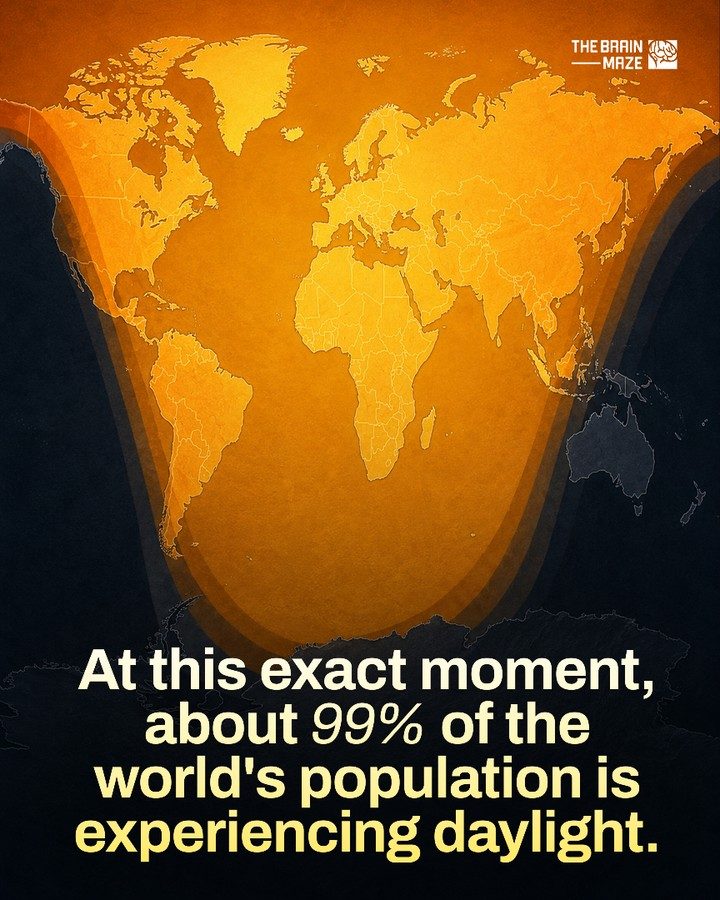
World Daylight
At any given moment, approximately 99% of the world’s population is experiencing daylight. This fascinating fact highlights the peculiar nature of our planet's rotation and the distribution of sunlight across its surface.
Why This Matters
Understanding the global distribution of daylight is more than just a curious trivia—it has significant implications for various fields, including astronomy, meteorology, and even urban planning. It underscores the interconnectedness of our planet and the fundamental role that sunlight plays in daily life.
The Science Behind Daylight Distribution
The distribution of daylight across the Earth is primarily determined by the planet's rotation and its axial tilt. The Earth rotates once every 24 hours, and this rotation creates the cycle of day and night. Additionally, the Earth's axial tilt of about 23.5 degrees means that different parts of the planet receive varying amounts of sunlight at different times of the year.
The Role of the Sun
The Sun is the ultimate source of daylight. Its position in the sky at any given time determines whether a particular location is experiencing daylight or darkness. The Earth's rotation and orbit around the Sun create the patterns of daylight and nighttime that we experience daily.
Global Lighting Patterns
Globally, the distribution of daylight is not uniform. Areas closer to the equator experience more consistent daylight throughout the year, while regions near the poles experience dramatic variations in daylight due to the Earth's axial tilt. For example, during the summer months, areas in the Northern Hemisphere experience longer days and shorter nights, while the Southern Hemisphere experiences the opposite.
The Impact of Daylight on Daily Life
The distribution of daylight has a profound impact on daily life, influencing everything from our sleep-wake cycles to our energy use.
Circadian Rhythms
Daylight plays a crucial role in regulating our circadian rhythms, which are the internal biological clocks that control our sleep-wake cycles. Exposure to natural light helps synchronize our bodies with the external environment, ensuring that we feel alert during the day and rested at night. Disruptions in these rhythms, often caused by irregular sleep schedules or artificial lighting, can lead to various health issues, including sleep disorders and mood disturbances.
Energy Consumption
Daylight also influences energy consumption patterns. In regions with shorter daylight hours, people tend to rely more on artificial lighting and heating, which increases energy consumption. Conversely, in areas with longer daylight hours, energy use for lighting and heating can be significantly reduced. Urban planners and architects often consider the availability of natural light when designing buildings and urban spaces to optimize energy efficiency.
Practical Tips for Maximizing Daylight
Understanding the distribution of daylight can help individuals and communities make the most of natural light.
Home Design
When designing or remodeling a home, consider the orientation of the windows to maximize natural light. South-facing windows, for example, can capture more sunlight throughout the day, reducing the need for artificial lighting. Additionally, using light-colored paint and reflective surfaces can help distribute natural light more effectively throughout the space.
Outdoor Activities
For outdoor enthusiasts, knowing the daylight patterns can help plan activities more effectively. For example, those who enjoy hiking or camping in remote areas can use daylight information to ensure they have enough light to navigate and set up camp before nightfall. In general, daylight patterns are predictable, so with a bit of planning, outdoor activities can be more enjoyable and safe.
Important Takeaways
The fact that 99% of the world’s population is experiencing daylight at any given moment underscores the interconnectedness of our planet and the fundamental role that sunlight plays in our daily lives.
Conclusion
The distribution of daylight across the Earth is a complex interplay of the planet's rotation, axial tilt, and orbit around the Sun. Understanding this phenomenon can help us appreciate the beauty and intricacy of our planet's natural cycles. By leveraging this knowledge, we can make more informed decisions about our daily activities, home design, and energy use, ultimately leading to a more sustainable and harmonious way of life.
Watch the Reel
Questions readers ask
How does Earth's rotation affect daylight distribution?
Earth's rotation causes the sunlight to move across the planet, creating day and night cycles. The rotation axis, tilted at approximately 23.5 degrees, also creates seasonal variations in daylight hours, influencing the global distribution of sunlight.
Why is understanding daylight distribution important for urban planning?
Knowing how sunlight is distributed helps urban planners design cities that maximize natural light, which can reduce energy consumption and improve public health. It also aids in optimizing the placement of buildings and green spaces to enhance the quality of life for residents.
What role does Earth's axial tilt play in the global daylight phenomenon?
Earth's axial tilt is crucial for the variation in daylight hours throughout the year. This tilt causes different parts of the planet to receive varying amounts of sunlight at different times of the year, resulting in the seasons and affecting the overall daylight experience globally.
Which regions on Earth experience the most daylight?
The brightest areas on Earth, in terms of daylight, are typically those closest to the equator, where daylight hours are more consistent throughout the year. Regions near the poles experience extreme variations, with long days in summer and long nights in winter.
How can a global daylight map benefit astronomers?
A global daylight map can provide astronomers with critical insights into when and where to observe celestial events. It helps them plan observations, especially for phenomena that are best viewed during specific daylight or nighttime conditions, enhancing their understanding of the universe.
What are the benefits of visualizing Earth's daylight distribution?
Visualizing Earth's daylight distribution allows us to better understand the interconnectedness of the planet's systems. It helps in identifying patterns that influence meteorology, climate, and even human activities, making it a valuable tool for various scientific and practical applications.
How does sunlight impact daily life around the world?
Sunlight greatly influences daily routines and activities. It affects when people work and sleep, as well as when they engage in leisure activities. Understanding the distribution of sunlight can help optimize daily schedules and improve overall well-being and productivity.
Related deep dives
Similar reads based on topic and creator.


Recent articles
Fresh deep dives from the latest Reels we unpacked.




Comments
Be the first to comment.