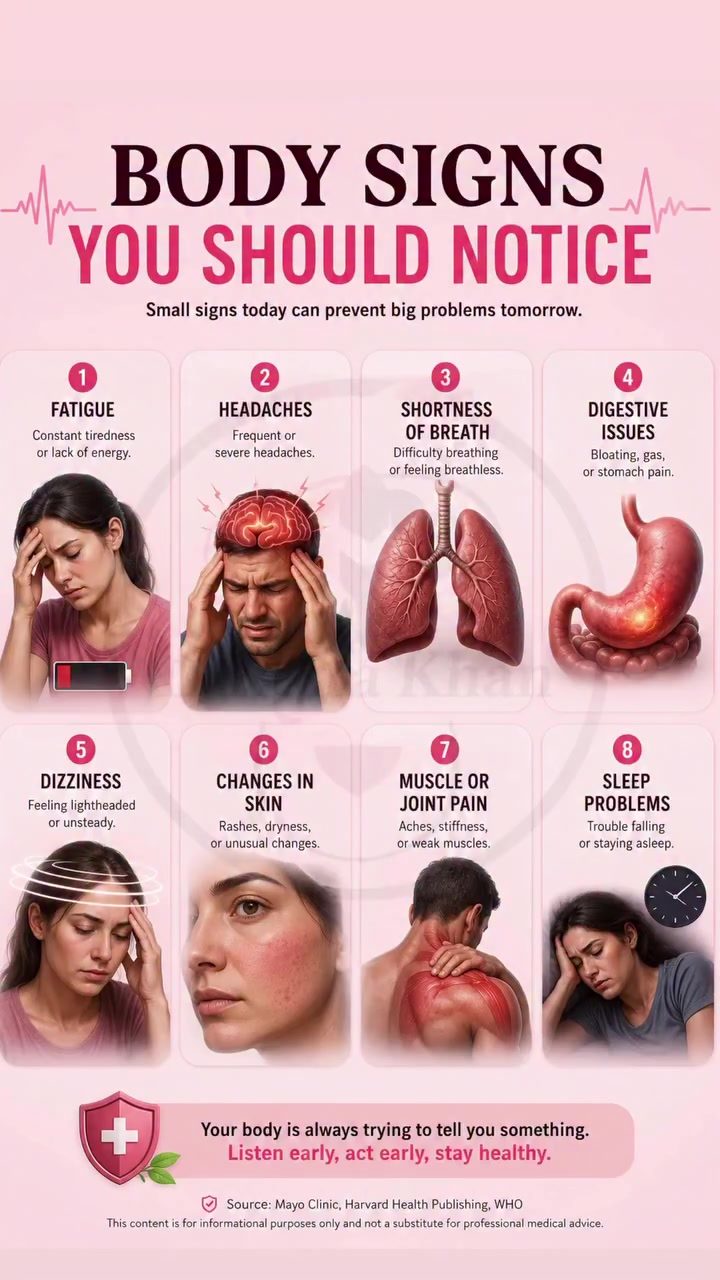
Body Signs to Watch For
Paying attention to your body's signals is crucial for maintaining overall health and well-being. While many symptoms can have multiple causes, noticing these signs early can help prevent more significant problems down the line. Here are eight key body signs to watch for, along with practical tips on how to address them.
Why this matters
Understanding and recognizing these signs can lead to proactive health management. Early detection and prompt action can often prevent minor issues from becoming major health concerns. Many symptoms, when noticed and addressed early, can be managed effectively, reducing the risk of chronic conditions and improving quality of life.
Main discussion
Fatigue
Fatigue is a common complaint that can stem from a variety of issues, including lack of sleep, poor diet, or underlying medical conditions. Constant tiredness or a lack of energy can be a sign that your body needs rest or attention. If fatigue persists, it may be a signal of an underlying health issue, such as anemia, thyroid problems, or depression. Managing fatigue involves identifying its root cause, which may require lifestyle changes or medical intervention.
Headaches
Headaches can range from mild and manageable to severe and debilitating. Frequent or severe headaches should not be ignored, as they can indicate various health problems, including migraines, sinus infections, or even more serious conditions like brain tumors. Addressing headaches often involves a combination of pain management, lifestyle adjustments, and, in some cases, medical treatment.
Shortness of Breath
Difficulty breathing or feeling breathless can be alarming and should be evaluated by a healthcare professional. Shortness of breath can be a symptom of respiratory conditions like asthma or chronic obstructive pulmonary disease (COPD), as well as cardiovascular issues. If you experience persistent shortness of breath, seek medical attention promptly to rule out serious underlying conditions.
Digestive Issues
Digestive discomfort, including bloating, gas, or stomach pain, can indicate various problems, from minor discomforts like indigestion to more serious conditions like irritable bowel syndrome (IBS) or gastroesophageal reflux disease (GERD). Managing digestive issues often involves dietary changes, stress reduction, and, in some cases, medical treatment. Paying attention to your diet and lifestyle can help alleviate many digestive issues.
Dizziness
Feeling lightheaded or unsteady can be a symptom of several conditions, including low blood sugar, dehydration, or an inner ear problem. Dizziness can also be a sign of more serious issues, such as heart problems or neurological disorders. If you experience frequent dizziness, consult a healthcare provider to determine the cause and appropriate treatment.
Changes in Skin
Rashes, dryness, or unusual changes in the skin can be a sign of an allergic reaction, inflammation, or other medical conditions. Skin changes should be monitored and addressed, as they can indicate conditions like eczema, psoriasis, or even skin cancer. Regular skin checks and prompt attention to any changes can help catch potential issues early.
Muscle or Joint Pain
Aches, stiffness, or weak muscles can indicate injury, inflammation, or chronic conditions like arthritis. Muscle or joint pain should be evaluated, especially if it persists or worsens over time. Managing muscle and joint pain often involves a combination of rest, physical therapy, pain management, and, in some cases, medical treatment. Regular exercise and a healthy lifestyle can help prevent and manage these issues.
Sleep Problems
Trouble falling or staying asleep can impact overall health and well-being. Sleep problems, including insomnia and sleep apnea, can lead to a variety of health issues, such as fatigue, mood disorders, and weakened immune function. Improving sleep hygiene, managing stress, and seeking medical intervention when necessary can help address sleep problems.
Practical tips
To effectively manage and address these body signs, consider the following practical tips:
-
Track Symptoms: Keep a symptom journal to track when and how often symptoms occur. This can help identify patterns and triggers, making it easier to discuss your concerns with a healthcare provider.
-
Seek Professional Help: If symptoms persist or worsen, consult a healthcare professional. Early intervention can often prevent minor issues from becoming more serious.
-
Maintain a Healthy Lifestyle: Regular exercise, a balanced diet, and adequate sleep can help manage many symptoms and improve overall health. Prioritize a healthy lifestyle to support your body's natural healing processes.
-
Manage Stress: High stress levels can exacerbate many symptoms. Incorporate stress-reduction techniques, such as meditation, yoga, or deep breathing exercises, into your daily routine.
-
Stay Hydrated: Dehydration can cause or worsen various symptoms, including fatigue, digestive issues, and dizziness. Ensure you drink enough water throughout the day.
-
Avoid Self-Diagnosis: While it's important to be aware of your body's signals, avoid self-diagnosing based on symptoms alone. Symptoms can have multiple causes, and a professional evaluation is necessary for accurate diagnosis and treatment.
Important takeaways
Your body is always trying to communicate with you, and it's crucial to listen to its signals. Paying attention to these eight key signs—fatigue, headaches, shortness of breath, digestive issues, dizziness, skin changes, muscle or joint pain, and sleep problems—can help you stay proactive in managing your health. Early detection and prompt action can prevent minor issues from becoming major health concerns, leading to a healthier, more balanced life. Regular check-ups, a healthy lifestyle, and prompt attention to any changes in your body are essential for maintaining overall well-being.
Conclusion
Understanding and addressing these body signs can significantly improve your overall health and quality of life. Listening to your body, seeking professional help when needed, and maintaining a healthy lifestyle are key to preventing minor issues from becoming more serious. Stay proactive in managing your health by paying attention to these crucial signs and taking early, informed action.
Watch the Reel
Questions readers ask
What are some common body warning signs that I should pay attention to?
Common body warning signs include changes in energy levels, such as unusual fatigue, persistent headaches, shortness of breath, muscle weakness, and dizziness. Regularly experiencing these symptoms can indicate underlying health issues that need attention.
What should I do if I experience persistent headaches?
If you experience persistent headaches, it's important to track their frequency, duration, and any associated symptoms. Keep a headache diary and consult with a healthcare professional, who can help determine the cause and appropriate treatment. Common triggers include stress, dehydration, and sleep disorders.
Why is it important to address shortness of breath?
Addressing shortness of breath is crucial because it can be a sign of various health issues, ranging from minor to severe. Conditions such as asthma, anemia, or heart problems can cause breathing difficulties. If you experience unexplained shortness of breath, especially during exertion or at rest, seek medical attention promptly.
Can muscle weakness be a sign of something serious?
Yes, muscle weakness can be a sign of an underlying health issue. It may indicate conditions such as nutrient deficiencies, thyroid problems, or neurological disorders. If you notice persistent muscle weakness, it's important to consult a healthcare provider for a proper evaluation and to rule out any serious conditions.
What are the potential causes of chronic dizziness?
Chronic dizziness can be caused by a variety of factors, including inner ear problems, such as benign paroxysmal positional vertigo (BPPV), vestibular disorders, or migraines. Other potential causes include low blood pressure, anemia, or medication side effects. If you experience chronic dizziness, consult a healthcare professional for a thorough evaluation.
How can listening to my body help in maintaining a healthy lifestyle?
Listening to your body involves paying attention to its signals and responding appropriately. This proactive approach can help you identify potential health issues early, allowing for timely intervention and management. By addressing symptoms promptly, you can prevent minor problems from escalating and maintain a healthier lifestyle overall.
What are the symptoms of sleep disorders that I should be aware of?
Symptoms of sleep disorders can include difficulty falling or staying asleep, excessive daytime sleepiness, snoring, and unusual movements during sleep. If you experience any of these symptoms regularly, it may be a sign of a sleep disorder such as insomnia, sleep apnea, or restless leg syndrome. Seeking professional help can improve your sleep quality and overall well-being.
Recent articles
Fresh deep dives from the latest Reels we unpacked.




Comments
Be the first to comment.