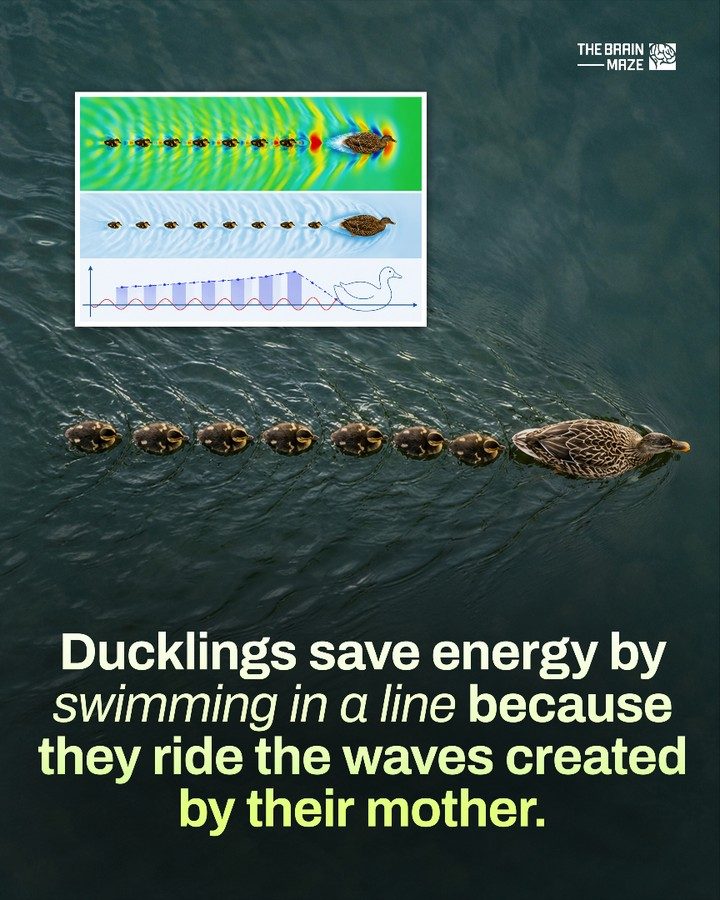
Duckling Swimming Efficiency: A Natural Lesson in Energy Conservation
When ducklings swim behind their mother in a straight line, it's not just a cute sight; it's a remarkable display of efficient energy use and safety. This behavior, often observed in nature, helps ducklings conserve energy and stay safe by utilizing the waves created by their mother as she moves through the water.
Why This Matters
Understanding why ducklings follow their mother is about more than appreciating nature. It's about exploring a little of the principles behind an exemplary energy conservation strategy that protects the young and reduces exertion. This natural phenomenon offers insights into efficient movement and energy savings in the wild.
The Mechanism of Energy Conservation
Ducklings conserve energy by following their mother in a line. As the mother duck moves through the water, she creates small waves that reduce water resistance. These waves make it easier for the ducklings to swim behind her, as they can ride the waves and use less effort to move forward. This coordinated movement is a classic example of how animals in nature have evolved to optimize energy use.
The Role of Waves in Energy Efficiency
The waves created by the mother duck play a crucial role in this energy-saving strategy. These waves not only reduce the overall resistance the ducklings face but also help them maintain a steady pace. By riding the waves, the ducklings can conserve energy that would otherwise be expended on overcoming water resistance. This efficient use of energy ensures that the ducklings have the stamina to keep up with their mother and stay together as a group.
The Safety Aspect
Swimming in a line behind their mother also enhances the safety of the ducklings. This formation keeps the family together, making it easier for the mother to protect her young from predators. The close-knit formation helps the mother duck keep an eye on all her ducklings and ensures that none of them become separated. This protective behavior is essential for the survival of the ducklings, as it minimizes their exposure to predators and other potential dangers.
The Benefits of Reduced Effort
By following their mother in a line, ducklings can significantly reduce the effort required to swim. This reduced effort allows them to conserve energy, which is crucial for their growth and development. The energy saved can be used for other essential activities such as feeding, resting, and growing.
Practical Applications in Human Activities
While duckling swimming behavior is a natural phenomenon, it offers valuable insights that can be applied to human activities. Understanding how animals conserve energy and move efficiently can inspire innovative solutions in various fields, from engineering to sports.
Sports and Athletics
In sports and athletics, understanding efficient movement can help athletes optimize their performance. For example, cyclists who ride in a peloton form a similar formation where the lead cyclists create a reduced resistance zone for those following. This formation allows cyclists to conserve energy and maintain their speed more easily, much like ducklings following their mother.
Engineering and Design
In engineering and design, the principles behind efficient movement can inspire new technologies. For instance, the design of streamlined vehicles and watercraft can benefit from studying how animals like ducks move through water. By mimicking natural energy-saving mechanisms, engineers can create more efficient and sustainable transportation methods.
Important Takeaways
Ducklings swimming in a line behind their mother is a fascinating example of efficient energy use and safety in nature. This behavior helps ducklings conserve energy by riding the waves created by their mother, reducing water resistance and minimizing the effort required to swim. Additionally, this formation enhances the safety of the ducklings by keeping the family together and making it easier for the mother to protect her young.
Conclusion
The natural behavior of ducklings swimming in a line behind their mother offers valuable insights into energy conservation and safety. Understanding these principles can inspire innovative solutions in various fields, from sports and athletics to engineering and design. By observing and learning from nature, we can find more efficient and sustainable ways to move through our world.
Watch the Reel
Questions readers ask
Why do ducklings swim in a straight line behind their mother?
Ducklings swim in a straight line behind their mother to take advantage of the waves created by her movement. This allows them to reduce water resistance and conserve energy, making their journey more efficient and safer.
How does swimming behind a mother duck save the ducklings energy?
By swimming behind their mother, ducklings can ride the waves she creates, which reduces the amount of water resistance they encounter. This makes it easier for them to swim and conserves their energy, as they don't have to expend as much effort to move through the water.
What are the safety benefits for ducklings when they follow their mother while swimming?
Following their mother while swimming not only helps ducklings conserve energy but also enhances their safety. By staying close and in a line, they are less likely to get separated or lost, and they can more easily follow her lead in navigating the water.
Can other animals use similar energy-saving strategies when swimming?
Yes, similar energy-saving strategies are used by various animals. For example, some fish and birds also form groups to reduce resistance when swimming or flying, making their movements more efficient and less energy-intensive.
Why is it important for ducklings to reduce water resistance while swimming?
Reducing water resistance is crucial for ducklings as it allows them to swim more efficiently. By minimizing the drag caused by the water, they can conserve their energy, which is especially important for young ducklings who have limited reserves.
How does the mother duck's swimming motion benefit the ducklings?
The mother duck's swimming motion creates a series of waves that the ducklings can ride, which helps them move through the water with less effort. This natural strategy not only conserves their energy but also ensures they stay close to their mother, enhancing their overall safety.
What can we learn from the ducklings' swimming strategy about efficient movement?
The ducklings' swimming strategy demonstrates the principle of reducing resistance and utilizing natural forces to move more efficiently. By following their mother and riding the waves, ducklings show how minimizing energy expenditure can be achieved through smart positioning and movement.
Related deep dives
Similar reads based on topic and creator.




Recent articles
Fresh deep dives from the latest Reels we unpacked.




Comments
Be the first to comment.