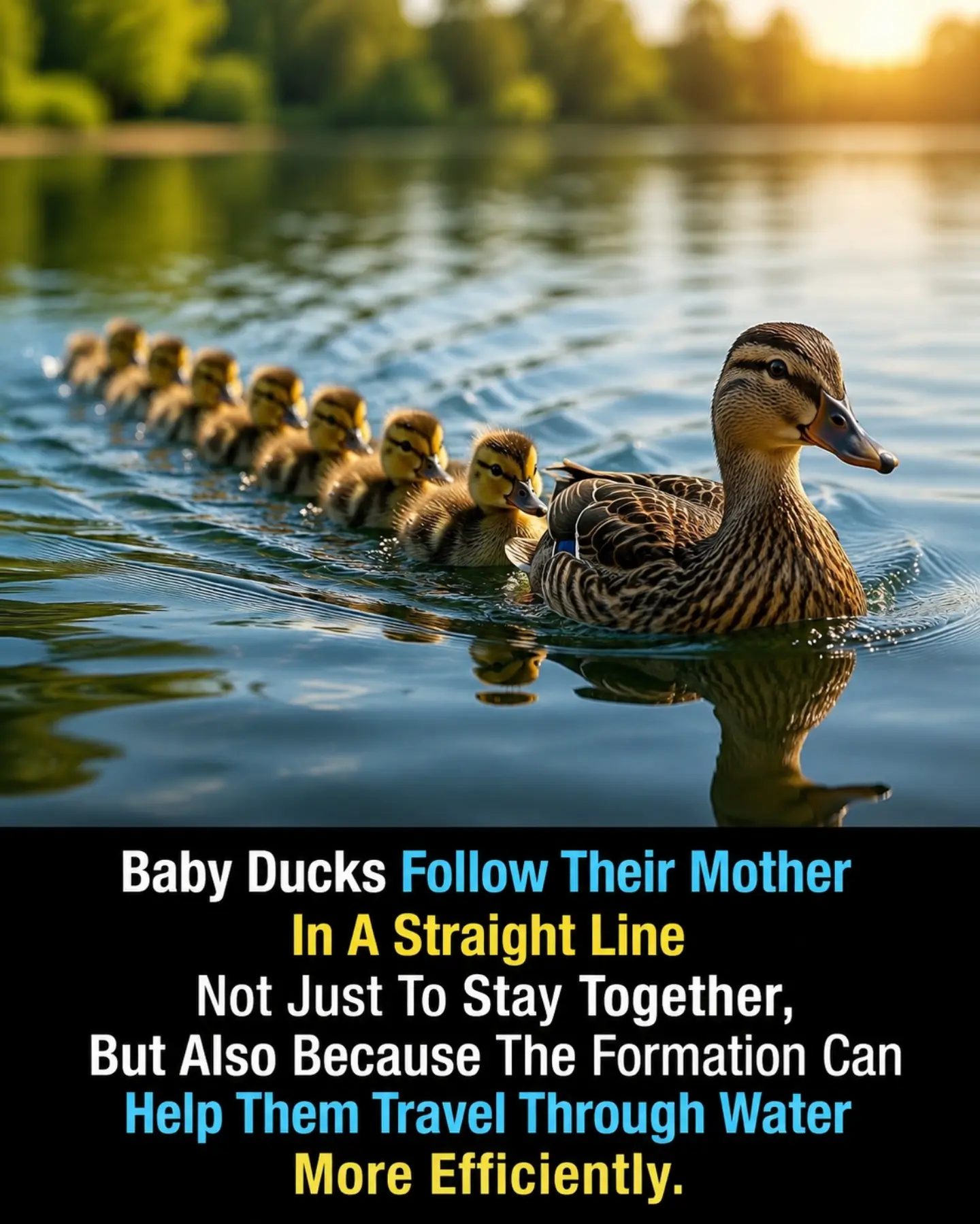
Baby Ducks Swimming in Formation
Baby ducks following their mother in a straight line is a common sight in nature, but the reason behind this behavior is more than just staying together. The formation helps them travel through water more efficiently.
Why This Matters
The way baby ducks swim behind their mother serves a practical purpose. This behavior is not just about keeping the ducklings together; it's also about energy conservation and efficient movement. By following closely in a line, the ducklings create less drag, making their journey through the water smoother and less energy-intensive.
The Science Behind the Formation
Hydrodynamics and Drag Reduction
The formation that baby ducks use is a classic example of hydrodynamics in action. Hydrodynamics is the study of how fluids (like water) interact with objects moving through them. When the mother duck swims at the front, she pushes water aside, creating a path of least resistance for the ducklings that follow. This reduced drag allows the ducklings to swim more efficiently.
Energy Conservation
Energy conservation is a key benefit of this formation. Ducklings, being small and not yet fully developed, have limited energy reserves. By following in a straight line, they can conserve energy, ensuring they have the stamina to travel long distances or swim against currents. This adaptation is crucial for their survival, especially in unpredictable environments.
Safety in Numbers
Beyond the hydrodynamic advantages, swimming in a straight line also provides safety benefits. A single, continuous line of ducks is less conspicuous to predators than a scattered group. The mother duck can keep a watchful eye on her brood, and the ducklings can stay close to each other, reducing the risk of any one of them getting separated or lost.
Practical Tips for Observing Ducks
Timing and Location
The best time to observe the formation of baby ducks swimming with their mother is early in the morning or late in the afternoon. During these times, the water is often calm, and the lighting is soft, making it easier to observe the ducklings' movement. Lakes and ponds with plenty of vegetation and natural cover are ideal spots for such observations, as they provide a safe environment for the ducks.
Binoculars and Cameras
A good pair of binoculars or a camera with a telephoto lens can enhance your viewing experience. These tools allow you to get a closer look at the ducks without disturbing them. Always maintain a respectful distance to avoid disturbing the natural behavior of the ducks.
Important Takeaways
The formation that baby ducks use while following their mother is a fascinating example of nature's efficiency. It highlights how animals have evolved to conserve energy and protect themselves. Understanding this behavior can give you a deeper appreciation for the natural world and the intricate ways in which animals adapt to their environments.
Conclusion
Observing baby ducks swimming in a straight line behind their mother is a delightful and informative experience. This behavior is not just a charming sight but a testament to the efficiency and adaptability of nature. Whether you're a nature enthusiast, a birdwatcher, or simply someone who enjoys the outdoors, understanding the science behind this formation can enrich your appreciation for the natural world.
Watch the Reel
Questions readers ask
Why do ducklings swim in a straight line behind their mother?
Ducklings swim in a straight line behind their mother primarily for energy efficiency and safety. This formation helps them reduce drag, allowing them to conserve energy while traveling through the water more smoothly.
How does the ducklings' swimming formation help with drag reduction?
The ducklings' formation helps reduce drag by allowing each duckling to benefit from the reduced water resistance created by the duck in front of them. This makes it easier for them to swim, which is a fundamental principle of hydrodynamics.
What are the benefits of ducklings following their mother in a straight line?
Following their mother in a straight line helps ducklings conserve energy, stay safe, and maintain a steady pace. This behavior ensures that they can travel longer distances without tiring as quickly, and it helps them stay close to their mother for protection.
Can other animals use similar swimming techniques?
Yes, other animals also use similar techniques to reduce drag and improve energy efficiency while swimming. For example, fish often swim in schools and birds fly in V-formations to achieve similar benefits.
Does the mother duck benefit from the ducklings' swimming formation?
While the primary benefit is for the ducklings, the mother duck also gains some advantages. By leading the way, she can set a consistent pace and maintain a clear path, making it easier for the ducklings to follow and ensuring the group stays together.
At what age do ducklings start swimming in formation?
Ducklings typically start swimming in formation soon after they hatch and are able to leave the nest. This behavior is instinctual and helps them adapt to their aquatic environment quickly, ensuring their survival.
How does the mother duck know to lead the way in a straight line?
Mother ducks instinctively lead the way in a straight line due to their innate knowledge of efficient swimming techniques. This behavior is hardwired and ensures that the ducklings can follow her path, which is both energy-efficient and safe.
Related deep dives
Similar reads based on topic and creator.


Recent articles
Fresh deep dives from the latest Reels we unpacked.


Comments
Be the first to comment.