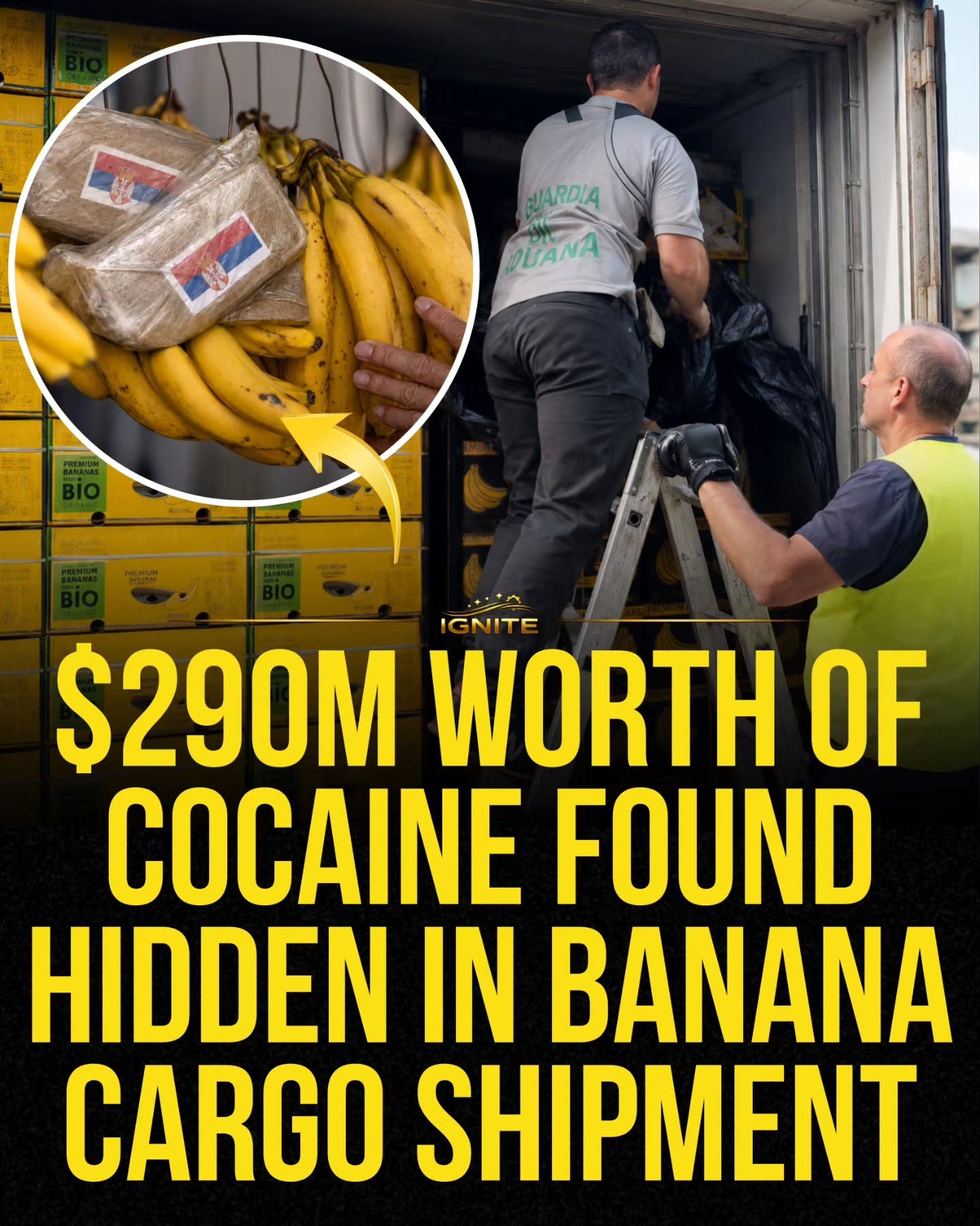
Investigating the Seizure of $290 Million Worth of Cocaine Hidden in a Banana Cargo
The recent seizure of a staggering $290 million worth of cocaine hidden within a shipment of bananas has once again highlighted the complexities and challenges of international drug trafficking. This unprecedented discovery underscores the ingenious methods employed by criminal organizations to transport illicit substances across borders. Let's delve into the details of this operation, the implications for law enforcement, and the broader context of drug trafficking through unconventional means.
Why This Matters
The use of banana shipments as a conduit for smuggling cocaine is a stark reminder of the intricate web of global trade that is often exploited by criminal elements. Bananas are a ubiquitous and high-volume commodity, making them an ideal cover for smuggling operations. This case serves as a wake-up call for enhanced vigilance and more sophisticated detection methods in supply chain security.
The Operation and Its Implications
The Discovery of Cocaine in Banana Shipments
The cocaine was concealed in bricks hidden amongst the banana boxes. This method of concealment makes it extremely difficult to detect, as bananas are a common and frequently transported commodity. The drugs were likely packaged in such a way to avoid detection by basic inspection methods, including sniffer dogs and X-ray machines. The $290 million estimated value indicates the scale of the operation and the potential profit involved, which underscores the high stakes in such criminal enterprises.
The Role of Law Enforcement
The Guardia Civil, Spain's national police force, played a crucial role in the investigation and seizure. Their involvement is a testament to the coordinated efforts required to tackle such complex operations. The Guardia Civil's expertise in maritime and border security was instrumental in identifying and intercepting the shipment. This case underscores the importance of international cooperation and the need for advanced surveillance and forensic technologies to combat drug trafficking.
Practical Tips for Enhanced Security
Advanced Detection Techniques
To counter such sophisticated smuggling methods, law enforcement agencies and border control authorities need to adopt more advanced detection techniques. This includes the use of high-resolution imaging, thermal scanning, and AI-driven analysis to identify anomalies in cargo shipments. Enhanced training for customs officials and law enforcement personnel is also crucial to ensure they are equipped to handle the evolving tactics of drug traffickers.
Supply Chain Audits
Regular audits of supply chains, especially those involving high-volume commodities like bananas, can help identify vulnerabilities and potential points of entry for illicit substances. This involves collaborating with suppliers, transporters, and logistics companies to implement stricter security protocols and monitoring systems.
International Collaboration
International cooperation is key to dismantling global drug trafficking networks. Sharing intelligence, coordinating operations, and harmonizing regulatory frameworks can significantly enhance the effectiveness of law enforcement efforts. Agencies like the Guardia Civil, along with international bodies like Interpol, play a vital role in fostering such collaboration.
Public Awareness
Raising public awareness about the methods used by drug traffickers can also play a role in deterring such activities. The public can be an essential ally in identifying and reporting suspicious activities, especially in ports and logistics hubs.
Important Takeaways
The $290 million seizure of cocaine hidden in a banana cargo shipment is a clear indication of the lengths to which criminal organizations will go to transport illicit substances. The case highlights the need for enhanced security measures, advanced detection technologies, and international cooperation to combat drug trafficking effectively. It also underscores the importance of public awareness and vigilance in identifying and reporting suspicious activities.
Conclusion
The discovery of a massive cocaine shipment concealed within a banana cargo is a stark reminder of the ever-evolving tactics employed by drug traffickers. This incident underscores the need for more robust security measures, advanced detection techniques, and international cooperation to combat such activities. By staying vigilant and adopting proactive measures, we can enhance the security of global supply chains and disrupt the flow of illicit substances.
Watch the Reel
Questions readers ask
How do criminals manage to hide cocaine in banana cargo?
Criminals exploit the bulk and natural concealment offered by banana shipments. They often insert cocaine packages within the banana bunches or containers, making detection difficult with standard cargo inspection methods.
What are the key challenges for law enforcement in detecting cocaine in cargo?
Law enforcement faces significant challenges due to the sheer volume of cargo, the sophistication of smuggling tactics, and the need for thorough, time-consuming inspections. Hidden drugs often go undetected during routine checks.
What makes banana shipments an attractive target for drug smugglers?
Bananas are a common commodity with high demand, making them less likely to raise suspicion. Additionally, the large volume of cargo and the perishable nature of bananas can expedite their movement through ports and customs.
What equipment or tools are often used to detect hidden drugs in cargo?
Law enforcement agencies use various tools, including X-ray machines, drug-sniffing dogs, and advanced imaging technology, to identify concealed drugs. However, the effectiveness of these methods can vary based on the sophistication of the hiding techniques.
How do international drug trafficking operations adapt to increased scrutiny?
Drug trafficking operations continuously evolve by developing new tactics and exploiting different types of cargo. They may switch to less scrutinized routes or conceal drugs in more unconventional ways to evade detection.
What are the potential risks for those involved in smuggling cocaine through banana cargo?
Those involved in such operations face severe legal consequences, including long jail sentences, if caught. Additionally, there are significant risks associated with the handling and transportation of large quantities of illicit substances.
What role does intelligence play in preventing large-scale drug seizures?
Intelligence plays a crucial role by providing law enforcement with actionable insights into smuggling operations. This allows for targeted inspections and the disruption of trafficking networks, potentially leading to significant seizures, like the $290 million banana cargo bust.
Recent articles
Fresh deep dives from the latest Reels we unpacked.




Comments
Be the first to comment.