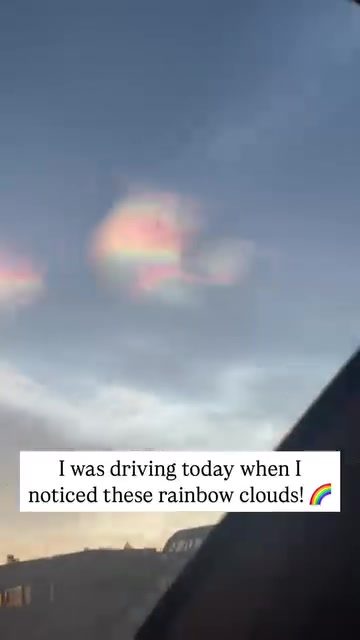
Rainbow Clouds
Rainbow clouds, also known as iridescent clouds, are a breathtaking atmospheric phenomenon that occurs when sunlight or moonlight is diffracted by tiny water droplets or ice crystals within clouds. The result is a shimmering display of pastel colors that seem to float on the cloud's surface, creating a visual resemblance to a rainbow. This optical effect is most commonly observed in thin, wispy clouds like cirrus or altocumulus clouds, especially when they are near the sun or moon.
Why This Phenomenon Matters
These vibrant, colorful clouds are more than just a beautiful sight; they serve as a reminder of the intricate ways in which light interacts with our atmosphere. Understanding the conditions under which iridescent clouds form can provide insights into weather patterns and atmospheric conditions. By studying these phenomena, meteorologists can better predict weather changes and understand the dynamics of cloud formations. The delicate balance of light, water droplets, and atmospheric conditions required for their formation highlights the complexity and beauty of our natural world.
Main Discussion
The Science Behind Rainbow Clouds
Rainbow clouds, or iridescent clouds, are formed through a process called diffraction. Unlike a typical rainbow, which is formed by the refraction and reflection of light within raindrops, iridescent clouds are created by the scattering of light by very small water droplets or ice crystals. These droplets or crystals are usually very small, often less than 0.01 millimeter in diameter, allowing the light to be diffracted in a way that creates the pastel colors we see.
Types of Clouds that Display Iridescence
Iridescent clouds are most commonly observed in cirrus and altocumulus clouds. These cloud types are characterized by their thin, wispy appearance, which allows for the diffraction of light to occur more prominently. The specific alignment of the sun or moon with these clouds is crucial for the phenomenon to be visible. When the sun or moon is at a certain angle behind the clouds, the light is diffracted in such a way that it creates the colorful display.
The Role of Atmospheric Conditions
The formation of iridescent clouds requires precise atmospheric conditions. Temperature, humidity, and the presence of small water droplets or ice crystals all play a role in this phenomenon. The droplets must be uniformly sized and closely packed to create the diffraction patterns that result in the iridescent colors.
Practical Tips
When and Where to Look for Rainbow Clouds
If you're eager to witness this stunning atmospheric phenomenon, there are a few tips to keep in mind. Firstly, look for iridescent clouds near the sun or moon, especially during the early or late afternoon or in the early morning. Second, pay attention to the cloud type. Cirrus and altocumulus clouds are the most likely to exhibit this phenomenon. Finally, keep an eye out for areas with unstable weather, as the rapid changes in atmospheric conditions can sometimes lead to the formation of iridescent clouds.
Photographing Iridescent Clouds
Capturing a photo of iridescent clouds can be a challenge due to their fleeting nature and the need for precise lighting conditions. Here are some tips to help you get the best shots:
- Use a Wide-Angle Lens: A wide-angle lens can capture the expansive sky and the surrounding landscape, giving context to the iridescent clouds.
- Increase ISO: Since the clouds are often faint, increasing the ISO can help capture more light, although be mindful of the potential increase in noise.
- Adjust Exposure: A slightly underexposed photo can better capture the delicate colors of the iridescent clouds.
- Use a Tripod: A tripod will help keep your camera steady, especially if you're shooting in low light conditions.
Explanation of Diffraction
Diffraction is the bending and spreading of light as it passes through an obstacle or around the edges of an object. When light encounters tiny water droplets or ice crystals in a cloud, it can be diffracted in various directions, resulting in the beautiful and colorful display that we see in iridescent clouds. The size and spacing of these droplets or crystals are crucial in determining the specific colors and patterns that we observe.
Important Takeaways
Iridescent clouds are a rare and captivating spectacle that showcases the delicate interplay of light and atmospheric conditions. They serve as a reminder of the beauty and complexity of our natural world. By understanding the science behind these clouds, we can better appreciate their transient nature and the specific conditions that allow them to form. Whether you're an amateur photographer or a weather enthusiast, catching a glimpse of these colorful clouds is an unforgettable experience.
Conclusion
The next time you find yourself outdoors, especially during the early or late hours of the day, take a moment to look up at the sky. You might just be lucky enough to witness the breathtaking display of rainbow clouds. Their ephemeral beauty serves as a reminder of the intricate and often unseen natural processes that unfold in our atmosphere.
Watch the Reel
Questions readers ask
What types of clouds are most likely to display iridescent colors?
Iridescent clouds are most commonly observed in thin, wispy clouds like cirrus or altocumulus clouds. These clouds have tiny water droplets or ice crystals that can diffract sunlight or moonlight, creating the vibrant, colorful display.
What weather conditions are typically associated with the appearance of rainbow clouds?
Rainbow clouds often appear in fair weather conditions, especially when the sun is high in the sky. They can also form near the horizon during sunrise or sunset, or even during moonrise or moonset.
Why is it advisable to drive carefully when spotting rainbow clouds?
While spotting rainbow clouds can be thrilling, it's important to prioritize safety while driving. Focus on the road and avoid distractions. If possible, safely pull over to observe the clouds and enjoy the sight.
Can rainbow clouds appear at night?
Yes, rainbow clouds can appear at night when moonlight diffracts through the tiny water droplets or ice crystals in the clouds. This is less common than daytime sightings, but it is still a fascinating phenomenon to witness.
What is the best way to photograph iridescent clouds while driving?
To photograph iridescent clouds, first ensure your safety by pulling over safely, and use a camera with a good zoom lens or a wide-angle lens to capture the vast sky. Adjust your camera settings to account for bright sunlight or moonlight to avoid overexposed images.
What does it mean if you see rainbow clouds with a halo around the sun or moon?
Seeing a halo around the sun or moon along with rainbow clouds indicates the presence of high-altitude ice crystals. This is a sign of cirrostratus or cirrus clouds, which are thin and wispy, and can also cause a white or colored ring around the sun or moon.
Can spotting rainbow clouds help predict weather changes?
Iridescent clouds can sometimes indicate changes in weather patterns. Their appearance in the sky might suggest the arrival of a warm front, which can bring in warmer temperatures and possibly precipitation. However, this is not always a reliable indicator, so it’s best to check a weather forecast for accurate updates.
Related deep dives
Similar reads based on topic and creator.




Recent articles
Fresh deep dives from the latest Reels we unpacked.



Comments
Be the first to comment.