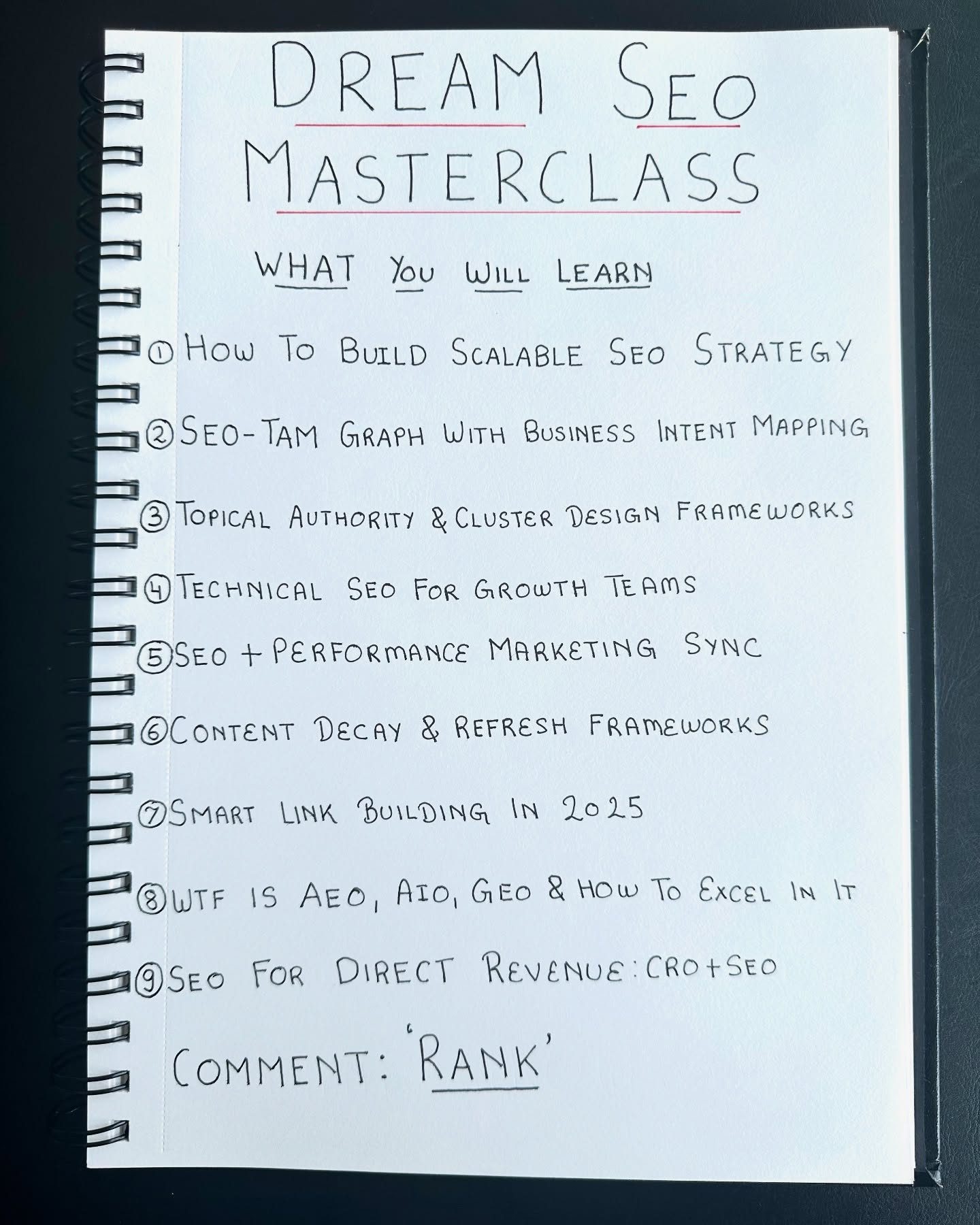
SEO Masterclass: Building a Scalable Framework for Success
SEO, or Search Engine Optimization, is a critical component of digital marketing. It encompasses a range of tactics and strategies designed to enhance a website’s visibility and ranking on search engines like Google. This makes it easier for potential visitors to find the site, thus increasing traffic and revenue. To achieve success in this competitive field, you need a robust framework that covers various aspects of SEO.
Why This Matters
In the dynamic world of digital marketing, staying ahead of the curve is crucial. A well-structured SEO strategy not only drives organic traffic but also builds credibility and authority in your niche. Whether you're a small business owner, a marketing professional, or an aspiring SEO specialist, understanding and implementing a comprehensive SEO framework can significantly impact your success.
For instance, topical authority and cluster design frameworks are essential for creating content that ranks well and attracts a consistent flow of visitors. Technical SEO ensures that your website is optimized for search engines, while performance marketing sync integrates SEO with other marketing efforts for a holistic approach. Link building, though challenging in 2025, remains a cornerstone of SEO strategies, and understanding content decay can help you refresh and maintain the relevance of your content over time.
Understanding the SEO Masterclass Framework
Building a Scalable SEO Strategy
A scalable SEO strategy is one that can grow with your business without requiring a proportional increase in resources. This involves creating a flexible plan that can adapt to changes in algorithms, market trends, and business goals. The first step is to conduct a thorough SEO audit to identify areas for improvement. This includes analyzing your website's structure, content, and keyword performance.
SEO-TAM Graph with Business Intent Mapping
The SEO-TAM (Total Addressable Market) graph is a powerful tool for visualizing the potential market for your SEO efforts. It helps in understanding the size of the market and the competitive landscape. Business intent mapping, on the other hand, involves aligning your SEO strategy with the goals and motivations of your target audience. By understanding what your audience is looking for, you can create more relevant and valuable content that meets their needs.
Topical Authority and Cluster Design
Topical authority refers to the expertise and credibility a website has in a specific subject area. Building topical authority involves creating high-quality content that covers various aspects of your niche. Cluster design is a content strategy that organizes content around a central topic, with related subtopics branching out from it. This helps in creating a comprehensive resource that search engines can easily crawl and index, thus improving your website’s ranking.
Technical SEO for Growth Teams
Technical SEO focuses on the backend aspects of your website that affect its visibility and performance. This includes optimizing for mobile devices, improving site speed, and ensuring secure connections (HTTPS). For growth teams, technical SEO is crucial for maintaining a strong online presence and ensuring that all SEO efforts are supported by a solid technical foundation.
Syncing SEO with Performance Marketing
Performance marketing is a results-driven approach that focuses on measurable outcomes, such as clicks, conversions, and ROI. Syncing SEO with performance marketing involves integrating SEO strategies with other marketing channels, such as PPC (Pay-Per-Click) advertising and social media marketing. This holistic approach ensures that all marketing efforts are aligned and working together to achieve common goals.
Managing Content Decay
Content decay refers to the gradual decline in the performance of older content. Over time, content can become outdated, irrelevant, or less effective in driving traffic. To manage content decay, it’s important to regularly update and refresh your content. This involves reviewing older posts, updating the information, and optimizing for current SEO best practices. Refreshing content can help maintain its relevance and keep it ranking well in search results.
Smart Link Building in 2025
Link building remains a crucial aspect of SEO, but it has evolved significantly over the years. Smart link building in 2025 involves creating high-quality, relevant backlinks that add value to your website. This includes guest blogging, partnering with influencers, and leveraging social media to drive traffic and engagement. The key is to focus on quality over quantity, as search engines are increasingly sophisticated in detecting and penalizing low-quality links.
Understanding AEO, AIO, and GEO
AEO (Authoritative Entity Optimization), AIO (Artificial Intelligence Optimization), and GEO (Geographic Entity Optimization) are emerging trends in SEO that focus on optimizing for specific types of content and users. AEO aims to enhance the authority and credibility of a website in a specific niche, while AIO leverages AI to improve search rankings. GEO, on the other hand, focuses on optimizing for local searches and users in specific geographic locations.
SEO for Direct Revenue: CRO and SEO
Converting traffic into revenue is the ultimate goal of SEO. SEO for direct revenue involves optimizing your website to drive conversions, such as sales, sign-ups, or downloads. This includes implementing conversion rate optimization (CRO) strategies, such as A/B testing, improving site navigation, and creating compelling calls-to-action. By aligning SEO with CRO, you can create a seamless user experience that encourages visitors to take desired actions and generate revenue.
Practical Tips for SEO Success
- Conduct Regular SEO Audits: Regularly review your website’s performance and identify areas for improvement.
- Focus on Quality Content: Create high-quality, relevant content that meets the needs of your audience.
- Optimize for Mobile and Speed: Ensure your website is mobile-friendly and loads quickly.
- Leverage Social Media: Use social media to drive traffic and engagement to your website.
- Stay Updated with Algorithms: Keep track of changes in search engine algorithms and adapt your strategies accordingly.
- Implement CRO Strategies: Continuously test and optimize for conversions to maximize revenue.
Important Takeaways
- Comprehensive Approach: A successful SEO strategy requires a comprehensive approach that covers all aspects of SEO, from technical optimization to content creation and performance marketing.
- Adaptability: SEO is a dynamic field, and it’s essential to stay updated with the latest trends and best practices.
- User-Centric: Always prioritize the needs and preferences of your audience, as this will guide your content and optimization efforts.
- Integration: Integrate SEO with other marketing channels to create a holistic strategy that drives results.
- Continuous Improvement: Regularly review and update your SEO strategies to ensure they remain effective and relevant.
Conclusion
Mastering SEO is a journey that requires continuous learning and adaptation. By understanding and implementing a comprehensive SEO framework, you can enhance your website’s visibility, drive organic traffic, and achieve your business goals. Whether you’re a beginner or an experienced marketer, staying informed about the latest SEO trends and best practices is crucial for success in the competitive digital landscape.
Watch the Reel
Questions readers ask
What is an SEO framework and why is it important for digital marketing?
An SEO framework is a structured approach that outlines the key strategies and tactics to improve a website's search engine ranking. It's important for digital marketing because it provides a clear roadmap for enhancing visibility, driving organic traffic, and staying competitive in online search results.
How can I build topical authority in my niche?
Building topical authority involves creating comprehensive, high-quality content around specific themes or topics relevant to your niche. This includes conducting thorough keyword research, producing in-depth articles, and regularly updating your content to ensure it remains relevant and authoritative.
What are some key technical SEO strategies to consider?
Technical SEO strategies include optimizing site structure, improving page load speed, ensuring mobile-friendliness, and implementing structured data. Additionally, regular audits to fix broken links, optimize meta tags, and create an XML sitemap are essential for maintaining strong technical SEO.
How does performance marketing integrate with SEO?
Performance marketing and SEO work together to drive targeted traffic and conversions. Performance marketing focuses on paid strategies like PPC (Pay-Per-Click) and social media ads, while SEO focuses on organic traffic. By integrating these two, you can maximize your online presence and ensure consistent visibility across both organic and paid channels.
What is content decay and how can I prevent it?
Content decay refers to the gradual decline in a webpage's search engine ranking due to outdated or irrelevant information. To prevent it, regularly update your content with fresh information, monitor performance metrics, and refresh your SEO strategies to maintain relevance and authority.
What are the benefits of using a scalable SEO strategy?
A scalable SEO strategy allows you to efficiently manage and grow your website's search engine performance as your business expands. It involves implementing processes that can be easily adapted and expanded, such as automated SEO tools, standardized content creation, and systematic link-building campaigns. This ensures long-term success and sustainability in the competitive online landscape.
Recent articles
Fresh deep dives from the latest Reels we unpacked.




Comments
Be the first to comment.