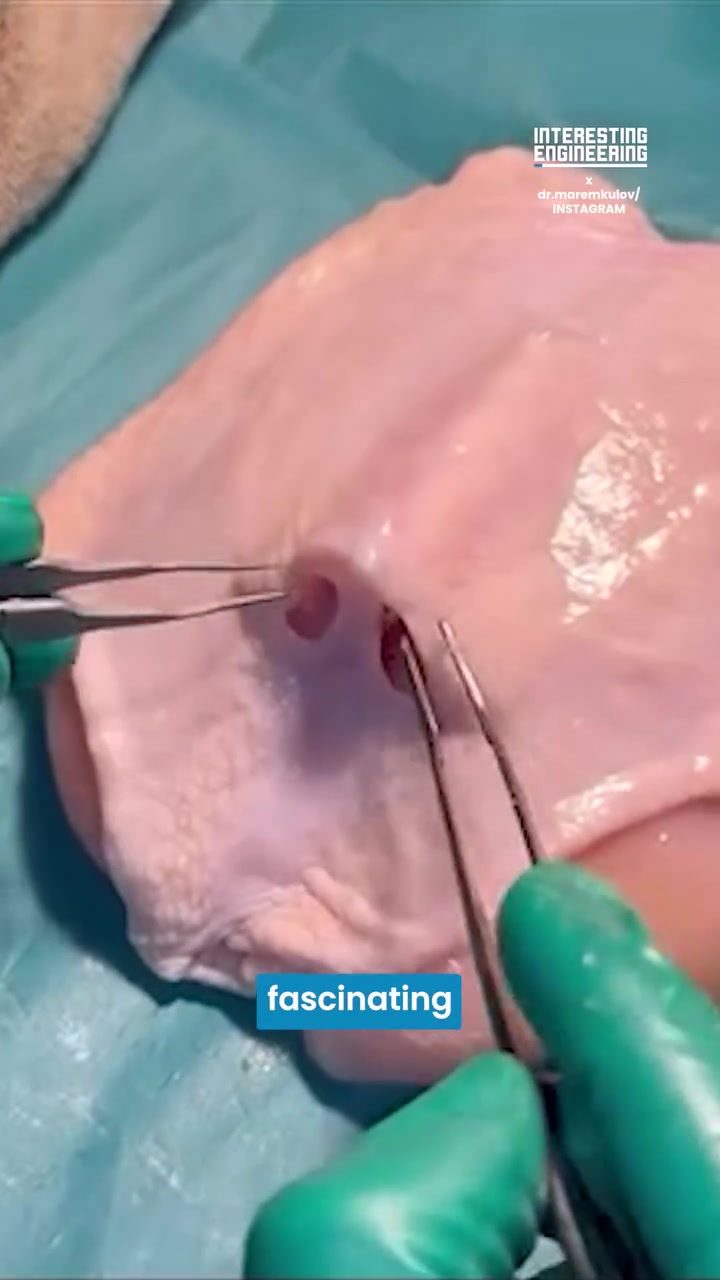
Chicken Rhinoplasty: A Unique Surgical Training Technique
The fascinating surgical training technique known as chicken rhinoplasty involves harvesting cartilage from a chicken breast and shaping it into a functional human nose structure. This approach, demonstrated by expert surgeons like Dr. Maremkulov, provides a realistic and effective way to practice nasal reconstruction techniques.
Why This Matters
Chicken rhinoplasty offers several advantages for surgical training. First, it provides a realistic biological model for practice, allowing surgeons to hone their techniques in a setting that closely mimics real-world conditions. This method is particularly valuable for practicing delicate procedures, like creating incisions, shaping cartilage grafts, and positioning them beneath the skin.
The Procedure and Its Benefits
The Basics of Chicken Rhinoplasty
Chicken rhinoplasty is a training technique that uses cartilage and soft tissue from a chicken breast to simulate human nasal reconstruction. The process is meticulous and requires a high level of precision. Surgeons create incisions, shape the cartilage grafts, and position them beneath the skin to mimic the structure of a human nose. This technique allows for a realistic simulation of human tissue, providing a valuable training tool for surgeons.
The Importance of Tissue Handling
One of the critical aspects of this surgical training method is the focus on tissue handling. Surgeons must carefully manipulate the cartilage and soft tissue to achieve the desired results. The precision required in this technique is crucial for successful rhinoplasty procedures, making it an essential skill for any surgeon performing nasal reconstruction.
Practical Applications
Chicken rhinoplasty is not just a theoretical exercise; it has practical applications in the field of rhinoplasty. By practicing on a chicken breast model, surgeons can improve their techniques and gain confidence in performing complex procedures. This method allows for repeated practice, enabling surgeons to refine their skills and achieve better outcomes in real-world scenarios.
Scaling Up to Human Surgery
The techniques honed through chicken rhinoplasty can be directly applied to human surgery. The delicate tissue manipulation and precise shaping of cartilage grafts are transferable skills that can enhance a surgeon's ability to perform nasal reconstruction on human patients. This training method ensures that surgeons are well-prepared to handle the intricacies of human tissue.
Practical Tips for Surgeons
Choosing the Right Model
When using chicken rhinoplasty for training, it’s essential to select a high-quality chicken breast. The cartilage and soft tissue should be fresh and well-preserved to provide a realistic simulation. This ensures that the practice session accurately mimics the conditions of human surgery, making the training more effective.
Precision in Incision
Creating incisions in the cartilage and soft tissue requires precision. Surgeons should focus on making clean, deliberate cuts that replicate the incisions made during human nasal reconstruction. This attention to detail is crucial for achieving the desired aesthetic and functional outcomes in rhinoplasty.
Shaping the Grafts
Shaping the cartilage grafts to fit the desired nasal structure is a critical step. Surgeons should take their time to carefully mold the grafts, ensuring they match the contours of a human nose. This precision is key to achieving a natural and harmonious result in nasal reconstruction.
Positioning the Grafts
Once the grafts are shaped, they must be positioned correctly beneath the skin. This step requires a deep understanding of nasal anatomy and the ability to visualize the final structure. Proper positioning ensures that the grafts integrate seamlessly with the surrounding tissue, creating a functional and aesthetically pleasing nose.
Important Takeaways
Chicken rhinoplasty is a valuable training technique for surgeons specializing in nasal reconstruction. It provides a realistic model for practicing delicate procedures and improving tissue handling skills. By mastering the techniques of chicken rhinoplasty, surgeons can enhance their ability to perform successful rhinoplasty procedures on human patients.
Benefits of Chicken Rhinoplasty
The primary benefit of chicken rhinoplasty is its realism. The chicken breast model closely mimics human tissue, allowing surgeons to practice in a setting that closely resembles actual surgery. This realism is invaluable for honing skills and gaining confidence in performing complex nasal reconstruction procedures.
Real-World Applications
The skills acquired through chicken rhinoplasty are directly applicable to human surgery. Surgeons who practice this technique can transfer their knowledge and experience to real-world scenarios, resulting in better outcomes for patients undergoing nasal reconstruction.
Continuous Improvement
Chicken rhinoplasty offers a platform for continuous improvement. Surgeons can repeatedly practice and refine their techniques, ensuring they are always at the top of their game. This ongoing practice is essential for maintaining high standards of care and achieving the best possible results for patients.
Conclusion
Chicken rhinoplasty is a groundbreaking training technique that offers a realistic and effective way to practice nasal reconstruction. By harvesting cartilage from a chicken breast and shaping it into a functional human nose structure, surgeons can improve their skills and gain confidence in performing complex procedures. This technique is a valuable tool for any surgeon specializing in rhinoplasty, providing a platform for continuous improvement and better patient outcomes.
Watch the Reel
Questions readers ask
What is chicken rhinoplasty and why is it used in surgical training?
Chicken rhinoplasty is a surgical training technique where a chicken breast is used to simulate human nasal reconstruction. It allows surgeons to practice cartilage harvesting, shaping, and positioning, providing a hands-on experience with a biological model that closely resembles real-world conditions.
How does chicken rhinoplasty help surgeons improve their skills in nasal reconstruction?
Chicken rhinoplasty provides a cost-effective, accessible, and ethical way for surgeons to practice delicate nasal reconstruction techniques such as incisions, cartilage shaping, and positioning. It allows them to refine their skills in a controlled environment before performing procedures on humans.
Who demonstrated the chicken rhinoplasty technique?
Dr. Maremkulov is one of the experts who has demonstrated the chicken rhinoplasty technique. His demonstrations show how to harvest, shape, and position cartilage from a chicken breast to create a functional nose structure, mimicking the process of human nasal reconstruction.
What are the advantages of using a chicken breast for surgical training?
The chicken breast provides a realistic biological model for practicing nasal reconstruction. It offers a similar tissue structure to handle as human tissue, especially for delicate procedures, and allows surgeons to experience the intricacies of cartilage manipulation in a controlled setting.
How does chicken rhinoplasty compare to other surgical training methods?
Chicken rhinoplasty offers a more affordable and accessible alternative to other surgical training methods, such as using cadavers or synthetic models. It provides a realistic experience with actual biological tissue, making it a valuable tool for practicing nasal reconstruction techniques.
Can chicken rhinoplasty be used to practice other types of ear cartilage harvesting?
While chicken rhinoplasty specifically focuses on nasal reconstruction, the principles of cartilage harvesting, shaping, and positioning can be applied to other procedures, including ear cartilage harvesting. However, the specific techniques and considerations for ear reconstruction may differ.
What specific techniques do surgeons practice during chicken rhinoplasty?
Surgeons practice a range of techniques, including creating precise incisions, harvesting and shaping cartilage grafts, and positioning them beneath simulated skin flaps to mimic the process of human nasal reconstruction.
Related deep dives
Similar reads based on topic and creator.



Recent articles
Fresh deep dives from the latest Reels we unpacked.




Comments
Be the first to comment.