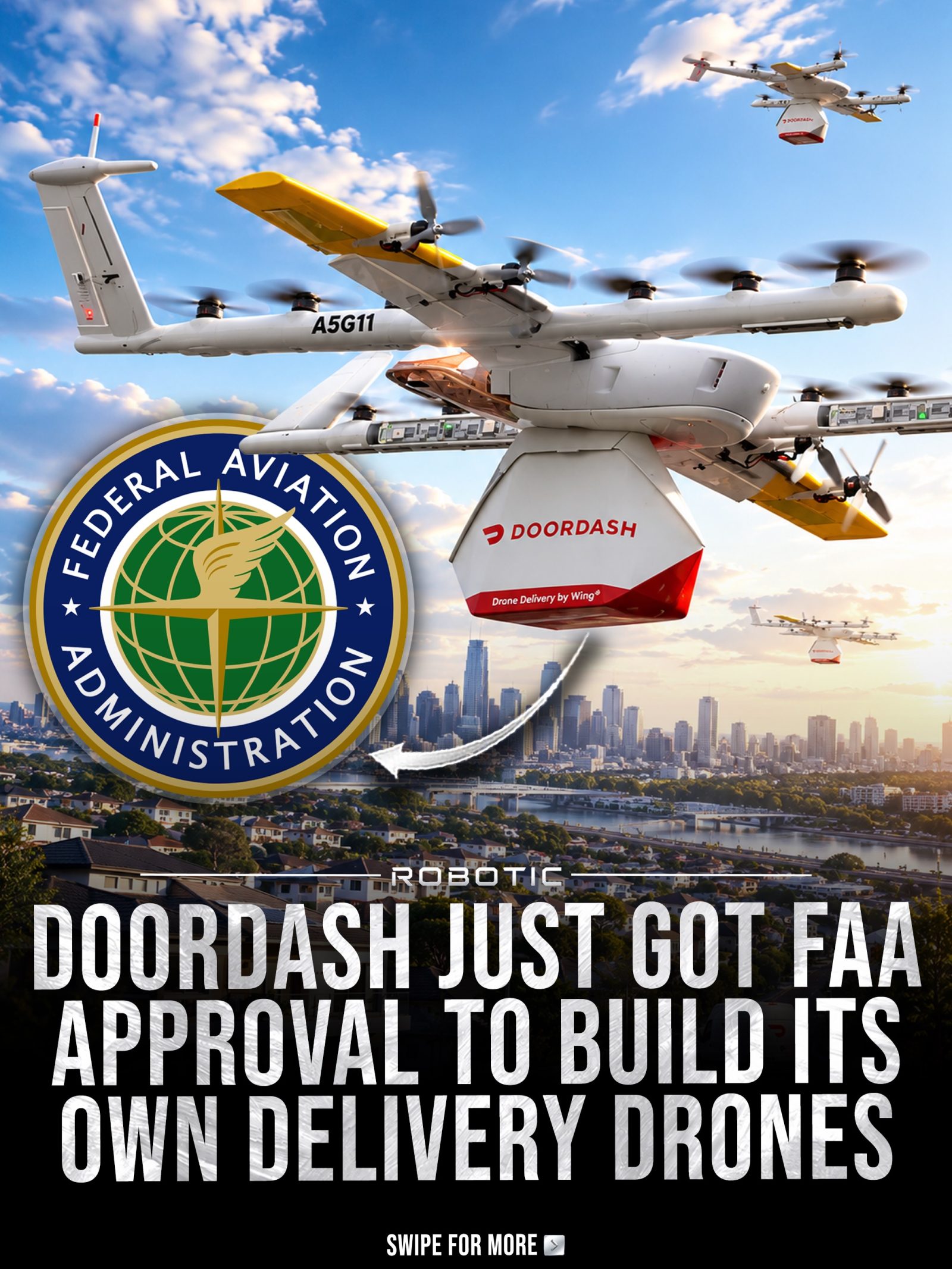
Drone Delivery: DoorDash's FAA Approval and its Implications
DoorDash has recently received Federal Aviation Administration (FAA) approval to build and operate its own delivery drones. This significant development marks a pivotal moment in the evolution of drone technology and its integration into everyday logistics. The approval allows DoorDash to conduct flights beyond the visual line of sight (BVLOS), enabling drones to travel longer distances without the need for constant visual contact with the pilot. This removal of a major operational barrier offers greater control over scaling autonomous deliveries.
Context: Why This Matters
The expansion of drone delivery services has the potential to revolutionize how goods are transported and delivered. With the ability to operate autonomously over longer distances, drones can significantly enhance the efficiency and speed of logistics operations. This is particularly important for companies like DoorDash, which traditionally specialize in food delivery but are now venturing into a broader range of delivery services.
The Role of the FAA
The FAA's approval is crucial for the advancement of drone technology. By granting DoorDash permission to build and operate its own delivery drones, the FAA has paved the way for other companies to follow suit. The approval also includes provisions for BVLOS flights, which are critical for expanding the reach and capability of drone delivery networks. This regulatory support is essential for the growth of autonomous delivery services, as it ensures that these operations are conducted safely and in compliance with aviation standards.
Main Discussion
Automating Logistics
Autonomous delivery drones can automate a significant portion of the logistics process, reducing the need for human intervention. This automation can lead to faster and more efficient delivery services, benefiting both businesses and consumers. DoorDash's approval to operate drones autonomously over longer distances means that deliveries can be made more swiftly and with fewer resources, which can lower costs and improve service quality.
Enhancing Delivery Capabilities
The capability to conduct BVLOS flights allows drones to cover larger areas and reach remote locations more easily. This is particularly advantageous for rural or hard-to-reach areas where traditional delivery methods may be less efficient. By expanding its drone delivery network, DoorDash can offer a more comprehensive service, ensuring that customers in all regions have access to timely and reliable deliveries.
Scaling Autonomous Deliveries
The FAA's approval removes key operating limits that previously hindered the scalability of drone delivery services. With greater control over their operations, companies like DoorDash can scale their drone fleets more effectively. This ability to scale is essential for meeting the growing demand for fast and efficient delivery services, as well as for integrating drone technology into other areas of logistics and supply chain management.
Practical Tips
Understanding BVLOS Operations
For those interested in drone delivery, understanding BVLOS operations is crucial. This involves familiarizing yourself with the regulations and technologies that enable drones to fly beyond the visual line of sight. Knowledge of BVLOS operations can help you better appreciate the potential of drone delivery services and their impact on logistics.
Staying Updated with Regulations
The regulatory landscape for drone operations is constantly evolving. Staying informed about the latest developments and approvals can help you navigate the complexities of drone delivery. Keeping up with FAA regulations and other relevant guidelines can ensure that your operations remain compliant and efficient.
Exploring Autonomous Delivery Solutions
If you are considering integrating autonomous delivery solutions into your business, it's important to explore the various technologies and services available. Understanding the capabilities and limitations of different drone models can help you make informed decisions about which solutions best meet your needs.
Important Takeaways
- FAA Approval for DoorDash: DoorDash's FAA approval to build and operate its own delivery drones marks a significant step forward in drone technology and logistics.
- BVLOS Flights: The approval for BVLOS flights allows drones to travel longer distances autonomously, enhancing their delivery capabilities.
- Scaling Autonomous Deliveries: The removal of key operating limits enables companies like DoorDash to scale their drone delivery networks more effectively.
- Regulatory Support: The FAA's support for drone operations is crucial for the growth of autonomous delivery services, ensuring safety and compliance.
Conclusion
DoorDash's FAA approval to build and operate its own delivery drones represents a major breakthrough in the field of logistics and delivery services. With the ability to conduct BVLOS flights and automate a significant portion of the delivery process, drones are poised to become an integral part of modern logistics. As regulations continue to evolve, the adoption of autonomous delivery services is likely to accelerate, making faster and more efficient logistics a larger part of everyday commerce.
Watch the Reel
Questions readers ask
What does FAA approval mean for DoorDash's drone delivery services?
FAA approval allows DoorDash to build and operate its own drones and conduct flights beyond the visual line of sight. This means drones can travel longer distances without constant visual contact with a pilot, enabling faster and more efficient deliveries.
How does FAA approval help drone delivery efficiency?
By allowing flights beyond visual line of sight, FAA approval enhances drone delivery efficiency. It removes the need for constant visual contact, enabling faster and more extensive deliveries.
What are the implications of DoorDash building its own drones?
Building its own drones gives DoorDash greater control over the design, operation, and scaling of autonomous deliveries. This can lead to more tailored and efficient delivery solutions.
What is drone delivery beyond visual line of sight?
Drone delivery beyond visual line of sight (BVLOS) refers to drone flights that do not require constant visual contact with the pilot. This allows drones to travel longer distances and cover more ground, which could make drone delivery services more accessible.
How does DoorDash's FAA approval impact drone technology?
DoorDash's FAA approval represents a significant advancement in drone technology by allowing for BVLOS flights. It shows a step forward in the integration of drones into everyday logistics and delivery services.
What are the benefits of DoorDash expanding its drone delivery services?
Expanding drone delivery services can make deliveries faster and more accessible. It allows for broader reach and more efficient operations, potentially transforming how goods are transported and delivered.
What are the potential benefits of autonomous drone delivery?
Autonomous drone delivery can provide faster and more efficient transportation of goods. This could lead to quicker delivery times, reduced operational costs, and more reliable service.
Related deep dives
Similar reads based on topic and creator.
Recent articles
Fresh deep dives from the latest Reels we unpacked.




Comments
Be the first to comment.