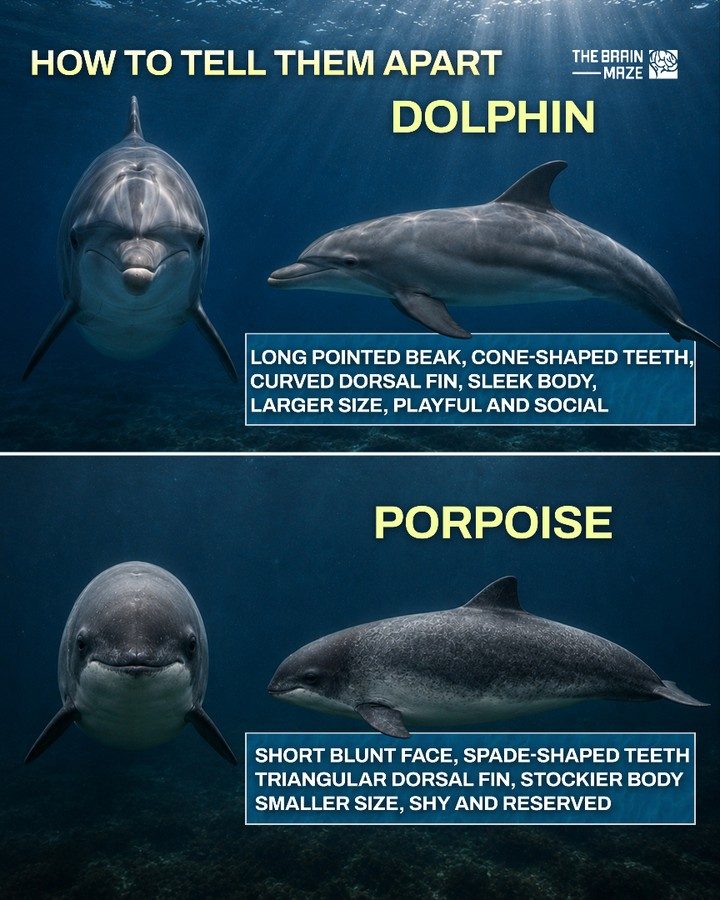
Distinguishing Features: Dolphins and Porpoises
Dolphins and porpoises are often mistaken for each other due to their similar aquatic habitats and sleek bodies. However, these marine mammals have several distinct differences that set them apart. Understanding these differences can enhance your appreciation for these fascinating creatures and their unique characteristics.
Why This Matters
Knowing how to differentiate between dolphins and porpoises is not just about satisfying curiosity; it also helps in conservation efforts, marine biology research, and even in activities like whale watching. Each species has its own ecological role and behavioral patterns, making accurate identification crucial for understanding and protecting marine ecosystems.
Main Discussion
Physical Characteristics
The most noticeable differences between dolphins and porpoises lie in their physical features.
Beaks and Teeth
Dolphins have long, pointed beaks, while porpoises have short, blunt faces. This difference is one of the easiest ways to tell them apart. Additionally, dolphins have cone-shaped teeth, whereas porpoises have spade-shaped teeth. These differences in dental structure reflect their distinct feeding habits and prey preferences.
Body Shape and Fins
Dolphins are known for their sleek, streamlined bodies, which allow them to swim swiftly and gracefully. Their dorsal fins are curved, adding to their aerodynamic profile. In contrast, porpoises have stockier bodies and triangular dorsal fins. These differences in body shape and fin structure are not just aesthetic; they also affect how each species moves through the water.
Size and Behavior
Dolphins are generally larger than porpoises. They are highly social animals, often traveling in large pods. This social structure is one of the reasons dolphins are known for their playful and acrobatic behaviors, such as jumping out of the water and riding waves. Porpoises, on the other hand, are typically smaller and more reserved. They tend to avoid human interaction and are less likely to engage in acrobatic displays.
Social and Behavioral Differences
The social and behavioral differences between dolphins and porpoises are as pronounced as their physical distinctions.
Social Structure
Dolphins are renowned for their complex social structures and strong bonds within their pods. They engage in various forms of communication, including clicks, whistles, and body movements. This social behavior is believed to be a key factor in their intelligence and problem-solving abilities. Porpoises, while also social, are generally more solitary and less vocal. They are often seen in smaller groups and prefer to keep to themselves, making them less conspicuous in the wild.
Acrobatics and Playfulness
Dolphins are famous for their acrobatic displays and playful behavior. They often leap out of the water, perform spins, and even engage in games with each other. This playfulness is not just for fun; it also serves important functions like strengthening social bonds and practicing hunting techniques. Porpoises, while they do jump, are less acrobatic and more cautious. Their jumps are usually lower and less frequent, reflecting their more reserved nature.
Practical Tips for Identification
Identifying dolphins and porpoises in the wild can be a rewarding experience. Here are some practical tips to help you distinguish between the two:
Observe from a Distance
When observing these marine mammals, it's important to maintain a respectful distance. Use binoculars or a telescope for a closer look without disturbing them. This is especially important for porpoises, which are more shy and less tolerant of human presence.
Look for Key Features
Focus on the key features mentioned earlier. The shape of the beak, the structure of the teeth (if visible), and the shape of the dorsal fin can all provide clues. Dolphins' long beaks, curved fins, and acrobatic behavior are distinct, as are porpoises' blunt faces, triangular fins, and more cautious demeanor.
Listen for Sounds
Dolphins are known for their vocalizations, which can sometimes be heard above water. Porpoises, while also vocal, are quieter and less expressive. Listening for these sounds can provide additional context for identification.
Note Social Behavior
Observe the behavior of the animals. Dolphins are usually found in larger groups and are more interactive, while porpoises are often seen in smaller groups and are less vocal. These behavioral differences are key indicators of the species.
Important Takeaways
Understanding the differences between dolphins and porpoises can enhance your appreciation for marine life. Here are some key takeaways:
- Physical Features: Dolphins have long beaks, cone-shaped teeth, and curved dorsal fins, while porpoises have blunt faces, spade-shaped teeth, and triangular dorsal fins.
- Body Shape and Size: Dolphins are sleek and larger, while porpoises are stockier and smaller.
- Social Behavior: Dolphins are highly social and playful, often traveling in large pods, whereas porpoises are more solitary and reserved.
- Identification Tips: Use binoculars for a closer look, observe key physical features, listen for vocalizations, and note social behavior.
Conclusion
Dolphins and porpoises, while often confused, have distinct characteristics that make them unique. From their physical features to their social behaviors, each species has its own story to tell. By understanding these differences, you can better appreciate and protect these remarkable marine mammals. Whether you're a marine biology enthusiast, a conservationist, or just someone who enjoys watching these creatures in their natural habitat, knowing how to tell dolphins and porpoises apart is a valuable skill.
Watch the Reel
Questions readers ask
What are the key physical differences between dolphins and porpoises?
Dolphins are generally larger and have longer, more pointed beaks compared to porpoises. Dolphins also have curved dorsal fins, while porpoises have triangular, more upright fins. Additionally, dolphins have conical teeth, whereas porpoises have flat, spade-shaped teeth.
How can I identify a dolphin by its dorsal fin?
Dolphins have a distinctive curved or hooked dorsal fin that is typically taller and more pronounced. This fin shape helps dolphins move swiftly and maneuver through the water, making it a key identifier.
What is the difference in body shape between dolphins and porpoises?
Dolphins have a more streamlined and slender body shape, which is well-suited for speed and agility. Porpoises, on the other hand, have a stockier and more robust build, which can make them appear chunkier and less slender.
Why is it important to distinguish between dolphins and porpoises in marine biology research?
Accurate identification of dolphins and porpoises is crucial for studies on marine behavior, population dynamics, and conservation efforts. Each species has unique behaviors and ecological roles that researchers need to understand to protect marine environments.
Can the teeth structure of dolphins and porpoises be used to differentiate between them?
Yes, the structure of their teeth is a key difference. Dolphins have conical, pointed teeth, while porpoises have flat, spade-shaped teeth. This difference in dental structure is a significant indicator for distinguishing between the two species.
What are the differences in face shape between dolphins and porpoises?
Dolphins typically have a more elongated and pointed beak, which can be very distinct. In contrast, porpoises have a blunt, rounded face, making it easier to distinguish them from dolphins when seen up close.
How do the behaviors of dolphins and porpoises differ, and how can this help in identification?
Dolphins are known for their acrobatic behaviors, such as leaping out of the water and riding waves. Porpoises, however, are less showy and tend to surface more discreetly, often appearing as a small, triangular fin breaking the water's surface, this adds to their identification by behavior.
Related deep dives
Similar reads based on topic and creator.




Recent articles
Fresh deep dives from the latest Reels we unpacked.




Comments
Be the first to comment.