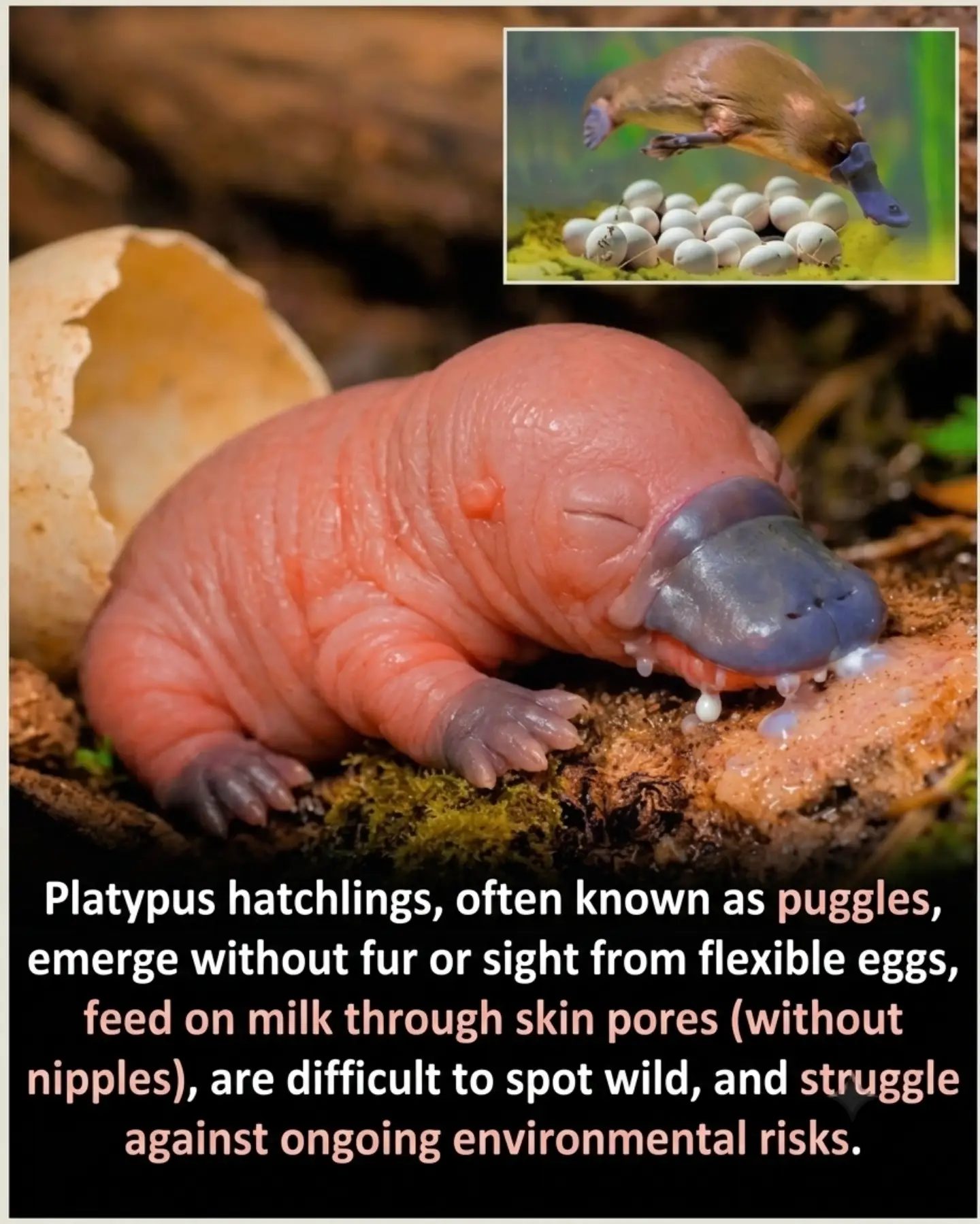
Platypus Hatchlings
Platypus hatchlings, affectionately known as puggles, are fascinating creatures that emerge from leathery eggs without fur or sight. These tiny mammals face unique challenges and exhibit intriguing survival traits. As they grow, they navigate an environment fraught with dangers and rely on their mothers in a way that sets them apart from other mammals.
Context / Why This Matters
Understanding the lifecycle and survival strategies of platypus hatchlings is crucial for appreciating the complexity of nature and the challenges these creatures face. As their habitats come under increasing threat from climate change and habitat loss, knowing more about these creatures can help in conservation efforts.
Main Discussion
Unique Birth and Development
Puggles emerge from flexible, leathery eggs. Unlike mammals that produce fur-covered young, puggles are born hairless and blind. This vulnerability requires them to stay close to their mothers for protection and sustenance.
Feeding Mechanism
One of the most remarkable aspects of puggles is their feeding mechanism. Mother platypuses do not have nipples; instead, they secrete milk through specialized skin pores. The puggles lap up this milk, a process that ensures they receive the necessary nutrients for growth without the need for nipples.
Evasive Behavior
Puggles are extremely elusive, staying hidden away in riverbank burrows for months. This behavior makes them nearly impossible to spot in the wild. Their habit of staying close to their mothers and living in burrows helps them avoid predators and other environmental threats.
Environmental Challenges
The freshwater habitats of platypuses are under significant threat from climate change and habitat loss. These changes put the survival of puggles at risk, highlighting the importance of conservation efforts. Climate change can alter water levels, temperatures, and the availability of food, making it harder for puggles to thrive.
Habitat and Behavior
Platypuses typically live in freshwater environments, such as rivers and streams. They are well-adapted to aquatic life, with webbed feet and a beak that helps them forage for food. However, their burrows and nesting sites are often near the water, making them vulnerable to environmental changes, such as floods and droughts.
Practical Tips
Supporting Conservation Efforts
One way to support platypus conservation is by promoting environmental policies that protect freshwater habitats. This can include advocating for clean water initiatives and reducing pollution in rivers and streams.
Public Awareness
Raising awareness about the plight of platypuses and their hatchlings can inspire more people to take action. Sharing information through social media, educational programs, and community events can help spread the message and encourage more people to support conservation efforts.
Important Takeaways
Puggles are a testament to the wonders of nature, exhibiting unique survival traits and facing significant challenges in their early development. Mother platypuses play a crucial role in providing the necessary protection and sustenance for their young. Understanding the intricacies of their lifecycle and the threats they face can help in developing effective conservation strategies to ensure the survival of these remarkable creatures.
Conclusion
Platypus hatchlings, or puggles, are a marvel of nature, showcasing unique adaptations and facing significant challenges in their early development. From their hairless and blind emergence from eggs to their distinctive feeding mechanism, puggles are a testament to the complexities of the natural world. As their habitats come under increasing threat, it is crucial to support conservation efforts and promote public awareness to ensure the survival of these fascinating creatures.
Watch the Reel
Questions readers ask
How do platypus hatchlings, or puggles, differ from other mammals at birth?
Platypus hatchlings, or puggles, differ from other mammals because they hatch from eggs, unlike the live births of the majority of other mammals. Also, they emerge from the egg hairless and blind and are very tiny, weighing only about 0.75 grams to 1.13 grams. They are also unique in their reliance on specific skin pores that help them absorb milk. Their mother's milk is secreted from these pores, allowing the mother platypus to maintain a constant flow of nourishment for her young.
What are the primary challenges faced by platypus hatchlings in the wild?
Puggles face numerous challenges in the wild, including the risk of predation, environmental hazards, and the need to adapt to their aquatic habitat. Because they are born blind and hairless, their survival is heavily dependent on their mother's care and protection. Additionally, they must learn to forage for food and navigate their surroundings, which can be particularly challenging for such small and vulnerable creatures.
How do platypus mothers care for their hatchlings?
Platypus mothers provide care through a combination of physical protection and nourishment. They maintain a constant flow of milk for their young, and the baby platypuses consume the milk by licking it from the mother's skin. The mother platypus also constructs a burrow for the puggles, and these burrows are used for protection and are essential for the survival of the hatchlings. This nurturing system supports the puggles' growth and development until they are mature enough to venture out on their own.
What role does habitat play in the survival of platypus hatchlings?
Habitat plays a crucial role in the survival of platypus hatchlings. They require clean, freshwater environments with suitable burrowing sites and abundant food sources. Climate change and habitat loss pose significant threats to their survival, as these factors can destroy their natural habitats and disrupt the delicate balance of their ecosystems. Conservation efforts aimed at protecting and restoring platypus habitats are essential for ensuring the survival of these unique mammals.
Why is it important to understand the lifecycle of platypus hatchlings?
Understanding the lifecycle of platypus hatchlings is important for several reasons. It helps in appreciating the intricacies of nature and the unique survival strategies of these mammals. Additionally, it provides valuable insights for conservationists and scientists working to protect platypus populations. By knowing more about their development and the challenges they face, efforts to conserve their habitats and ensure their survival can be more informed and effective.
What makes the feeding habits of platypus hatchlings unique?
The feeding habits of platypus hatchlings are unique because they rely on their mother's milk, which is secreted through specialized skin pores rather than through nipples. This method of feeding ensures a constant supply of nourishment for the hatchlings. Also, as they transition to solid food, the young platypuses develop their own specialized feeding habits, such as using their sensitive bills to detect prey in the water. This combination of maternal care and independent feeding mechanisms is crucial for their development and survival.
How can conservation efforts help platypus hatchlings thrive?
Conservation efforts can help platypus hatchlings thrive by protecting and restoring their natural habitats, reducing pollution in waterways, and mitigating the effects of climate change. Additionally, monitoring platypus populations and studying their behavior can provide important data for conservation strategies which can then be used to safeguard the species. By addressing the environmental challenges they face, these efforts can ensure that platypus hatchlings have a better chance of survival and growth.
Related deep dives
Similar reads based on topic and creator.




Recent articles
Fresh deep dives from the latest Reels we unpacked.




Comments
Be the first to comment.