Exploring the Anatomy of a Tortoise
The tortoise's anatomy is a marvel of evolutionary design, tailored for defense and a terrestrial lifestyle. Understanding the tortoise's structure provides insights into how these remarkable creatures have thrived on land for millions of years.
Context / Why This Matters
The tortoise is a fascinating study in nature's design. Its body plan is expertly crafted to withstand the pressures of terrestrial life, from predators to environmental challenges. By delving into the intricate details of tortoise anatomy, we can appreciate the adaptations that make these reptiles so resilient and successful.
Main Discussion
External Anatomy of a Tortoise
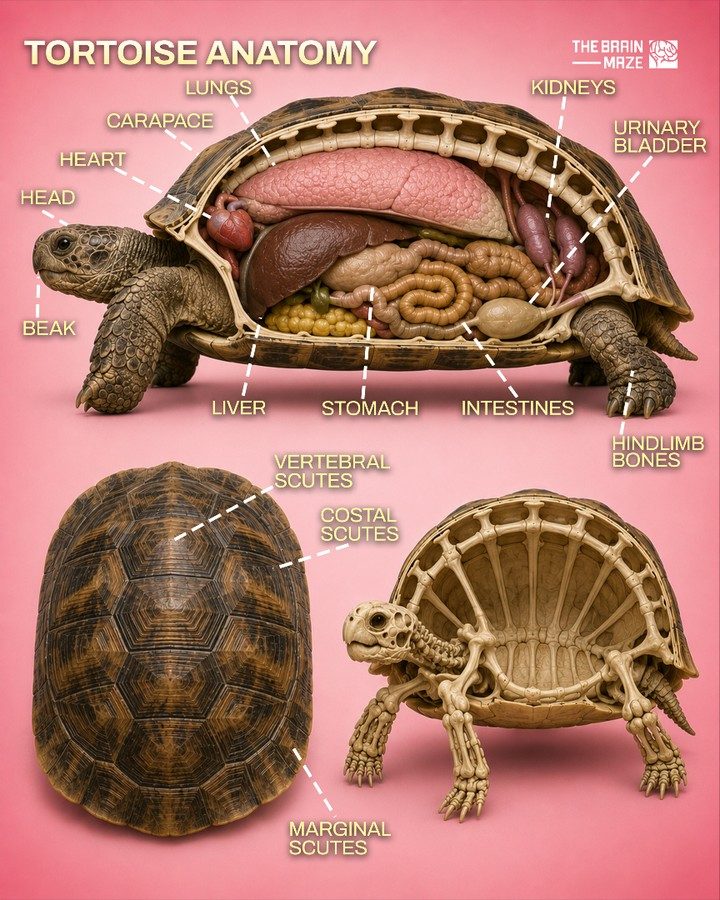
The most striking feature of a tortoise is its shell, which is composed of two main parts: the carapace and the plastron. The carapace forms the dorsal (upper) part of the shell and is typically domed. This dome shape helps to distribute weight evenly and provides a strong, protective barrier. The plastron, on the other hand, protects the underside of the tortoise. Together, these structures create a robust frame that houses the tortoise's internal organs. The ribs and spine are fused to the shell, further reinforcing its strength and rigidity.
The shell is not just a static structure; it is composed of various types of scutes, which are the horny scales that cover the shell. Three main types of scutes can be identified: vertebral, costal, and marginal. Vertebral scutes are located along the midline of the shell, while costal scutes are found on the sides. Marginal scutes line the edges of the shell. These scutes play a crucial role in protecting the tortoise from predators and environmental hazards.
Internal Anatomy of a Tortoise
Inside the shell, the tortoise's internal organs are well-protected. The tortoise has large lungs that are essential for efficient gas exchange, allowing it to breathe effectively. The three-chambered heart pumps blood through the body, ensuring that all organs receive the necessary oxygen and nutrients. The liver, stomach, intestines, kidneys, bladder, and cloaca are all vital for the tortoise's metabolic processes and waste management.
The liver plays a key role in digestion and detoxification, while the stomach and intestines are responsible for breaking down and absorbing nutrients from food.
The kidneys filter waste products from the blood, producing urine that is stored in the bladder. The cloaca is a multi-functional opening that serves as the exit for both the digestive and urinary systems, as well as the reproductive system.
The tortoise's limbs, claws, beak, and flexible neck are all adapted for its terrestrial lifestyle. The strong limbs and claws enable the tortoise to walk, dig, and move through its environment with ease. The beak is used for feeding, helping the tortoise to grasp and manipulate food. The flexible neck allows the tortoise to reach food and water sources effectively, despite the constraints of its shell.
Practical Tips
If you are interested in observing or caring for tortoises, understanding their anatomy can be highly beneficial. Here are some practical tips:
- Proper Handling: When handling a tortoise, always support its shell to avoid injury. Avoid picking it up by the tail or legs, as this can cause stress and potential harm.
- Hygiene: Keep the tortoise's environment clean to prevent bacterial and fungal infections. Regularly clean the enclosure and provide fresh water.
- Diet: Offer a balanced diet that includes a variety of foods, such as leafy greens, vegetables, and occasional fruits. Avoid overfeeding to prevent obesity, which can strain the tortoise's internal organs.
Important Takeaways
- The tortoise's shell, composed of the carapace and plastron, provides robust protection and structural support.
- The shell is made up of different types of scutes, each playing a role in defense and structural integrity.
- Internal organs, such as the lungs, heart, liver, and kidneys, are well-protected within the shell and function efficiently to support the tortoise's metabolic needs.
- Strong limbs, claws, a beak, and a flexible neck are essential for the tortoise's movement, feeding, and survival in its environment.
Conclusion
The tortoise's anatomy is a testament to the wonders of natural adaptation. From its protective shell to its efficient internal organs, every aspect of a tortoise's design is optimized for survival on land. By understanding the intricate details of a tortoise's anatomy, we can better appreciate these remarkable creatures and the unique challenges they face in their natural habitats.
Watch the Reel
Questions readers ask
What are the primary components of a tortoise's shell?
A tortoise's shell is composed of two main parts: the carapace, which is the upper shell, and the plastron, the lower shell. The shell is formed from roughly 60 different bones, including the tortoise's vertebrae, ribs, and portions of the pelvis, all fused together for strength and protection.
How do a tortoise's scutes contribute to its survival?
Scutes are the horny, plate-like structures that cover the tortoise's shell. They are made of keratin and provide additional protection against predators and environmental hazards. Scutes also help regulate the tortoise's body temperature and prevent water loss, enhancing its overall resilience.
What makes the tortoise's spine and ribs unique?
The tortoise's spine and ribs are uniquely fused to the shell, forming a strong, protective internal structure. Unlike many other vertebrates, the tortoise cannot lift its head and limbs without moving the entire shell. This fusion provides exceptional strength and defense against predators.
How has the tortoise's respiratory system adapted to its anatomy?
The tortoise's respiratory system is designed to work efficiently within the constraints of its shell. Tortoises have a pair of lungs located on the inside of the shell, with the trachea and bronchi situated in a way that allows for oxygen exchange while the tortoise is inside its shell. Their slow metabolism helps in conserving energy, which is crucial for their survival in harsh environments.
What role do the beak and hindlimbs play in a tortoise's survival?
The tortoise's beak is a powerful tool for biting and tearing food, as well as for defense. The hindlimbs are sturdy and well-adapted for digging and burrowing, which helps tortoises create shelters and escape predators. These adaptations contribute to their overall resilience and success in a terrestrial environment.
How does a tortoise's digestive system support its lifestyle?
A tortoise's digestive system is well-suited to its herbivorous diet. Their long, muscular intestines allow for efficient digestion of plant material, which is often high in fiber. This adaptation ensures that tortoises can extract maximum nutrients from their food, which is essential for their survival in environments where food may be scarce.
What are some of the most remarkable survival adaptations of a tortoise?
Tortoises have evolved several remarkable adaptations for survival, including their strong, protective shell, which provides defense against predators. Their ability to retract their head, limbs, and tail into the shell provides an additional layer of protection. Moreover, their slow metabolism and efficient water conservation mechanisms help them endure harsh environmental conditions.
Related deep dives
Similar reads based on topic and creator.




Recent articles
Fresh deep dives from the latest Reels we unpacked.




Comments
Be the first to comment.