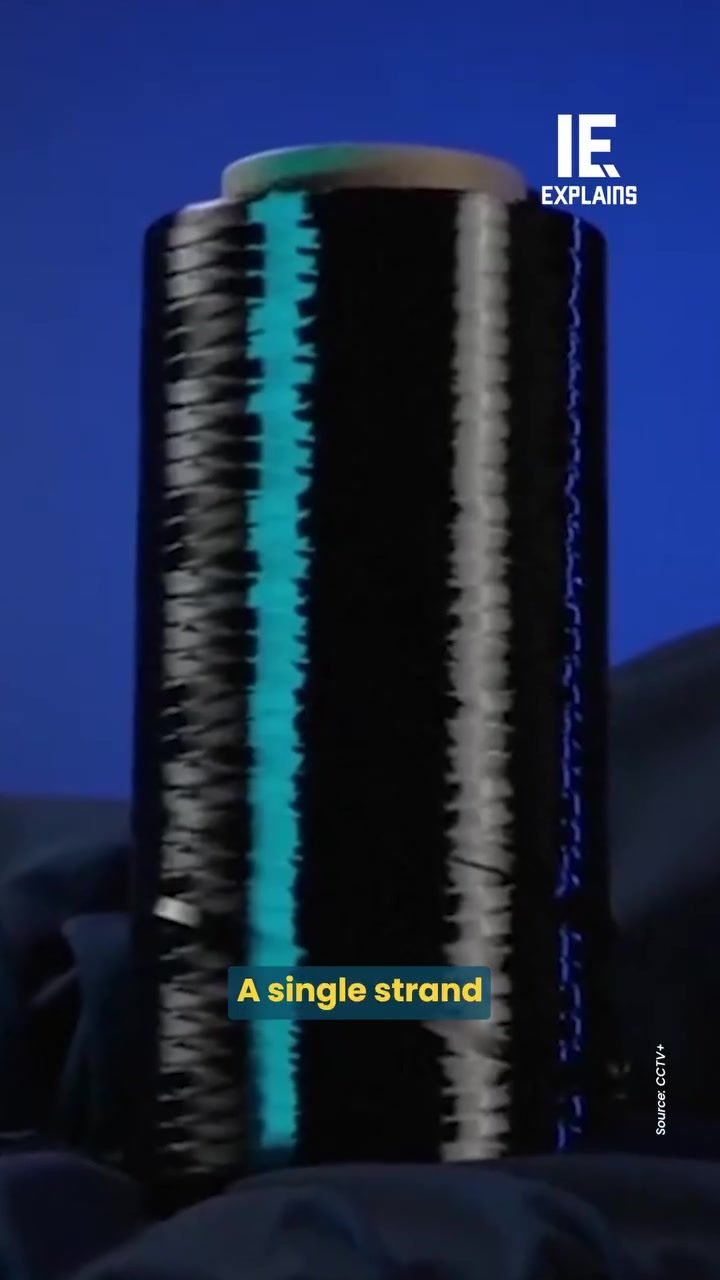
Advanced Material Production: T1000 Grade Carbon Fibre
The production of T1000-grade carbon fiber, now in mass production at Sino-Pec Shanghai Petrochemical, marks a significant breakthrough in material science. This advanced material, dubbed "black gold" by Chinese media, offers unparalleled strength and versatility, making it a game-changer in various industries.
Context: Why this matters
Sino-Pec Shanghai Petrochemical has achieved a major milestone with the mass production of T1000-grade high-performance carbon fiber. This material, produced using an in-house wet-spinning process, is set to revolutionize multiple sectors, from aerospace to robotics. The implications of this breakthrough are vast, as it promises to enhance product durability, reduce costs, and open new avenues for technological advancements.
The Science Behind the Strength
The strength of this remarkable material lies in its microscopic structure. Each bundle of T1000-grade carbon fiber consists of 12,000 microfilaments, each thinner than a human hair at just five micrometers wide. This finely spun material boasts a tensile strength above 6.5 gigapascals, which translates to the impressive ability to pull a 10-ton truck with ease.
Comparative Advantages
When compared to traditional materials, such as steel, the advantage of T1000-grade carbon fiber is evident. It weighs less than a quarter of steel's density while being seven to nine times stronger. This lightness, coupled with its robustness, makes it an ideal choice for applications where weight and durability are critical.
Additionally, this carbon fiber is highly resistant to corrosion, a significant advantage over metal alloys, which are prone to rust and degradation. This resistance to corrosion ensures a longer lifespan for products made from this material, reducing maintenance costs and extending their usability.
Economic and Industrial Impact
The economic benefits of this breakthrough are substantial. T1000-grade carbon fiber is around 20 to 30% cheaper than equivalent imports designed for aerospace, the low-altitude economy, and next-gen robotics. This cost-effectiveness, combined with its superior performance, makes it an attractive option for manufacturers across various industries.
Environmental Considerations
The environmental impact of this material cannot be overlooked. Given its long lifespan and resistance to corrosion, products made from T1000-grade carbon fiber will require less frequent replacement, reducing waste and the need for raw materials. This aligns with the global push toward sustainability and eco-friendly technologies.
Practical Tips for Utilizing T1000 Grade Carbon Fibre
Applications in Aerospace
For aerospace engineers, the use of T1000-grade carbon fiber can significantly enhance aircraft performance. Its lightweight and robust properties can reduce the overall weight of aircraft structures, leading to improved fuel efficiency and increased payload capacity. Additionally, the material's resistance to corrosion ensures that aircraft components can withstand harsh environmental conditions, enhancing safety and reliability.
Industrial and Manufacturing Uses
In industrial and manufacturing sectors, T1000-grade carbon fiber can be utilized to create stronger, lighter machinery and equipment. This material's high strength-to-weight ratio makes it ideal for constructing durable tools and components that can withstand wear and tear, reducing the need for frequent repairs and replacements.
Next-Gen Robotics and Automation
In the field of robotics, the incorporation of T1000-grade carbon fiber can lead to the development of more agile and robust robots. Its lightweight nature allows for faster movement, while its strength ensures durability, making it an excellent choice for building robotic components that can operate efficiently in demanding environments.
Construction and Infrastructure
In construction and infrastructure, T1000-grade carbon fiber can be used to build stronger, more resilient structures. Its resistance to corrosion and high tensile strength make it suitable for reinforcing concrete and steel, enhancing the longevity and safety of bridges, buildings, and other infrastructure projects.
Automotive Industry
For the automotive industry, this advanced material offers the potential to create lighter, more fuel-efficient vehicles. By reducing the weight of vehicle components, such as chassis and body panels, manufacturers can improve fuel efficiency and performance, leading to more sustainable and cost-effective transportation solutions.
Advancements in Medical Technology
In medical technology, T1000-grade carbon fiber can be used to produce lighter, more durable medical devices and prosthetics. Its biocompatibility and resistance to corrosion make it an ideal material for creating implants and surgical tools that can withstand sterilization and long-term use, enhancing patient safety and care.
Important Takeaways
The mass production of T1000-grade carbon fiber at Sino-Pec Shanghai Petrochemical represents a significant leap forward in material science. Key takeaways from this breakthrough include:
- The development of a material with a tensile strength above 6.5 gigapascals, capable of pulling a 10-ton truck.
- A composite material that is seven to nine times stronger than steel, with a fraction of its weight.
- Enhanced corrosion resistance, ensuring longevity and durability.
- Cost-effective production, making it 20 to 30% cheaper than equivalent imports.
- Versatile applications across aerospace, robotics, construction, automotive, and medical industries.
Conclusion
The production of T1000-grade carbon fiber at Sino-Pec Shanghai Petrochemical signals a new era in material innovation. This advanced material, with its exceptional strength, lightness, and cost-effectiveness, is set to transform various industries by offering stronger, lighter, and more durable solutions. As the world continues to look for sustainable and efficient materials, T1000-grade carbon fiber stands out as a promising contender, poised to reshape the future of technology and engineering.
Watch the Reel
Questions readers ask
What makes T1000 carbon fibre considered China's 'black gold'?
T1000 carbon fibre is dubbed China's 'black gold' due to its exceptional strength and versatility, making it highly valuable across various industries. Its production, particularly in mass quantities, signifies a major advancement in material technology, driving innovation and economic growth.
Which industries are expected to benefit from the mass production of T1000 carbon fibre?
The mass production of T1000 carbon fibre is anticipated to significantly benefit industries such as aerospace and robotics. Its durability and strength will enhance product performance and longevity, while its cost-effectiveness will drive down manufacturing costs across these sectors.
What is the significance of the wet-spinning process used by Sino-Pec Shanghai Petrochemical?
Sino-Pec Shanghai Petrochemical uses an in-house wet-spinning process to produce T1000 carbon fibre. This process is crucial in achieving the high-quality and consistent performance of the material, making it suitable for the most demanding applications in various industries.
How will the mass production of T1000 carbon fibre impact the aerospace industry?
In the aerospace industry, T1000 carbon fibre can lead to the creation of lighter, stronger, and more durable components. This can result in improved fuel efficiency, reduced maintenance costs, and enhanced safety, making it a highly desirable material for aircraft manufacturing.
What are the potential applications of T1000 carbon fibre in the robotics industry?
The robotics industry can leverage T1000 carbon fibre for building lighter and more robust robotic components. This can lead to more agile and efficient robots, capable of performing complex tasks with improved precision and durability, ultimately pushing the boundaries of what robotics can achieve.
What advantages does T1000 carbon fibre offer over traditional materials?
T1000 carbon fibre offers several advantages over traditional materials, including superior strength-to-weight ratio, enhanced durability, and resistance to corrosion and fatigue. These properties make it an ideal choice for applications requiring high performance and longevity, such as in aerospace and robotics.
What role does Sino-Pec Shanghai Petrochemical play in the carbon fibre industry?
Sino-Pec Shanghai Petrochemical is a key player in the carbon fibre industry, having achieved a significant milestone with the mass production of T1000-grade high-performance carbon fibre. Their advancements in material science and production processes are set to drive innovation and competitiveness in the global market, positioning China as a leader in advanced carbon materials.
Related deep dives
Similar reads based on topic and creator.


Recent articles
Fresh deep dives from the latest Reels we unpacked.




Comments
Be the first to comment.