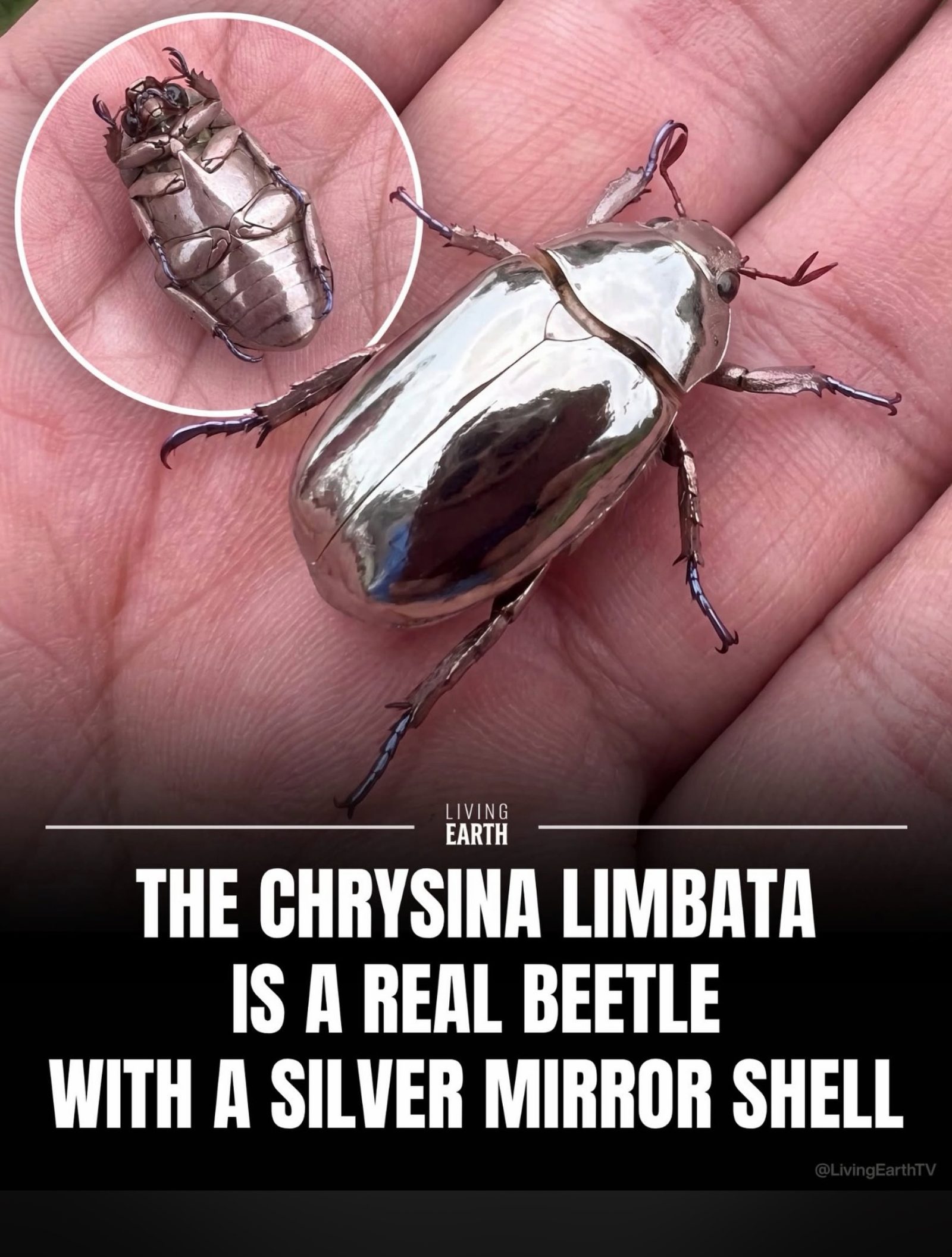
Silver Beetle: The Fascinating World of the Chrysina Limbata
The Chrysina limbata, or the silver beetle, is an extraordinary creature known for its striking appearance and remarkable survival adaptations. This beetle, which is a real species, possesses a unique exoskeleton that is not only highly reflective but also acts like a mirror, reflecting light and nearby shapes.
Context / Why this matters
The silver beetle is a fascinating example of how nature can develop unique solutions to the age-old problem of survival in the wild. The ability to blend into the environment by mirroring surroundings is a technique that has evolved to help these insects evade predators. Understanding such adaptations is crucial for appreciating the intricate balance of ecosystems and the ingenuity of natural selection.
Silver Mirror Shell
The Chrysina limbata is one of the most unusual insects in the world due to its highly reflective, silver-colored exoskeleton. This mirror-like shell is not just a visual marvel; it serves a critical function in the beetle's survival. The highly reflective surface can mirror light and nearby shapes, making the beetle's outline harder to recognize. This adaptive trait allows the beetle to blend into bright, shifting backgrounds, effectively camouflaging itself from predators. In nature, this metallic shine helps the beetle to remain inconspicuous and avoid detection, enhancing its chances of survival.
Adaptations of Silver Beetles
Camouflage and Defense
The Chrysina limbata's ability to reflect light and nearby shapes is a sophisticated form of camouflage. Unlike traditional camouflage, which relies on color and pattern matching to blend into the environment, the silver beetle's reflective shell uses a more dynamic approach. This adaptive trait is particularly effective in environments with bright, shifting backgrounds, such as forests with dappled sunlight. The beetle's reflective shell allows it to mimic its surroundings, making it almost invisible to predators. This adaptation is a testament to the beetle's evolutionary success and its ability to thrive in diverse environments.
Reflective Exoskeleton
The Chrysina limbata's exoskeleton is more than just a protective layer; it is a highly adapted structure designed for survival. The reflective properties of the exoskeleton are due to the unique arrangement of microstructures on its surface. These microstructures are capable of reflecting light in a way that mimics the surrounding environment, contributing to the beetle's stealthy presence.
The reflective exoskeleton also has a secondary benefit: it can act as a deterrent to predators. The unexpected mirror effect can startle and confuse potential threats, giving the beetle precious moments to escape. This combination of camouflage and defense makes the Chrysina limbata a formidable opponent for predators, showcasing the beetle's ingenious adaptation to its environment.
Practical Tips
While the Chrysina limbata is a fascinating subject for naturalists and entomologists, there are a few practical tips for those interested in observing these remarkable creatures:
Observation Tips
When trying to spot a Chrysina limbata, look for environments with bright, shifting backgrounds, such as forests with dappled sunlight. The beetle's reflective shell will mimic these surroundings, making it difficult to spot. However, with patience and a keen eye, one can observe this incredible adaptation in action. Avoid disturbing the beetle's habitat, as these creatures play a crucial role in their ecosystems by contributing to nutrient cycling and soil health.
Conservation Practices
The Chrysina limbata, like many other species, faces threats from habitat destruction and climate change. To support the conservation of these remarkable creatures, consider adopting sustainable practices that protect their habitats. Support organizations dedicated to preserving natural environments and raising awareness about the importance of biodiversity. Every effort counts in ensuring that future generations can appreciate the wonders of nature, including the silver beetle.
Important Takeaways
The Chrysina limbata, with its highly reflective, silver-colored exoskeleton, is a testament to the ingenuity of nature. This beetle's unique adaptations, such as its mirror-like shell and ability to blend into bright, shifting backgrounds, are not just fascinating; they are essential for its survival. Understanding such adaptations highlights the complex interplay between species and their environments, offering valuable insights into the natural world.
Conclusion
The silver beetle, or Chrysina limbata, is a marvel of nature with its highly reflective and mirror-like shell. This species showcases the remarkable adaptations that have evolved to help it survive in the wild. By blending into its surroundings and using its reflective shell as a deterrent, the silver beetle has developed a sophisticated defense mechanism that ensures its survival. For those interested in nature and its wonders, the Chrysina limbata is a fascinating subject that offers a glimpse into the intricate workings of the natural world.
Watch the Reel
Questions readers ask
How does the silver beetle's exoskeleton aid in its survival?
The silver beetle's exoskeleton is highly reflective, mirror-like, and acts as a unique camouflage mechanism. By reflecting light and nearby shapes, it allows the beetle to blend into its surroundings, making it nearly invisible to predators in bright, shifting environments.
What is the primary advantage of the Chrysina limbata beetle's mirror-like exoskeleton?
The primary advantage of the Chrysina limbata beetle's mirror-like exoskeleton is its exceptional camouflage. This adaptation enables the beetle to mimic its surroundings effectively, providing a significant survival benefit by helping it evade predators.
Can other beetles mimic the silver beetle's camouflage technique?
While other beetles may have unique adaptations, the silver beetle's mirror-like exoskeleton is a rare and specialized feature. Very few other beetles possess this exact ability to reflect light and nearby shapes to blend so effectively into their environment.
How does the silver beetle's reflective shell help it in its natural habitat?
The reflective shell of the silver beetle is crucial for its survival in its natural habitat. It allows the beetle to reflect and mimic the light and surroundings in its environment, making it nearly invisible to potential predators and enhancing its chances of survival.
What makes the Chrysina limbata beetle's shell so unique?
The Chrysina limbata beetle's shell is unique due to its highly reflective and mirror-like properties. Unlike typical beetle shells, it can reflect light and nearby shapes, creating a seamless blend with its surroundings and providing exceptional camouflage.
Does the silver beetle's camouflage work in all environments?
The silver beetle's camouflage is most effective in bright, shifting environments where its reflective exoskeleton can best mimic the surroundings. While it is exceptionally well-adapted for such conditions, its effectiveness may vary in darker or less varied environments.
Related deep dives
Similar reads based on topic and creator.




Recent articles
Fresh deep dives from the latest Reels we unpacked.




Comments
Be the first to comment.