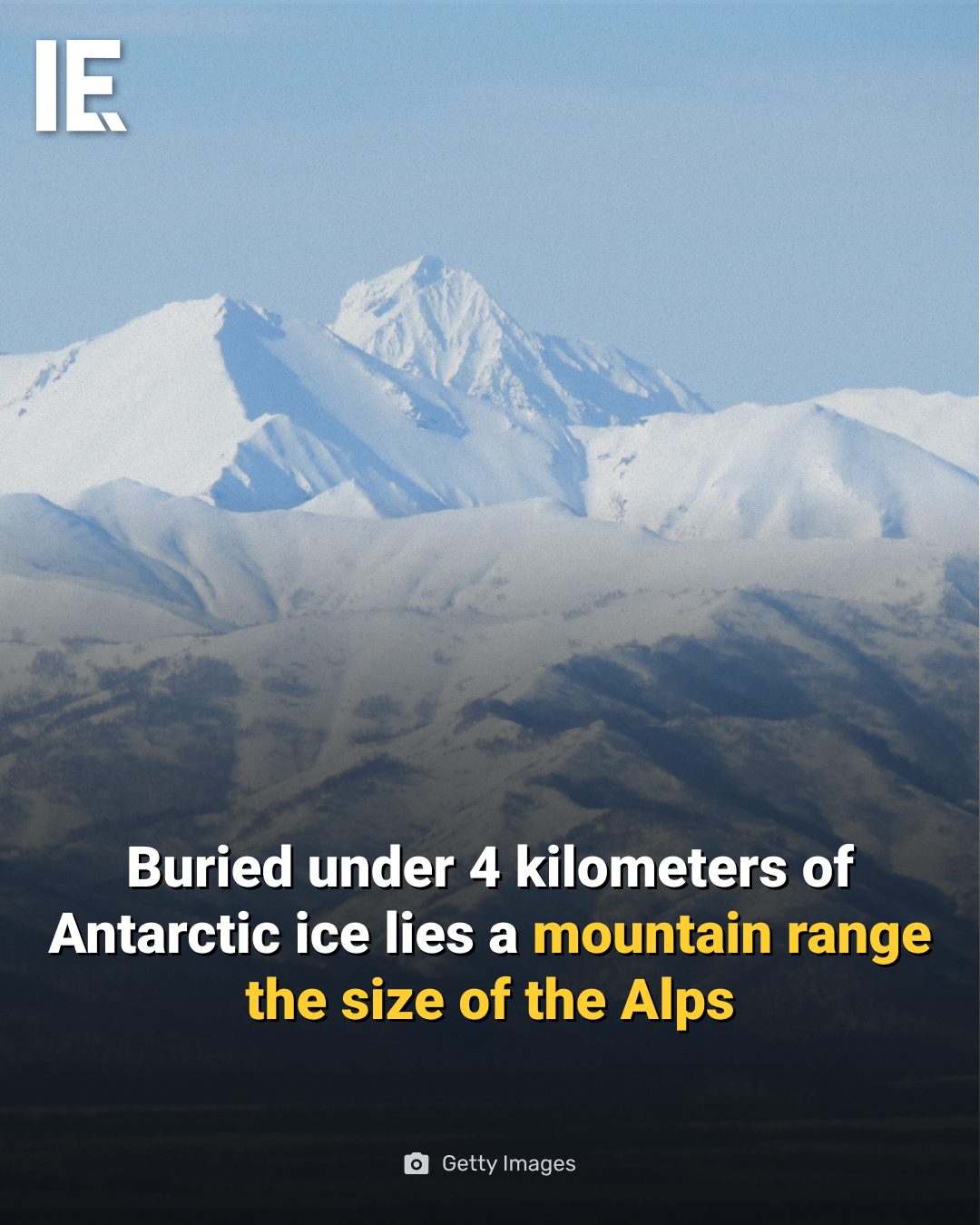
The Gamburtsev Mountains: A Hidden Gem of Antarctica
Buried under up to 4 kilometers of ice in the heart of Antarctica lies a mountain range that stretches 1,200 kilometers, with peaks reaching 3,400 meters. Known as the Gamburtsev Mountains, this range is completely invisible from the surface, but it is a fascinating subject for geologists and scientists.
Context: Why this Matters
The Gamburtsev Mountains are significant not just for their size, but also for their unique geological characteristics. Unlike other mountain ranges that have been shaped by erosion and weathering over millions of years, the Gamburtsev Mountains have been preserved in near-perfect condition beneath the ice. This makes them a valuable subject of study for understanding the Earth's geologic history.
The mountains were first detected in 1958 by Soviet scientists using seismic measurements. Since then, radar and seismic data have been used to gather information about the range, revealing a landscape that has remained largely untouched by the forces of nature.
The Discovery of the Gamburtsev Mountains
The Gamburtsev Mountains were discovered in 1958 by Soviet scientists during the Third Soviet Antarctic Expedition. Using seismic measurements, the scientists detected a large mountain range beneath the Antarctic ice. The range was named after Grigory Gamburtsev, a Russian geophysicist who died in 1955.
Geological Characteristics
The Gamburtsev Mountains stretch approximately 1,200 kilometers, making them roughly the size of the Alps. The peaks of the mountains reach up to 3,400 meters, which is comparable to some of the highest peaks in the Alps. The range is composed of various rock types, including granite, gneiss, and schist. The mountains were formed around 500 million years ago and have remained largely untouched by erosion or sunlight, thanks to the thick layer of ice that covers them.
The preservation of the Gamburtsev Mountains beneath the ice is a unique phenomenon. Erosion and weathering are typically the primary forces that shape mountain ranges over time. However, the Gamburtsev Mountains have been protected from these processes by the thick layer of ice that covers them. This has allowed the mountains to retain their original features, providing scientists with a rare opportunity to study a geological landscape that has remained largely unchanged for millions of years.
Exploration and Study
Given the challenging conditions of Antarctica, the exploration and study of the Gamburtsev Mountains have been limited. However, several expeditions have been conducted to gather more information about the range. In 2008, a team of scientists from the United States, United Kingdom, Germany, Australia, China, and Japan conducted a major expedition to study the mountains. The team used radar and seismic data to map the range and gather more information about its geological characteristics.
The study of the Gamburtsev Mountains is important for understanding the Earth's geological history. The range provides a unique opportunity to study a geological landscape that has remained largely unchanged for millions of years. This can help scientists better understand the processes that shape the Earth's surface and the forces that drive geological change.
Practical Tips for Those Interested in Antarctica
Because of their remote and inhospitable location, the Gamburtsev Mountains are not a destination for casual tourists. However, there are still ways for those interested in Antarctica to learn more about the Gamburtsev Mountains:
- Educational Resources: There are various educational resources available to learn more about the Gamburtsev Mountains. Online courses, documentaries, and research papers can provide a wealth of information about the range and its significance.
- Guided Tours: Several organizations offer guided tours to Antarctica, providing an opportunity to explore the continent and learn more about its geological features. While these tours may not take visitors to the Gamburtsev Mountains, they can still offer a unique perspective on the continent and its hidden wonders.
- Research Expeditions: Participating in scientific research expeditions can provide a unique opportunity to study the Gamburtsev Mountains firsthand. While these expeditions are typically reserved for professionals, there may be opportunities for volunteers or assistants to participate.
- Virtual Exploration: The internet is a treasure trove of information and visual media. Virtual tours and remote exploration tools can provide a glimpse into the Gamburtsev Mountains and the broader landscape of Antarctica.
Important Takeaways
The Gamburtsev Mountains are a fascinating and unique geological feature. Their preservation beneath the Antarctic ice offers a rare opportunity to study a landscape that has remained largely unchanged for millions of years. The mountains provide valuable insights into the Earth's geological history and the forces that shape its surface. While the Gamburtsev Mountains are not accessible to casual visitors, there are still ways to learn more about this hidden gem of Antarctica.
Conclusion
The Gamburtsev Mountains, buried beneath 4 kilometers of ice in the heart of Antarctica, are a geological marvel. Their unique characteristics and preservation beneath the ice make them a valuable subject of study for geologists and scientists. While they remain largely inaccessible, there are still ways to explore and learn about these hidden wonders. Through scientific research, educational resources, and virtual exploration, anyone can delve into the fascinating world of the Gamburtsev Mountains and gain a deeper understanding of the Earth's geological history.
Watch the Reel
Questions readers ask
What are the Gamburtsev Mountains and where are they located?
The Gamburtsev Mountains are a vast, 1,200-kilometer mountain range hidden beneath Antarctica's thick ice sheet. They are located in the heart of Antarctica, with peaks reaching up to 3,400 meters, making them one of the most intriguing geological features on the continent.
How were the Gamburtsev Mountains first discovered?
The Gamburtsev Mountains were first discovered in 1958 by a Soviet Antarctic expedition. The range was named after Grigori Gamburtsev, a prominent Russian geophysicist who played a crucial role in the discovery. The mountains were initially detected through seismic and gravity measurements.
Why are the Gamburtsev Mountains significant to scientists?
The Gamburtsev Mountains are significant because they offer a rare, untouched glimpse into Earth’s geological history. The thick ice sheet above has preserved the mountains in near-pristine condition, allowing scientists to study geological processes and structures that have been shielded from erosion and weathering for millions of years.
Are there any known seismic activities in the Gamburtsev Mountains?
The Gamburtsev Mountains are largely isolated from human observation, making direct seismic monitoring challenging. However, while seismic activity is typically low in the region, scientists have detected small earthquakes and tectonic activity. These activities provide insights into the dynamics of the Earth's crust beneath the ice.
What methods are used to study the Gamburtsev Mountains?
Due to the inaccessibility of the Gamburtsev Mountains, scientists rely on advanced geophysical techniques such as radar and seismic imaging to map and study the range. Satellite data and ice-penetrating radar are particularly useful in revealing the hidden topography and geological features beneath the ice sheet.
What makes the Gamburtsev Mountains different from other mountain ranges?
Unlike many other mountain ranges that have been exposed to the elements and shaped by erosion and weathering over time, the Gamburtsev Mountains have been preserved beneath the Antarctic ice sheet for millions of years. This unique circumstance has kept the mountains in a nearly pristine state, offering a unique window into the Earth's geological past.
Can tourists visit the Gamburtsev Mountains?
Unfortunately, visiting the Gamburtsev Mountains is not feasible for tourists. The harsh Antarctic environment, combined with the lack of direct access to the buried range, makes it nearly impossible for visitors. Additionally, the area is remote and heavily regulated to protect its unique environment and scientific value.
Related deep dives
Similar reads based on topic and creator.



Recent articles
Fresh deep dives from the latest Reels we unpacked.




Comments
Be the first to comment.