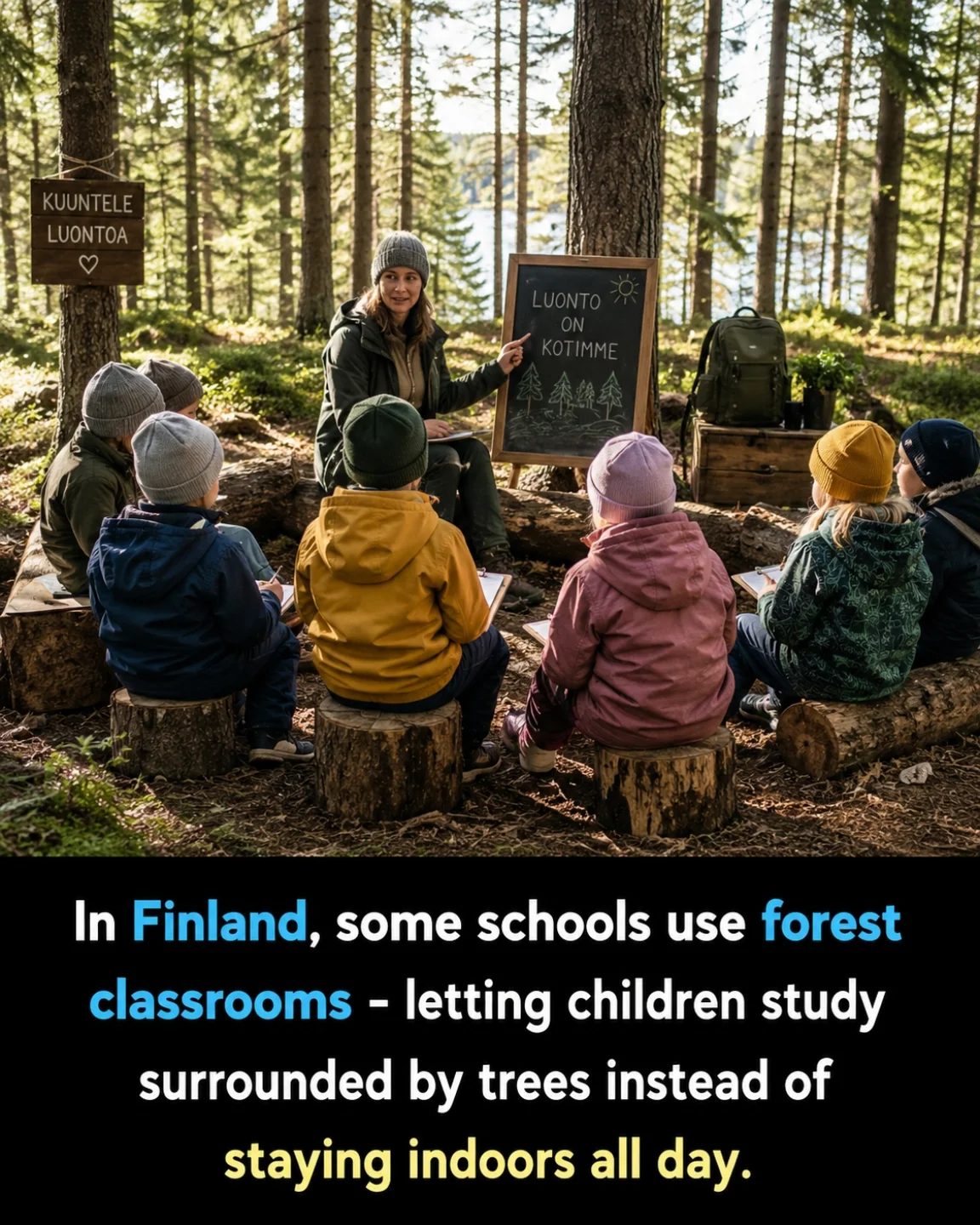
Forest Classrooms in Finland: Learning in Nature
Forest classrooms are a unique and innovative approach to education in Finland. These outdoor learning environments provide children with an opportunity to study surrounded by nature, offering a distinctive alternative to traditional indoor classrooms.
Why This Matters
Forest classrooms, or "luonto" as described by the on-screen text, promote a deeper connection with the natural world. This immersive learning experience can enhance children's understanding of the environment and foster a sense of appreciation for nature while also providing numerous physical and mental health benefits. Finland’s embrace of these classrooms is rooted in a broader cultural emphasis on harmony with nature, encapsulated in the phrase "luonto on kotimme" (nature is our home).
Main Discussion
The Natural Classroom Experience
In a forest classroom, children sit in circles on tree stumps, surrounded by the rustling of leaves, the scent of pine, and the ever-changing natural environment. This setting encourages sensory engagement, which can enhance learning and memory retention. It’s a far cry from the traditional four walls and fluorescent lights of a standard classroom.
The Role of the Teacher
The teacher, typically holding a chalkboard, does not merely convey information. They act as a facilitator, guiding the students through hands-on activities, nature walks, and interactive lessons. This approach encourages independence, creativity, and problem-solving skills. The teacher’s role is less about delivering a lecture and more about nurturing a curiosity and love for learning.
The Curriculum in the Woods
Forest classrooms incorporate a variety of subjects, including science, environmental studies, and even language arts. Nature becomes a living textbook, where lessons on ecosystems, biodiversity, and natural history come to life. Every tree, every animal track, and every changing season provides a new lesson. While traditional subjects are taught, the focus is often on experiential learning, where students engage directly with their environment.
Practical Tips
Incorporating Nature into Your Learning Environment
If you're looking to bring a bit of the forest classroom experience into your own learning environment, consider these tips:
- Outdoor Learning Spaces: Create designated outdoor spaces for learning, even if it’s just a small garden or a nearby park.
- Nature Walks: Incorporate regular nature walks into your routine. This can be a great way to learn about local flora and fauna.
- Hands-On Activities: Use natural materials for crafts and activities. This can include collecting leaves, making nature journals, or creating art with found objects.
Adapting Lesson Plans
- Observation and Journaling: Encourage students to keep nature journals, documenting their observations and thoughts. This can be a valuable tool for enhancing critical thinking and creativity.
- Local Field Trips: Plan field trips to local natural areas, such as parks, forests, or nature reserves. This can provide a rich context for learning about local ecosystems and conservation efforts.
- Interactive Learning: Use nature as a starting point for broader discussions. For example, studying the life cycle of a tree can lead to discussions about photosynthesis, the carbon cycle, and climate change.
Important Takeaways
Forest classrooms in Finland highlight the potential for integrating nature into educational settings. This approach not only enhances learning outcomes but also promotes a deeper appreciation for the natural world. The forest classroom model is about more than just changing the physical setting; it’s about fostering a holistic approach to education that values both intellectual growth and emotional well-being.
Conclusion
Finland's use of forest classrooms underscores the potential for transformative learning experiences. By embracing nature as a classroom, students gain a unique perspective on the world, one that is both enriching and deeply rooted in the natural environment. Whether you’re a teacher, a parent, or an educator, the concepts embodied in the forest classroom can provide valuable insights and practical applications for creating a more dynamic and engaging learning environment.
Watch the Reel
Questions readers ask
What exactly is a forest classroom in Finland?
A forest classroom in Finland is an outdoor learning environment where children engage in lessons under the trees. This approach, often referred to as 'luonto,' provides a unique setting that integrates nature with learning activities.
What are the benefits of learning in a forest classroom?
Forest classrooms offer numerous benefits, including a deeper connection to nature, improved physical health from increased outdoor activity, and enhanced mental well-being. Children may also develop a greater appreciation for the environment.
How are lessons structured in a Finnish forest classroom?
Lessons in a Finnish forest classroom are designed to utilize the natural environment. Activities can range from science experiments using natural materials to creative writing inspired by the surroundings, fostering hands-on learning and exploration.
What age groups typically participate in forest classrooms in Finland?
Forest classrooms in Finland cater to a wide range of age groups, from preschool to primary school. Young children, in particular, benefit from the immersive and interactive nature of this learning experience.
Are there specific challenges associated with forest classrooms?
While forest classrooms offer numerous advantages, they also present challenges such as managing weather conditions and ensuring safety in an outdoor environment. Additionally, some traditional academic subjects may need to be adapted to fit the outdoor setting.
How do Finnish forest classrooms align with the country’s cultural values?
Finnish forest classrooms reflect the country’s deep cultural appreciation for nature, encapsulated in the phrase 'luonto on kotimme,' which translates to 'nature is our home.' This approach aligns with Finland’s overall ethos of living in harmony with the natural world.
What impact do forest classrooms have on children's environmental awareness?
Forest classrooms in Finland foster a strong sense of environmental awareness in children. By spending significant time in nature, children develop a deeper understanding and respect for the environment, which can influence their attitudes and behaviors towards conservation and sustainability.
Related deep dives
Similar reads based on topic and creator.


Recent articles
Fresh deep dives from the latest Reels we unpacked.




Comments
Be the first to comment.