Food as Medicine: How Everyday Foods Support Your Body
Food does more than just fill your stomach. It communicates with your body, influencing everything from your energy levels to your skin's health. The concept of "Food is Medicine" underscores the power of nutrition in maintaining and enhancing overall health. Let's explore how specific foods can support your body's natural functions, from boosting immunity to improving digestion.
Why This Matters
In today's fast-paced world, it's easy to overlook the impact of our food choices. However, understanding that food provides essential information to your body can transform your approach to nutrition. By choosing the right foods, you can support your body's healing, performance, and overall well-being.
Food as Medicine: A Closer Look
Fruits and Their Benefits
Fruits are packed with vitamins, minerals, and antioxidants that support various bodily functions. For instance:
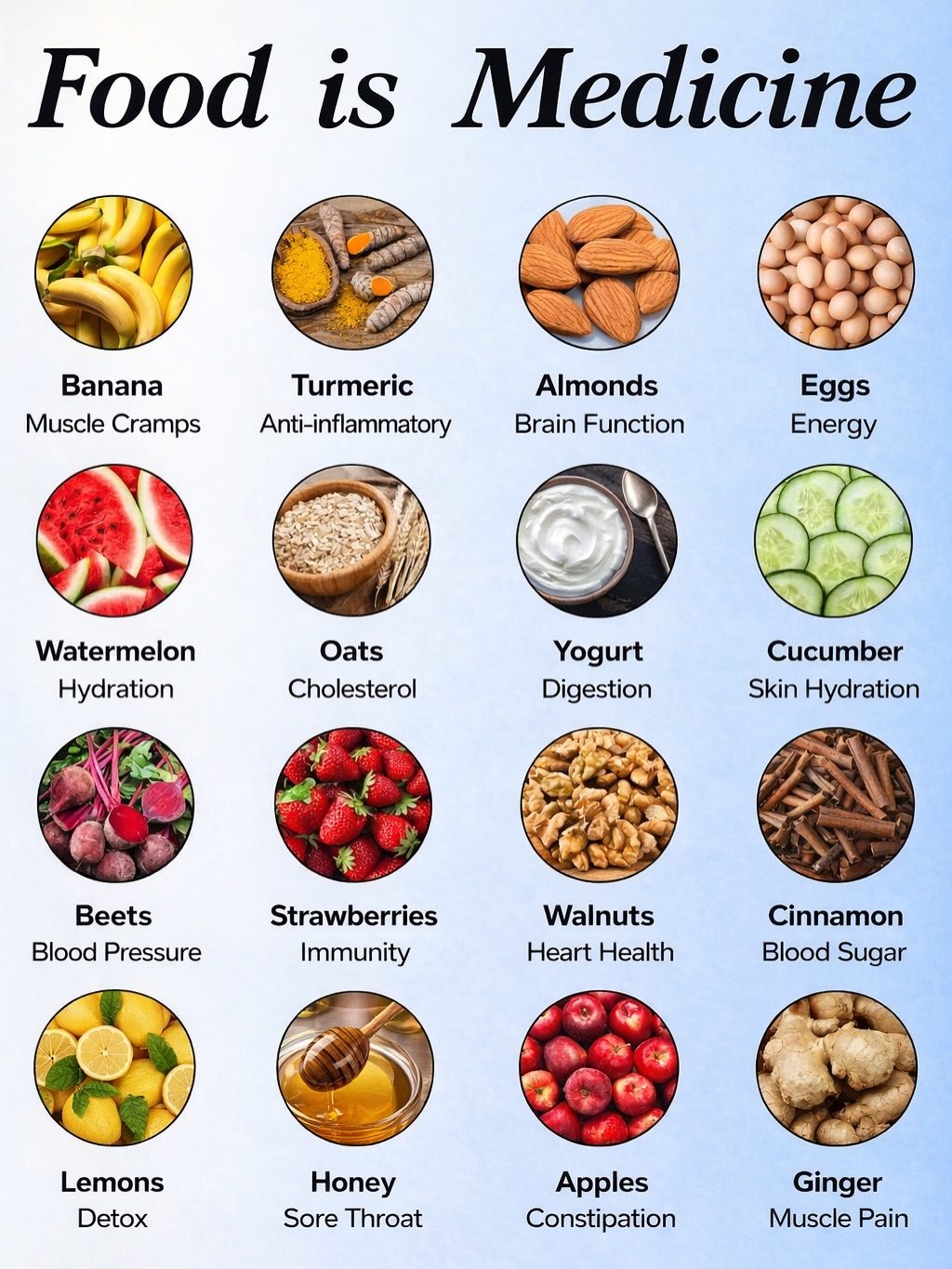
- Pomegranate and grapes support blood health, and strawberries can boost your immunity.
- Watermelon is particularly beneficial for maintaining healthy blood pressure.
- Lemons aid in detoxification, helping your body eliminate toxins more efficiently.
- Blueberries are known for their ability to improve mood, memory, and gut health, contributing to overall metabolic health.
Vegetables and Their Benefits
Vegetables are a powerhouse of nutrients that support various aspects of health. For example:
- Beets support liver function and help maintain healthy blood pressure.
- Cucumbers promote skin hydration, keeping your skin looking fresh and youthful.
- Broccoli is rich in vitamins and antioxidants that support overall health.
- Ginger is known for its anti-inflammatory properties, which can help alleviate muscle pain and reduce symptoms of irritable bowel syndrome (IBS) and menstrual cramps.
Nuts and Seeds and Their Benefits
Nuts and seeds are excellent sources of healthy fats, proteins, and other essential nutrients. Consider these:
- Almonds support brain function, making them a great snack for a quick mental boost.
- Walnuts are beneficial for heart health, thanks to their omega-3 fatty acids.
- Flaxseeds are rich in fiber, which aids in digestion and helps maintain healthy cholesterol levels.
- Chia seeds are a good source of omega-3 fatty acids, fiber, and protein, supporting overall health and energy levels.
Dairy and Their Benefits
Dairy products like yogurt and kefir provide essential nutrients that support various bodily functions:
- Yogurt is beneficial for digestion, thanks to its probiotic content, which helps maintain a healthy gut.
- Kefir supports the immune system and improves anemia by providing essential nutrients.
Practical Tips for Incorporating Food as Medicine
Plan Your Meals
Planning your meals in advance ensures that you include a variety of foods that support your body's needs. Aim for a balanced diet that includes fruits, vegetables, whole grains, lean proteins, and healthy fats.
Stay Hydrated
Hydration is crucial for overall health. Drink plenty of water throughout the day and consider incorporating hydration-rich foods like watermelon and cucumbers into your diet.
Track Your Nutritional Intake
Using a nutrition tracking app can help you monitor your daily intake of calories, macronutrients, and other essential nutrients. Apps like Workit offer data-driven insights to help you make informed food choices and achieve your health goals. They can help you maintain a balanced diet and ensure you're getting the nutrients your body needs.
Cook with Intention
Cooking with intention means choosing recipes that incorporate foods known for their health benefits. For example, adding turmeric to your meals can help reduce inflammation, while including ginger can support digestion and alleviate muscle pain.
Important Takeaways
Incorporating "Food as Medicine" into your daily routine can have a profound impact on your overall health and well-being. The foods you choose directly affect your body's ability to heal, perform, and thrive. By making conscious food choices and tracking your nutritional intake, you can support your body's natural functions and achieve your health goals.
Conclusion
Food is more than just fuel for your body—it's information that supports your wellbeing. From reducing inflammation and boosting energy to supporting muscle recovery and improving digestion, the right foods can make a significant difference in your overall health. By choosing foods that support your body's natural functions and tracking your nutritional intake, you can build healthy habits and live a more vibrant, energetic life.
Watch the Reel
Questions readers ask
Which foods are best for boosting immunity on a daily basis?
Foods rich in vitamin C, such as citrus fruits, berries, and leafy greens, are excellent for boosting immunity. Additionally, foods high in zinc like oysters, nuts, and seeds, and those with antioxidants like colorful fruits and vegetables, can support a healthy immune system.
What nutrients are essential for gut health and which foods provide them?
Probiotics and prebiotics are vital for gut health. Probiotics can be found in yogurt, kefir, and sauerkraut, while prebiotics are in foods like bananas, onions, and garlic. Fiber-rich foods such as whole grains, fruits, and vegetables also promote a healthy gut.
How can specific fruits aid in digestion and which are the best choices?
Fruits high in fiber and water content are great for digestion. Apples, pears, and berries are excellent choices due to their fiber content. Kiwi and papaya contain enzymes that can further enhance digestion.
What are the best foods to maintain muscle health and support muscle recovery?
Protein-rich foods like lean meats, poultry, fish, eggs, and legumes are essential for muscle health and recovery. Including foods rich in omega-3 fatty acids, such as fatty fish and walnuts, can also reduce muscle inflammation and support recovery.
Which daily foods can help improve overall health and daily energy levels?
Whole grains, nuts, and seeds provide sustained energy by releasing glucose slowly. Foods high in B vitamins, such as leafy greens, eggs, and fortified cereals, are also important for maintaining daily energy. Additionally, staying hydrated with water and herbal teas supports overall health and energy levels.
What dietary choices can support blood health and why are they important?
Foods high in iron, such as spinach, lentils, and red meat, support blood health by aiding in the production of red blood cells. Foods rich in vitamin K, like kale and Brussels sprouts, are essential for blood clotting. Omega-3 fatty acids from fish and flaxseeds help reduce inflammation and improve circulation, promoting overall blood health.
Recent articles
Fresh deep dives from the latest Reels we unpacked.




Comments
Be the first to comment.