Shape-Shifting Drone Technology
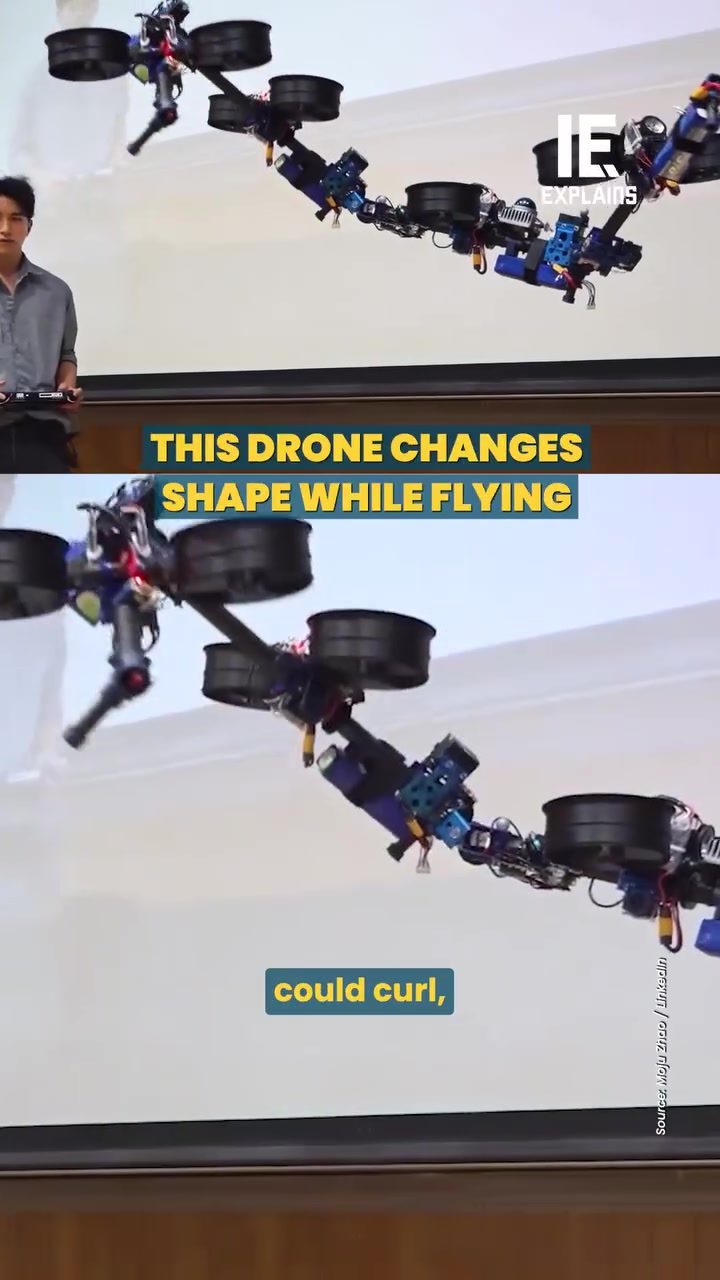
In a groundbreaking demonstration, a drone that can reshape itself mid-flight was showcased, marking a significant advance in aerial robotics. Developed by DRACON Lab at the University of Tokyo, the DRAGON v1.5 drone is a snake-like aerial robot designed to twist, curl, and reconfigure in mid-air. This innovation, which was recently demonstrated live at the Komaba Campus, represents a leap forward in autonomous flight and adaptive robotics.
Why This Matters
The ability of a drone to change shape in flight opens up new possibilities for aerial exploration, rescue missions, and environmental monitoring. By squeezing through tight gaps, adapting its shape in the air, and maintaining stable flight, these drones can navigate complex environments with precision and efficiency. This technology could revolutionize industries that rely on aerial data collection and remote sensing, making it easier to access and gather information from hard-to-reach areas.
The DRACON DRAGON Drone
Design and Innovation
The DRAGON drone, developed by the DRACON Lab, is a testament to the innovative use of generative automation and onboard sensors. Each segment of the drone is equipped with two ducted fans on gimbals, allowing it to bend, curl, and reconfigure in mid-air. This design enables the drone to adapt its shape dynamically, making it versatile and agile in various flight conditions.
Autonomous Flight Capabilities
One of the standout features of the DRAGON v1.5 is its ability to achieve fully autonomous flight using only onboard sensors. The drone utilizes a 3D LiDAR, an IMU (Inertial Measurement Unit), and joint encoders to navigate and adapt its shape in real-time. This autonomous capability is a first for morphing aerial robots, setting a new standard for aerial robotics.
Evolution of the DRAGON Drone
The DRAGON drone first debuted in 2018, and the v1.5 version is a significant milestone in its development. This version not only proves the concept works outside the lab but also demonstrates the drone's ability to handle live demonstrations in real-world settings. The successful live demonstration at the Komaba Campus is a testament to the drone's reliability and adaptability.
Applications and Future Potential
The DRACON Lab, under the Department of Mechanical Engineering at the University of Tokyo, has named the lab for Dynamic Robotics with Analytical and Generative Automation. The lab's mission aligns with the drone's applications in various fields, including:
- Aerial Surveying: The drone's ability to change shape and navigate tight spaces makes it ideal for surveying difficult-to-reach areas, such as dense forests or rugged terrain.
- Rescue Missions: In search and rescue operations, the drone can squeeze through narrow spaces to locate survivors and provide real-time data.
- Environmental Monitoring: The drone can adapt to changing environmental conditions, making it suitable for monitoring ecosystems, tracking wildlife, and collecting environmental data.
Practical Tips for Understanding Shape-Shifting Drones
Understanding the Technology
For those interested in the technology behind shape-shifting drones, it's essential to grasp the key components:
- Ducted Fans on Gimbals: These fans are crucial for the drone's maneuverability, allowing it to bend and twist in mid-air.
- Onboard Sensors: The drone relies on a 3D LiDAR, IMU, and joint encoders to navigate and adapt its shape autonomously.
- Generative Automation: This technology enables the drone to dynamically reconfigure its segments, making it versatile and adaptable.
Potential Challenges
While the DRAGON drone showcases remarkable capabilities, there are potential challenges to consider:
- Battery Life: Shape-shifting drones may consume more power due to the additional energy required for reconfiguring their shape. Improving battery efficiency is crucial for extended flight times.
- Complexity: The drone's design and control systems are complex, requiring advanced engineering and maintenance.
- Regulatory Compliance: As with any autonomous vehicle, regulatory compliance is essential. Ensuring the drone operates safely within legal frameworks is a key consideration.
Future Developments
The future of shape-shifting drones is promising, with ongoing research and development. Future advancements may include:
- Improved Sensors: Enhancing the accuracy and range of onboard sensors to improve navigation and adaptability.
- Sophisticated Algorithms: Developing more sophisticated algorithms for generative automation, allowing the drone to handle even more complex environments.
- Enhanced Materials: Using lighter and more durable materials to improve the drone's performance and longevity.
Important Takeaways
The DRAGON drone represents a groundbreaking advancement in aerial robotics, demonstrating the potential of shape-shifting technology. Its ability to adapt and navigate complex environments opens up new possibilities for various applications. By understanding the technology behind these drones, we can appreciate the significance of this innovation and look forward to future developments.
Conclusion
The DRAGON v1.5 drone, developed by the DRACON Lab at the University of Tokyo, showcases a remarkable leap forward in aerial robotics. Its ability to reshape itself mid-flight, using only onboard sensors, makes it a versatile and adaptable tool for various applications. As research and development continue, the future of shape-shifting drones looks promising, with the potential to revolutionize industries that rely on aerial data collection and remote sensing.
Watch the Reel
Questions readers ask
What makes the DRAGON drone unique compared to other drones?
The DRAGON drone is unique due to its ability to twist, curl, and reshape itself in mid-air, a feature developed by the DRACON Lab at the University of Tokyo. This adaptive capability allows it to navigate complex environments more effectively than traditional drones, making it a significant advancement in aerial robotics.
Who developed the DRAGON drone and where is it based?
The DRAGON drone was developed by the DRACON Lab, which is based at the University of Tokyo. The lab is at the forefront of innovative drone technology, focusing on autonomous flight and adaptability.
What are some practical applications of the DRAGON drone's shape-shifting technology?
The DRAGON drone's shape-shifting capabilities have several practical applications. It can be used for aerial exploration, rescue missions, and environmental monitoring. Its ability to navigate through tight spaces and adapt its shape in flight makes it ideal for tasks that require precise and flexible maneuvering.
How does the DRAGON drone maintain stable flight while changing shape?
The DRAGON drone uses advanced automation systems and generative design principles to maintain stable flight while changing shape. These systems allow the drone to adjust its configuration in real-time, ensuring it remains balanced and controlled even as it adapts to different environments.
What challenges does the DRAGON drone help overcome in drone navigation?
The DRAGON drone helps overcome challenges in drone navigation by being able to squeeze through tight gaps and adapt its shape in the air. This means it can navigate complex environments that would otherwise be inaccessible to traditional drones, making it a valuable tool for various applications.
How does the DRAGON drone's design enhance its sensor capabilities?
The DRAGON drone's design incorporates advanced sensors that work seamlessly with its shape-shifting capability. This integration allows the drone to gather detailed data from various angles and positions, enhancing its overall performance in tasks that require precise and adaptive sensing.
What future developments can we expect from the DRACON Lab's drone technology?
Future developments from the DRACON Lab are likely to focus on further enhancing the DRAGON drone's adaptability and autonomy. This could include improvements in its maneuvering capabilities, increased sensor integration, and more advanced automation systems to handle even more complex environments and tasks.
Related deep dives
Similar reads based on topic and creator.


Recent articles
Fresh deep dives from the latest Reels we unpacked.




Comments
Be the first to comment.