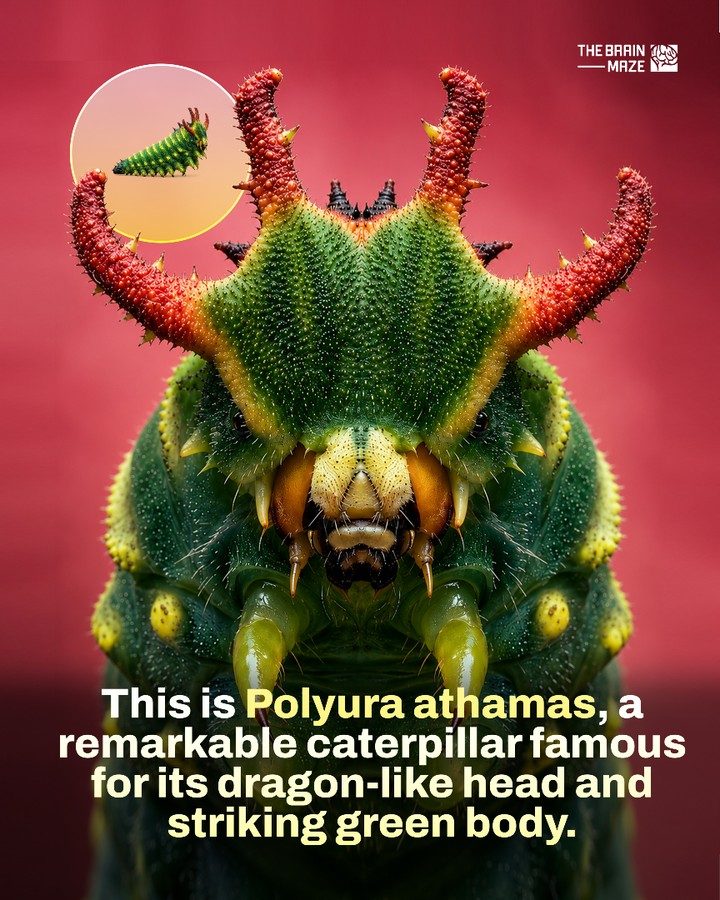
Polyura athamas: The Dragon Caterpillar
Polyura athamas, commonly known as the dragon caterpillar, is a fascinating specimen that captures the imagination with its unique appearance. This caterpillar is renowned for its striking green body and a head that resembles a tiny dragon, complete with horn-like projections and vivid colors. This captivating insect is a testament to the peculiar and beautiful outcomes of insect evolution.
The Unique Features of Polyura athamas
Polyura athamas stands out due to its distinctive physical characteristics. The caterpillar's vibrant green body is a notable feature, providing excellent camouflage among the leaves and foliage of its natural habitat. However, it is the head of the Polyura athamas that truly sets it apart. The dragon-like appearance, with its protruding horns, makes this caterpillar one of the most unusual and intriguing larvae in the insect world.
Habitat and Behavior
Polyura athamas is often found in tropical and subtropical regions, where it thrives in lush, green environments. These caterpillars are typically found on specific host plants, where they feed on the leaves. Their green coloration helps them blend in with their surroundings, providing protection from predators. The dragon caterpillar's behavior includes spending most of its time munching on leaves and moving slowly to conserve energy during its development.
Evolutionary Significance
The Polyura athamas caterpillar exemplifies the diverse and sometimes extraordinary results of insect evolution. Its unique appearance is thought to serve multiple purposes, including camouflage and defense. The dragon-like head might deter predators, making the caterpillar appear more intimidating than it is. Evolution has equipped this species with adaptations that enhance its survival chances in a competitive natural environment.
The Transition to Adulthood
While the caterpillar stage of Polyura athamas is captivating, the transformation into an adult butterfly is equally remarkable. The adult Polyura athamas, often referred to as the Nathusius Swallowtail, undergoes a complete metamorphosis. This process involves several stages, including the pupa stage, where the caterpillar encases itself in a chrysalis to undergo a dramatic transformation. The resulting butterfly is a stunning creature with intricate wing patterns and colors.
Conservation Status
Polyura athamas is not currently listed as an endangered species. However, like many insects, it faces threats from habitat loss, pollution, and climate change. Conservation efforts are crucial to ensure that these remarkable creatures continue to thrive in their natural habitats. Protecting the host plants and the broader ecosystems where Polyura athamas resides is essential for maintaining biodiversity.
Practical Tips for Observing Polyura athamas
If you're interested in observing Polyura athamas in the wild, there are several practical tips to keep in mind:
- Know the Habitat: Polyura athamas is more likely to be found in tropical and subtropical regions with abundant foliage. Look for areas with dense vegetation and specific host plants.
- Patience and Timing: These caterpillars can be hard to spot due to their excellent camouflage. Spend time observing the foliage where they are known to feed, and visit during the right season.
- Use Binoculars: A good pair of binoculars can help you spot the caterpillar from a distance without disturbing it. This is especially useful in dense vegetation.
- Document Your Findings: If you spot a Polyura athamas, take detailed notes or photographs. This can help with future observations and contribute to scientific research.
Important Takeaways
Polyura athamas, the dragon caterpillar, is a remarkable example of the wonders of nature. Its unique appearance, habitat, and evolutionary adaptations make it a fascinating subject for observation and study. Appreciating and conserving such species is essential for maintaining the diversity and beauty of our natural world.
Conclusion
Polyura athamas embodies the extraordinary and the mundane aspects of the insect world, showcasing the beauty of evolution. By understanding and appreciating this species, we can gain a deeper understanding of the intricate web of life that surrounds us. Whether you are a nature enthusiast, a scientist, or simply curious, the dragon caterpillar offers a glimpse into the remarkable world of insects and their extraordinary adaptations.
Watch the Reel
Questions readers ask
What makes the dragon caterpillar stand out among other caterpillars?
The dragon caterpillar, or Polyura athamas, is notable for its vibrant green body and a head that resembles a tiny dragon, complete with horn-like projections. These features make it a captivating subject of natural curiosity.
How does the dragon caterpillar's appearance aid in its survival?
The dragon caterpillar's vivid green coloration provides excellent camouflage among the leaves and foliage, helping it to blend in and avoid predators. Its dragon-like head also serves as a defense mechanism, potentially deterring predators with its unusual appearance.
What are the horn-like projections on the dragon caterpillar's head?
The horn-like projections on the dragon caterpillar's head are part of its distinctive appearance. These projections, along with its vivid colors, contribute to its dragon-like resemblance and likely play a role in both camouflage and defense.
Where can the dragon caterpillar be typically found?
The dragon caterpillar is typically found in habitats rich in foliage, where its green coloration helps it blend in with the surrounding leaves. Specific regions or countries are not mentioned, so its geographic range is not detailed.
What are the primary defense mechanisms of the dragon caterpillar?
The primary defense mechanisms of the dragon caterpillar include its vibrant green coloration for camouflage and its dragon-like head with horn-like projections for deterring predators. These features work together to protect the caterpillar from potential threats.
Why is the dragon caterpillar a subject of evolutionary study?
The dragon caterpillar is a subject of evolutionary study due to its unique and striking features, such as its vivid green body and dragon-like head. These characteristics provide insights into the evolutionary processes that shape insect appearance and survival strategies.
Related deep dives
Similar reads based on topic and creator.




Recent articles
Fresh deep dives from the latest Reels we unpacked.




Comments
Be the first to comment.