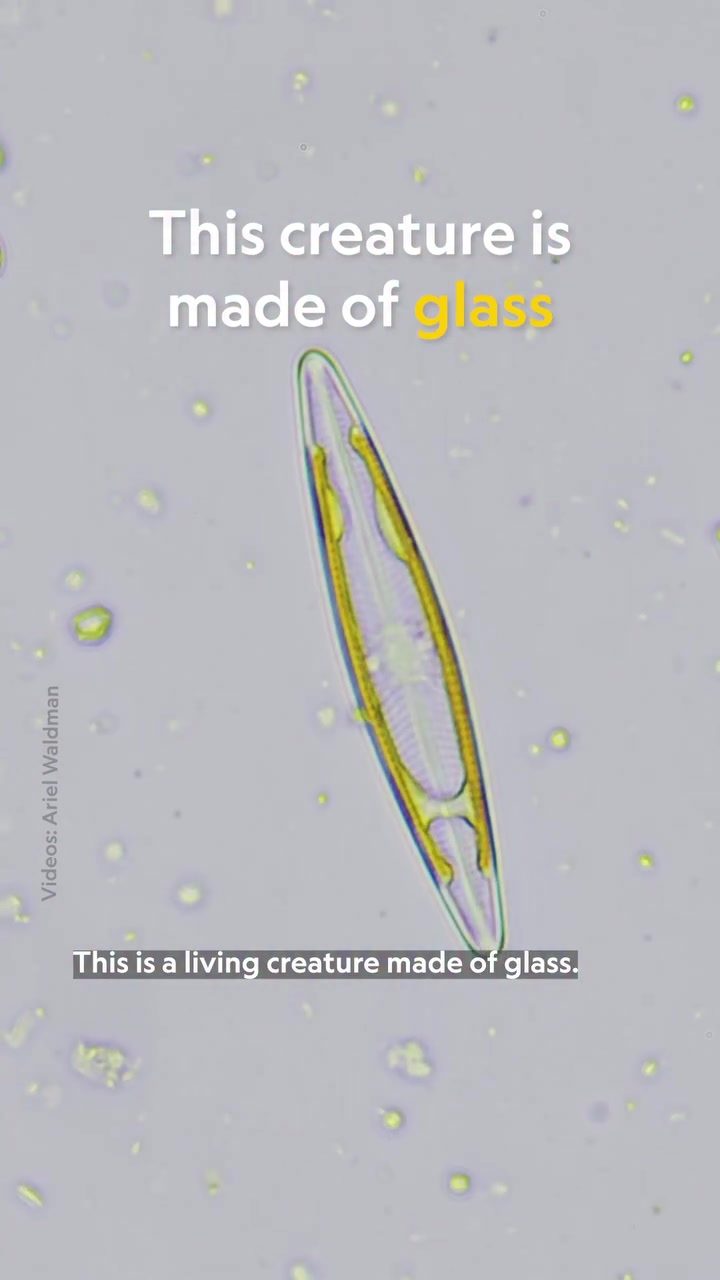
Diatoms: The Glass-like, Microscopic Marvels
Diatoms are microscopic, single-celled algae encased in a glass-like exoskeleton. These tiny creatures, though invisible to the naked eye, play a significant role in marine ecosystems and contribute to the global carbon cycle.
Context / Why this matters
Diatoms are more than just microscopic organisms; they are essential components of the ocean's food web. Their silica-based cell walls, known as frustules, are incredibly intricate and diverse in shape and size. These unique structures have fascinated scientists for centuries, and their study has led to advancements in various fields, including nanotechnology and materials science.
The world of diatoms
Diatom diversity and distribution
Diatoms are ubiquitous in aquatic environments, from freshwater lakes to the vast expanse of the ocean. They can be found in a wide range of habitats, including Antarctica, where Ariel Waldman, a National Geographic Explorer, ventured under the sea ice to collect samples. Despite their small size, diatoms exhibit remarkable diversity in terms of their shapes and sizes, often appearing in a dazzling array of geometric patterns. This diversity is not only aesthetically pleasing but also serves essential functions in their survival and reproduction.
The silica exoskeleton
One of the most distinctive features of diatoms is their silica-based exoskeleton. This exoskeleton, or frustule, is made of amorphous silica and is incredibly strong and lightweight. The intricate patterns and structures of diatom frustules have inspired researchers to explore their potential applications in materials science and nanotechnology. These patterns can be used as templates for creating new materials with unique properties, such as enhanced strength and light-weightness.
The beauty of diatoms
Diatoms are not only fascinating from a scientific perspective but also visually stunning. Their intricate structures and geometric patterns make them a subject of fascination for artists and photographers alike. The beauty of diatoms can be witnessed through a microscope or even from space, as astronauts can see them in the form of colorful swirls in the ocean. This natural beauty has inspired many to appreciate the wonders of the microscopic world.
Practical tips for observing diatoms
Observing diatoms can be a rewarding experience for both scientists and hobbyists. Here are some practical tips for getting started:
Choosing the right equipment
To observe diatoms, you will need a microscope with a high magnification power, typically 400x or higher. A good quality microscope will allow you to see the intricate details of diatom frustules. Additionally, you may want to consider using a camera or smartphone adapter to capture images of your observations for further study or sharing.
Collecting diatom samples
Diatom samples can be collected from various aquatic environments, including ponds, lakes, and oceans. To collect a sample, you can use a plankton net or a simple filter to strain water through. Once you have a sample, you can prepare it for observation by using a mounting medium designed for diatom microscopy. This will help to preserve the diatoms and enhance their visibility under the microscope.
Preparing diatom slides
To prepare a diatom slide, place a drop of your sample on a clean microscope slide and cover it with a coverslip. You can then observe the slide under your microscope and adjust the focus to see the diatoms clearly. Depending on the size and type of diatoms in your sample, you may need to adjust the magnification power to get the best view. A higher magnification power will allow you to see the finer details of the diatom frustules, while a lower magnification power will give you a broader view of the sample.
Preserving diatom samples
Diatom samples can be preserved for future study by using a mounting medium such as Naphrax or Permount. These mounting media help to preserve the diatoms and keep them in place on the slide. To prepare a preserved slide, place a drop of your sample on a clean microscope slide and add a drop of mounting medium. Cover the sample with a coverslip and allow it to dry. Once dry, the slide can be stored for future study or sharing.
Important takeaways
Diatoms are not only fascinating microscopic organisms but also play a crucial role in marine ecosystems. Their silica-based exoskeletons are incredibly diverse and beautiful, inspiring researchers and artists alike. Observing diatoms can be a rewarding experience, and with the right equipment and techniques, anyone can appreciate their natural beauty. The next time you find yourself near a body of water, consider collecting a sample and taking a closer look at the microscopic world of diatoms.
Conclusion
The world of diatoms is a fascinating and beautiful one, filled with intricate patterns and geometric shapes. These tiny organisms play a crucial role in marine ecosystems and contribute to the global carbon cycle. By observing diatoms, we can gain a deeper appreciation for the natural world and the wonders it holds, even at the microscopic level. So, grab a microscope and explore the hidden beauty of diatoms for yourself.
Watch the Reel
Questions readers ask
What are diatoms and why are they important in marine environments?
Diatoms are microscopic algae with glass-like exoskeletons made of silica. They are crucial in marine ecosystems as they form the base of the food web and contribute significantly to the global carbon cycle by absorbing carbon dioxide during photosynthesis.
How do diatoms contribute to advancements in nanotechnology?
Diatoms inspire advancements in nanotechnology due to their intricate, silica-based structures. These structures, known as frustules, exhibit diverse and complex geometric shapes that scientists study to develop new materials and technologies.
What makes the glass-like structures of diatoms unique?
The glass-like structures of diatoms are unique due to their intricate and diverse shapes, which are formed by the deposition of silica. These structures are not only beautiful but also incredibly strong and lightweight, making them a subject of fascination for scientists and engineers.
Can diatoms be observed in space?
While diatoms themselves cannot be seen from space, the impact of their presence is evident in ocean color and productivity. Satellites can measure the chlorophyll content in the ocean, which indicates the presence of phytoplankton, including diatoms. The study of diatoms from space helps monitor global ocean health and carbon cycling.
What are some of the most notable geometric shapes formed by diatoms?
Diatoms form a variety of geometric shapes, including circles, ellipses, triangles, and more complex patterns. Their precise and often symmetrical designs are not only aesthetically pleasing but also provide valuable insights into natural engineering and biological design.
How can I observe diatoms myself?
To observe diatoms, you will need a microscope with at least 400x magnification. Collect a sample of water from a local pond, lake, or even a puddle, and place a drop on a microscope slide. Add a coverslip and examine the sample under the microscope. You may also find videos and images online that showcase the beauty of diatoms under magnification.
What role do diatoms play in the carbon cycle?
Diatoms play a pivotal role in the carbon cycle by absorbing carbon dioxide during photosynthesis. When diatoms die, their silica structures sink to the ocean floor, sequestering carbon and contributing to the global carbon cycle. This process helps regulate atmospheric carbon dioxide levels.
Related deep dives
Similar reads based on topic and creator.



Recent articles
Fresh deep dives from the latest Reels we unpacked.




Comments
Be the first to comment.