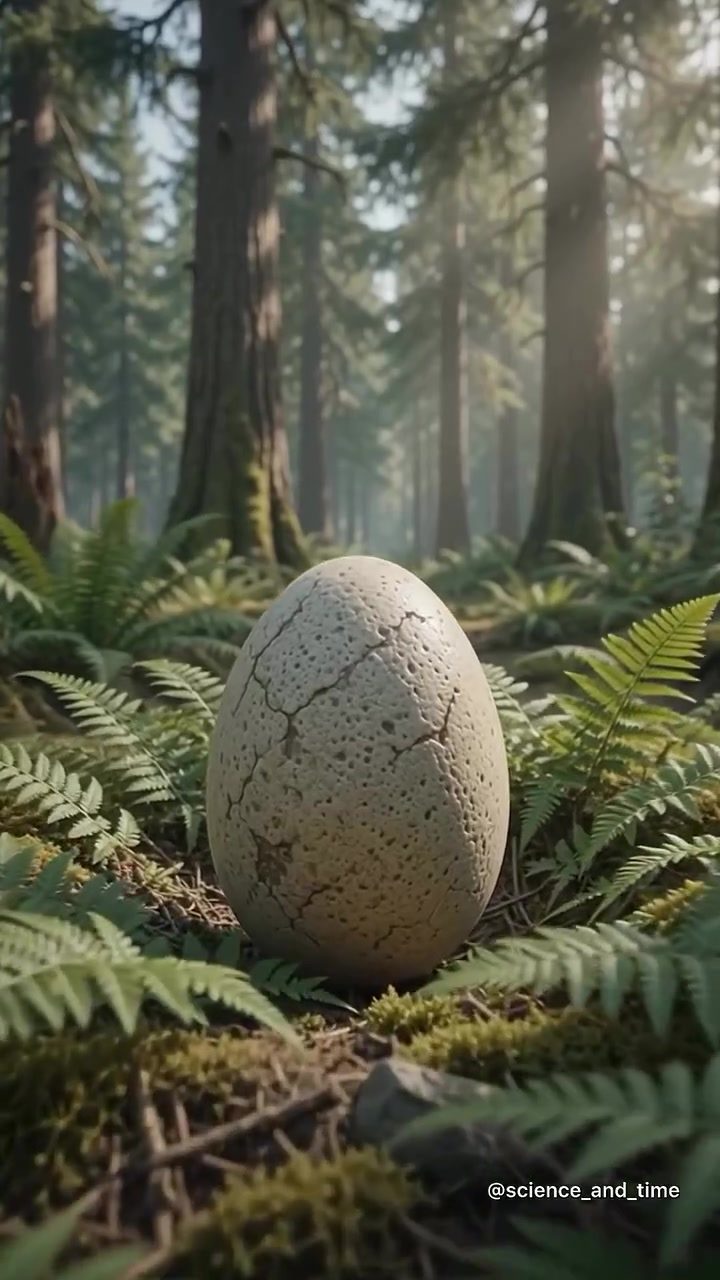
Dinosaur Evolution: From Egg to Giant
Every giant dinosaur once began as a tiny life inside an egg. The journey from an embryo smaller than a grain of rice to a towering predator is a fascinating chapter in Earth’s history. This cinematic journey reveals the incredible science behind how dinosaur embryos developed, hatched, and grew into the giants that once ruled the Earth.
Why This Matters
Understanding the life cycle of dinosaurs offers a unique perspective on the evolution of life on Earth. By examining the stages from embryo to adult, we gain insights into the adaptations that allowed these remarkable creatures to thrive in a world filled with predators and challenges. This journey is not just about the past; it also sheds light on the mechanisms of growth and survival that continue to shape life on our planet today.
The Life Cycle of a Dinosaur
Embryonic Development
Dinosaur embryos spent nearly two months growing inside their eggs, surviving entirely on the nutrients stored in the yolk. This period of development was critical for the embryo's survival, as it prepared the baby dinosaur for the challenges it would face upon hatching.
Hatching and Early Survival
The hatching process was a monumental task for a baby dinosaur. Using a tiny egg tooth found only in hatchlings, the baby chipped away at its shell for hours. This final push marked the moment the hatchling took its first breath in a world filled with giant predators. Unlike many reptiles today, these baby dinosaurs couldn't survive on their own immediately. Their legs were too weak to leave the nest, so their mother returned again and again with food, protecting them until they were strong enough to walk and forage independently.
Rapid Growth
Survival for these hatchlings hinged on one critical factor: rapid growth. In just a few weeks, they grew nearly five times longer. Staying small for too long was a recipe for becoming someone else's meal. Every meal became new bone and muscle, fueled by rich blood vessels that fed rapidly growing bones. This incredible growth allowed some dinosaurs to reach lengths of up to 8 meters within 8 to 10 years.
Key Adaptations
Dinosaurs didn't become giants by simply eating more. Their bird-like lungs delivered oxygen efficiently, and blood-rich bones grew rapidly from the inside out. These adaptations were essential for their rapid growth and survival in a competitive environment.
Practical Tips for Understanding Dinosaur Evolution
Paleontology and Fossil Analysis
Paleontologists study fossils to uncover details about dinosaur life cycles. By examining fossil bones, scientists can count growth rings, similar to tree rings, to determine a dinosaur's age, growth speed, and when it finally became an adult. These growth rings provide a wealth of information about the dinosaur's development and the environmental conditions it faced.
Modern Scientific Research
Modern scientific research builds on the foundations of paleontology. Advances in technology and methods allow researchers to gain deeper insights into dinosaur biology. Techniques such as CT scans, genetic analysis, and molecular studies have revolutionized our understanding of these prehistoric giants.
Evolutionary Insights
The study of dinosaur evolution offers valuable insights into the mechanisms of growth and survival that continue to shape life on Earth. By understanding how dinosaurs adapted to their environment, we can apply these principles to our own understanding of evolution and the natural world.
Important Takeaways
Dinosaur evolution is a testament to the incredible adaptations that allowed these creatures to thrive in a world filled with challenges. From their embryonic development to their rapid growth, every stage of a dinosaur's life was a critical step in its survival. By studying these processes, we gain a deeper appreciation for the complexity and beauty of life on Earth.
Conclusion
The journey from a tiny embryo to a giant predator is a fascinating chapter in Earth’s history. By understanding the life cycle of dinosaurs, we gain insights into the mechanisms of growth, survival, and adaptation that continue to shape life on our planet. Whether you are a paleontology enthusiast or simply curious about the natural world, the story of dinosaur evolution is a captivating tale of resilience and adaptation.
Watch the Reel
Questions readers ask
How did dinosaur embryos develop inside their eggs?
Dinosaur embryos, tiny at first, developed inside eggs with hard or soft shells, depending on the species. Inside the egg, the embryo would grow and form the structures needed for life, such as bones, muscles, and internal organs, gradually preparing for hatching.
What is the significance of the hatching process for dinosaurs?
The hatching process was crucial for dinosaurs as it marked the beginning of their life outside the egg. Many dinosaurs had tiny teeth, or egg teeth, which helped them break out of the shell. This process allowed the young dinosaurs to enter the world ready to face the challenges of their environment.
What factors influenced the growth rate of dinosaurs?
The growth rate of dinosaurs was influenced by several factors, including genetics, diet, and environmental conditions. Many dinosaurs experienced rapid growth spurts, reaching adult sizes relatively quickly to better survive in their habitats and compete with other species.
What can the study of dinosaur bones reveal about their life cycle?
Examining giant dinosaur bones provides valuable information about their life cycle, including growth patterns, age at death, and even health conditions. By analyzing bone structure and composition, scientists can infer details about the dinosaur's life history and evolution.
How did dinosaur embryos acquire nutrients inside the egg?
Dinosaur embryos acquired nutrients through a specialized structure called the yolk sac, which contained essential nutrients for growth. The yolk provided the embryo with the necessary nutrients until hatching, ensuring it had the energy and resources to develop fully.
How did dinosaurs adapt to their environment as they grew?
Dinosaurs adapted to their environment through various means, such as developing specialized teeth, claws, and defensive mechanisms. As they grew, these adaptations became more pronounced, enhancing their ability to survive and thrive in a world filled with challenges, including other predators.
Related deep dives
Similar reads based on topic and creator.



Recent articles
Fresh deep dives from the latest Reels we unpacked.




Comments
Be the first to comment.