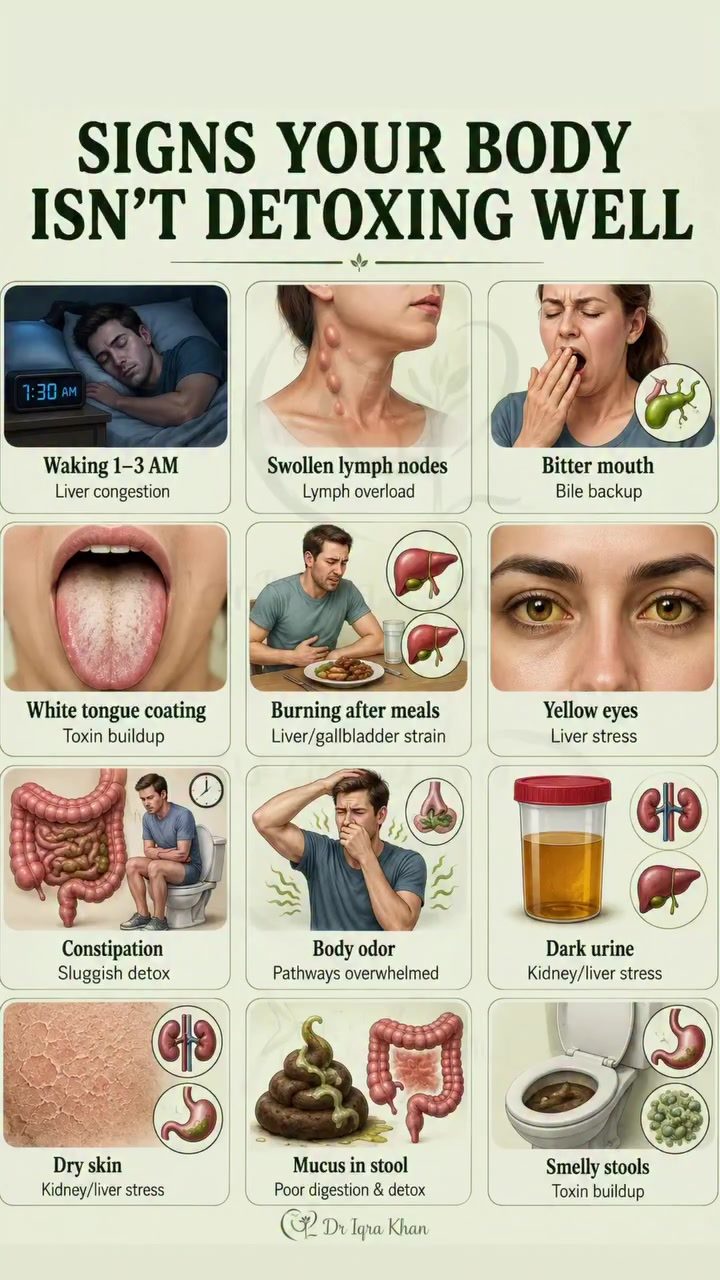
Signs of poor detoxification
The body has a remarkable ability to detoxify itself through various organs, including the liver, kidneys, lungs, digestive system, and skin. However, there are times when these natural systems may become overwhelmed, leading to a buildup of toxins. Recognizing the signs of poor detoxification can help identify potential health issues that may require medical attention.
Context / Why this matters
Understanding the signs of poor detoxification is crucial because it can alert individuals to potential health issues that might otherwise go unnoticed. Many of these symptoms can be indicative of underlying problems that, if left untreated, could lead to more serious health complications. Addressing these symptoms early can help maintain overall health and well-being.
Main discussion
Common Symptoms and Their Causes
Sleep Disturbances
One of the most telling signs of poor detoxification is waking up between 1 AM and 3 AM. According to Dr. Iqra Khan, this could indicate liver congestion. The liver plays a crucial role in detoxification, and when it is overwhelmed, it can disrupt sleep patterns. This disruption can lead to chronic fatigue and a host of other health issues.
Lymphedema and Lymph Overload
Swollen lymph nodes are another critical indicator of poor detoxification. The lymphatic system is responsible for transporting waste products and toxins out of the body. When this system becomes overwhelmed, lymph nodes can become swollen, leading to discomfort and potential health complications.
Oral Symptoms
A persistent bitter taste in the mouth or a white-coated tongue can also be signs of poor detoxification. These symptoms often result from bile backup, which occurs when the body is unable to process toxins efficiently. A white tongue coating, in particular, can be a sign of toxin buildup in the body.
Digestive Issues
Burning or discomfort after meals is another common symptom of poor detoxification. This discomfort can be due to strain on the liver and gallbladder, which are responsible for breaking down and eliminating toxins. Constipation, strong body odor, dark urine, and foul-smelling stools can also indicate that the body's detoxification pathways are overwhelmed.
Skin and Digestive Problems
Dry skin and mucus in the stool are additional signs that the body may not be detoxifying efficiently. Dry skin can be a sign of kidney and liver stress, while mucus in the stool may indicate poor digestion and detoxification processes.
Understanding the Underlying Causes
To truly understand the underlying causes of poor detoxification, it is essential to look at the body as a whole. When the liver, kidneys, and digestive system are not functioning optimally, toxins can build up, leading to various health issues. These underlying causes can include poor diet, lack of exercise, chronic stress, and exposure to environmental toxins.
Practical tips
Support Your Body's Natural Detox Systems
There are several practical steps you can take to support your body's natural detox systems and improve overall health:
-
Stay Hydrated: Drinking plenty of water helps flush out toxins and keeps the body functioning optimally.
-
Eat a Balanced Diet: Consuming a diet rich in fruits, vegetables, and fiber supports the digestive system and helps the body eliminate waste more efficiently.
-
Exercise Regularly: Regular physical activity boosts circulation, helps the body sweat out toxins, and supports overall health.
-
Limit Alcohol and Avoid Smoking: Both alcohol and smoking can put additional strain on the liver and other detoxification organs, making it harder for the body to eliminate toxins.
-
Get Enough Sleep: Adequate sleep allows the body to repair and regenerate, supporting the natural detoxification processes.
-
Manage Chronic Health Conditions: If you have chronic health conditions, working with your healthcare provider to manage them effectively can help reduce the strain on your body's detox systems.
Important takeaways
Poor detoxification can manifest in various symptoms, from sleep disturbances to digestive issues and skin problems. Recognizing these signs early can help address underlying health issues and prevent more serious complications. By supporting the body's natural detox systems through a healthy lifestyle, individuals can improve their overall health and well-being.
Conclusion
Detoxification is a natural process that the body undergoes to remove waste products and toxins. However, when this process is compromised, it can lead to a buildup of toxins and various health issues. By understanding the signs of poor detoxification and taking proactive steps to support the body's natural detox systems, individuals can maintain optimal health and well-being. Always consult with a healthcare provider if you experience persistent symptoms, as they can have many causes and should not be assumed to be due to poor "detox."
Watch the Reel
Questions readers ask
What are some common detox symptoms that might indicate liver issues?
Liver detox symptoms can include fatigue, abdominal bloating and discomfort, dark urine, and yellowing of the skin or eyes (jaundice). These symptoms might suggest that the liver is struggling to process toxins efficiently. If you experience these symptoms, it's important to consult a healthcare professional for proper evaluation.
How do kidney issues manifest during detoxification?
Kidney detox symptoms can manifest as changes in urination patterns, such as frequent urination, foamy urine, or persistent back pain. You might also experience swelling in the ankles, feet, or face, as well as nausea and vomiting. If you notice these signs, it is crucial to seek medical advice to assess your kidney function.
What role do the digestive system and symptoms play in the detox process?
A healthy digestive system is vital for effective detoxification. Symptoms such as constipation, diarrhea, or excessive gas can indicate that your body is having trouble eliminating waste and toxins. Maintaining a balanced diet and staying hydrated can help support your digestive system during detox.
Why might I experience swollen lymph nodes during detoxification?
Swollen lymph nodes can occur during detoxification as the body works to eliminate toxins and fight infections. This symptom typically indicates that your lymphatic system is active. However, if the swelling is severe, persistent, or accompanied by other concerning symptoms, consult a healthcare provider to rule out any underlying issues.
Is it normal to have a persistent bitter taste in the mouth during detox?
A persistent bitter taste in the mouth can be a sign that your liver is struggling to process toxins. This symptom is often related to an increase in bile production, which can cause a bitter flavor. If this symptom persists, it's a good idea to consult a healthcare professional to ensure your liver is functioning properly.
How are sleep problems connected to the body's detoxification process?
Disrupted sleep patterns can be a sign that your body is struggling to detoxify effectively. The liver and other detoxifying organs often work during sleep to eliminate toxins. If you're experiencing sleep problems, such as insomnia or disrupted sleep patterns, it might indicate that your body needs additional support during the detox process.
What does a white tongue indicate during detoxification?
A white tongue can be a sign of an overgrowth of yeast or bacteria in the digestive system, which might be a result of an imbalance in gut flora during detox. This symptom can also indicate dehydration. Maintaining good oral hygiene, staying hydrated, and supporting your gut health can help alleviate this symptom.
Recent articles
Fresh deep dives from the latest Reels we unpacked.




Comments
Be the first to comment.