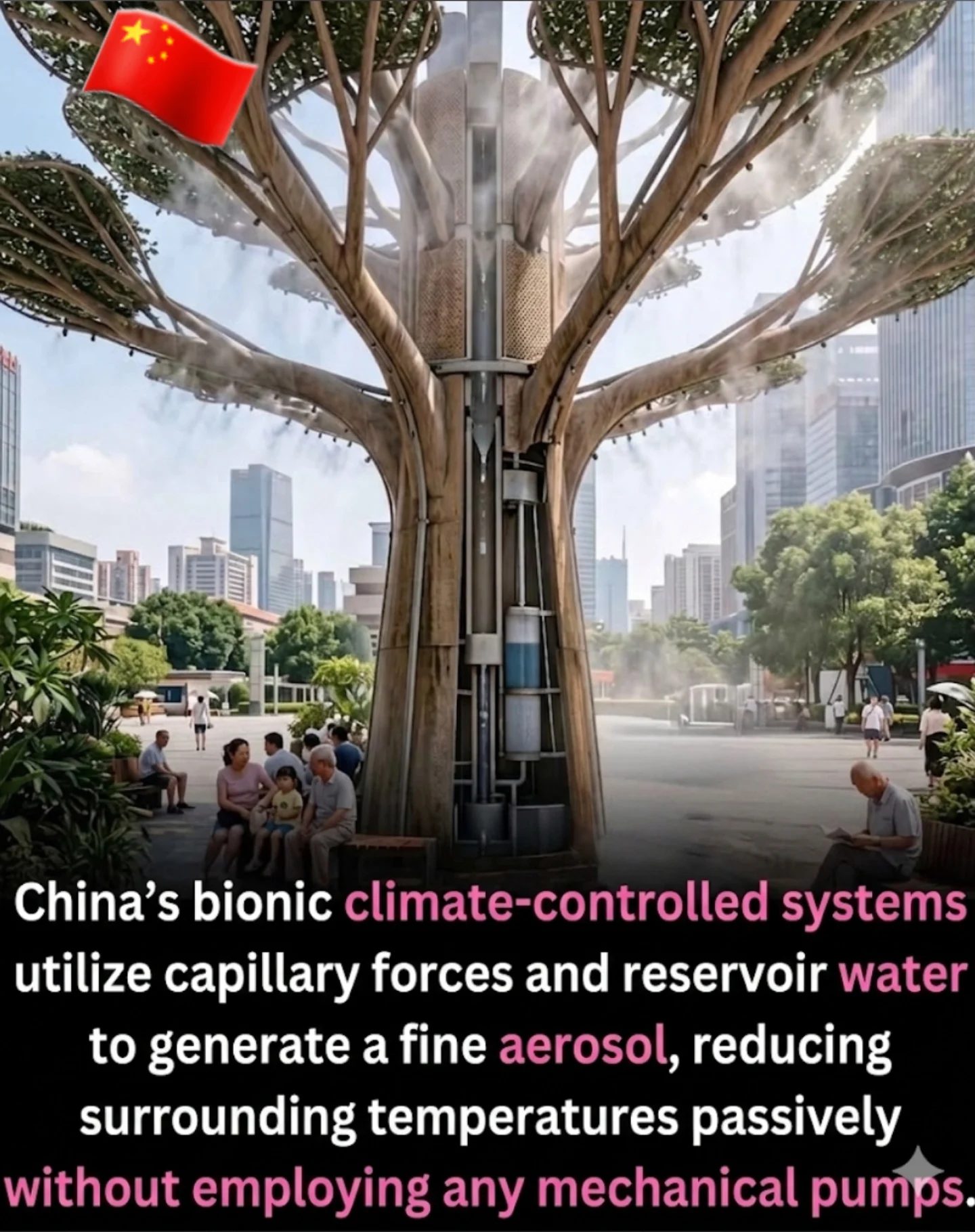
Bionic Climate Control Systems
Bionic climate control systems represent a groundbreaking advancement in environmental technology. These systems, inspired by natural processes like transpiration in trees, are designed to combat urban heat island effects. Unlike traditional cooling methods, these innovative structures utilize capillary action and reservoir water to generate a fine aerosol, passively reducing surrounding temperatures.
Here’s how it works:
Context / Why This Matters
Urban heat islands are a significant problem in densely populated areas. The concentration of buildings, roads, and other infrastructure absorbs and traps heat, leading to higher temperatures than in surrounding rural areas. This can result in increased energy consumption for cooling, higher levels of air pollution, and even health issues for residents.
Bionic climate control systems offer a sustainable solution to this problem. By mimicking natural cooling processes, these systems can help mitigate the urban heat island effect, reduce energy consumption, and improve the overall quality of life in urban environments.
Main Discussion
The Science Behind Bionic Climate Control
Bionic climate control systems leverage capillary forces to draw up stored water through micro-channels. This process is similar to how trees transport water from their roots to their leaves. The water is then converted into a fine aerosol, which evaporates and cools the surrounding air. This passive cooling method is highly efficient and does not require mechanical pumps or electricity, making it an eco-friendly alternative to traditional cooling systems.
Capillary Action
Capillary action is the ability of a liquid to flow in narrow spaces without the assistance of, or even in opposition to, external forces like gravity. In the context of bionic climate control systems, this means that water can be drawn up through micro-channels without the need for pumps or other mechanical devices. This process is not only energy-efficient but also highly reliable, as it does not depend on external power sources.
Reservoir Water and Aerosol Generation
The reservoir water is stored in a system that utilizes capillary forces to draw the water up through micro-channels. This water is then converted into a fine aerosol, which is released into the surrounding air. The evaporation of this aerosol cools the air, reducing the overall temperature of the area. This process is passive, meaning it does not require any mechanical intervention or energy input.
Architectural Integration
These systems are integrated into architectural designs, often taking the form of large, tree-like structures. These designs not only serve a functional purpose but also add an aesthetic element to urban landscapes. The tree-like structures are inspired by nature, blending seamlessly with the environment while providing a crucial cooling function.
Urban Sustainability
The integration of bionic climate control systems into urban infrastructure represents a significant step toward sustainable urban development. By reducing the need for traditional cooling methods, these systems help lower energy consumption and reduce carbon emissions. They also create more comfortable and livable urban spaces, which can have a positive impact on public health and well-being.
Eco-Friendly Alternatives
Traditional cooling systems, such as electric fans and air conditioning units, rely on mechanical pumps and electricity. These systems are not only energy-intensive but also contribute to air pollution and carbon emissions. Bionic climate control systems, on the other hand, are powered by natural processes and do not require electricity, making them a much more eco-friendly alternative.
Practical Tips
If you are considering implementing a bionic climate control system in your urban environment, here are some practical tips to keep in mind:
-
Evaluate the Site: Assess the area where the system will be installed to ensure it will be effective. Consider factors such as the amount of sunlight, wind patterns, and the overall layout of the urban space.
-
Water Source: Ensure a reliable source of water for the reservoir. This could be rainwater harvesting, groundwater, or even municipal water supply, depending on availability and local regulations.
-
Design Considerations: Work with architects and engineers to design a system that not only functions effectively but also integrates well with the existing urban landscape. The system should be both functional and aesthetically pleasing.
-
Maintenance: Regular maintenance is essential to keep the system running smoothly. This includes checking the water levels in the reservoir, ensuring the micro-channels are clear, and inspecting the aerosol generation mechanism.
Important Takeaways
-
Efficiency: Bionic climate control systems are highly efficient, using natural processes to cool the surrounding air without the need for mechanical pumps or electricity.
-
Sustainability: These systems are an eco-friendly alternative to traditional cooling methods, helping to reduce energy consumption and carbon emissions.
-
Aesthetics: The tree-like structures of these systems add an aesthetic element to urban landscapes, blending seamlessly with the environment.
-
Public Health: By reducing the urban heat island effect, these systems can improve public health and well-being, creating more comfortable and livable urban spaces.
Conclusion
Bionic climate control systems offer a innovative and eco-friendly solution to the challenges posed by urban heat islands. By mimicking natural processes and integrating seamlessly into urban infrastructure, these systems provide a sustainable and effective way to cool our cities. As urbanization continues to increase, the adoption of such technologies will be crucial in creating more livable, sustainable, and comfortable urban environments.
Watch the Reel
Questions readers ask
What are bionic climate control structures and how do they work?
Bionic climate control structures are designed to mimic natural cooling processes, like those found in trees. They use capillary action and reservoir water to create a fine mist, which helps to lower surrounding temperatures without requiring significant energy input. These structures are particularly effective in urban environments where traditional cooling methods may be less sustainable.
How do bionic climate control structures address the urban heat island effect?
Urban heat islands form when buildings and infrastructure absorb and trap heat, leading to higher temperatures than in surrounding rural areas. Bionic climate control structures mitigate this effect by passively reducing temperatures, which can lower energy demands for cooling and improve overall comfort in urban areas.
What makes bionic climate control systems a sustainable solution for urban cooling?
Bionic climate control systems are sustainable because they use natural processes to cool urban environments. By mimicking the cooling effects of trees and requiring minimal energy input, these structures offer a more environmentally friendly alternative to traditional air conditioning and other energy-intensive cooling methods.
Where can I find examples of bionic climate control structures in China?
China has been at the forefront of implementing bionic climate control structures. While specific locations may vary, cities with significant urban heat issues, such as Shanghai, Beijing, and Guangzhou, are likely to have implemented or be considering these innovative solutions.
What are the benefits of using passive cooling techniques in urban design?
Passive cooling techniques, such as those used in bionic climate control structures, offer numerous benefits. They reduce the reliance on energy-intensive cooling systems, lower operational costs, and contribute to a more comfortable urban environment. Additionally, these techniques can help mitigate the urban heat island effect, improving the overall livability of cities.
How do bionic climate control structures compare to traditional cooling methods?
Unlike traditional cooling methods that often rely on significant energy consumption, bionic climate control structures use natural processes to cool urban environments. By mimicking the cooling effects of trees and requiring minimal energy input, these structures offer a more sustainable and environmentally friendly solution to urban heat management.
What role does water play in bionic climate control systems?
Water is a crucial component in bionic climate control systems. These structures use reservoir water and capillary action to generate a fine aerosol mist. This mist helps to cool the surrounding air through evaporation, mimicking the natural cooling process of trees and creating a more comfortable urban environment.
Related deep dives
Similar reads based on topic and creator.




Recent articles
Fresh deep dives from the latest Reels we unpacked.




Comments
Be the first to comment.