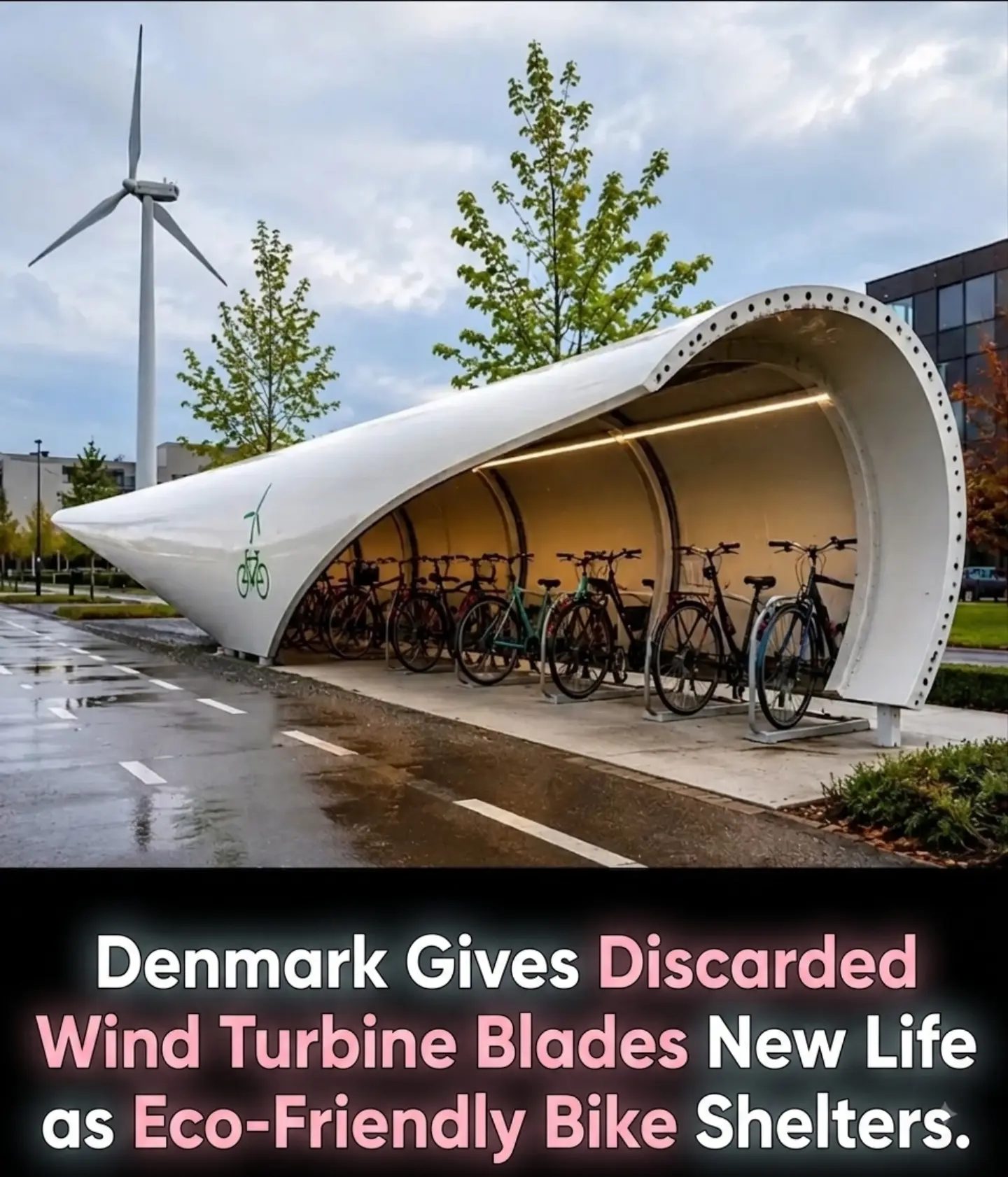
Recycled Wind Turbine Blades: A Sustainable Solution for Bike Shelters
Wind turbine blades, designed to harness power from the wind, are notoriously tough and durable, making them challenging to recycle. This durability, while beneficial for energy production, poses a significant environmental challenge when these blades reach the end of their useful life. Fortunately, innovative solutions are emerging to tackle this issue, particularly in Denmark, where discarded wind turbine blades are being repurposed into stylish, weatherproof bike shelters.
This unique approach not only addresses the problem of waste but also enhances urban design and promotes a circular economy. By repurposing these massive fiberglass structures, Denmark is setting a global example in sustainable practices.
Why This Matters
The waste generated by discarded wind turbine blades is a growing concern in the renewable energy sector. These blades are typically made from composite materials that are difficult to break down or recycle. As a result, many end up in landfills, contributing to environmental degradation. The repurposing of these blades into bike shelters is a significant step towards a more sustainable future, showcasing how innovative thinking can turn waste into valuable community assets.
The Benefits of Repurposing Wind Turbine Blades
Environmental Impact
Repurposing wind turbine blades significantly reduces the environmental footprint of the renewable energy sector. By keeping these blades out of landfills, Denmark is lowering its carbon emissions and conserving resources. Additionally, the shelters are designed to withstand harsh weather conditions, ensuring longevity and reducing the need for frequent replacements.
Community Benefits
Eco-friendly bike shelters not only provide practical benefits but also enhance the aesthetic appeal of urban spaces. These shelters can house multiple bicycles, offering a convenient and secure parking solution for cyclists. This encourages more people to adopt cycling as a mode of transportation, further reducing carbon emissions and promoting a healthier, more active lifestyle.
Economic Advantages
Repurposing wind turbine blades into bike shelters can also bring economic benefits. The process creates local jobs in design, construction, and maintenance. Furthermore, these shelters can attract businesses and tourists, contributing to the economic growth of the community.
Innovative Design
The design of these bike shelters is both functional and aesthetically pleasing. The curved, white structures resemble giant blades, blending seamlessly with the natural environment. This design not only highlights the eco-friendly nature of the project but also adds a modern, futuristic touch to the urban landscape.
Practical Tips for Repurposing Wind Turbine Blades
Assessing Material Suitability
Before repurposing wind turbine blades, it is essential to assess the material's suitability for the new application. The blades' durability and weather resistance make them ideal for outdoor structures, but it's crucial to ensure they meet the necessary safety standards.
Design Considerations
When designing bike shelters from repurposed wind turbine blades, consider the following:
- Space: Ensure the shelter can accommodate multiple bicycles comfortably.
- Accessibility: Design the shelter with easy access in mind, making it convenient for cyclists to park and retrieve their bikes.
- Aesthetics: Incorporate elements that enhance the shelter's visual appeal while maintaining its eco-friendly theme.
- Weather Resistance: Utilize the blades' natural durability to create shelters that can withstand various weather conditions.
Community Engagement
Engage the local community in the planning and implementation process. Gather input from cyclists and residents to ensure the shelters meet their needs and preferences. This collaborative approach can foster a sense of ownership and pride, leading to better maintenance and longevity of the shelters.
Public Awareness
Promote the benefits of repurposing wind turbine blades through public awareness campaigns. Highlight the environmental, economic, and community advantages to garner support and encourage other regions to adopt similar practices.
Important Takeaways
Repurposing discarded wind turbine blades into bike shelters is a practical and environmentally friendly solution to a growing problem. This innovative approach not only reduces waste but also enhances urban design and promotes a sustainable future. By keeping these massive fiberglass structures intact and giving them a new purpose, we can create valuable community assets that benefit both the environment and local residents.
Conclusion
The repurposing of wind turbine blades into bike shelters in Denmark serves as a model for sustainable urban design. This innovative solution addresses the challenge of waste from wind energy infrastructure while providing practical benefits to the community. By embracing such initiatives, we can move towards a more sustainable, eco-friendly future.
Watch the Reel
Questions readers ask
How are wind turbine blades transformed into bike shelters?
Wind turbine blades are repurposed into bike shelters by first dismantling and transporting them to a facility. Then, the blades are carefully cut and shaped into the necessary sizes and configurations. These sections are then assembled to create weatherproof, durable, and stylish bike shelters.
What are the benefits of using wind turbine blades for bike shelters?
Using wind turbine blades for bike shelters is beneficial in several ways. Firstly, it helps reduce waste by giving a second life to materials that would otherwise end up in landfills. Additionally, these shelters are incredibly durable and weatherproof, providing long-lasting protection for bicycles. This approach also promotes a circular economy and enhances urban design.
How does Denmark's initiative advance sustainable living?
Denmark's initiative advances sustainable living by reducing waste, promoting a circular economy, and enhancing transportation infrastructure. By repurposing wind turbine blades into bike shelters, Denmark is not only tackling the issue of waste but also encouraging people to use bicycles as a mode of transportation, which is more environmentally friendly than cars.
Why are wind turbine blades difficult to recycle?
Wind turbine blades are difficult to recycle due to their size and the materials used in their construction. They are typically made from fiberglass, which is not easily broken down or recycled. Additionally, they are designed to be incredibly durable, which makes them challenging to repurpose.
What other uses can wind turbine blades have after they are decommissioned?
After decommissioning, wind turbine blades can have several other uses beyond bike shelters. They can be repurposed into various structures, such as playground equipment, benches, or even bridges. Research is also ongoing into new methods for recycling these materials into composites for other industries.
How does this initiative contribute to Denmark's waste reduction efforts?
This initiative significantly contributes to Denmark's waste reduction efforts by providing a practical and innovative way to repurpose wind turbine blades. Denmark is setting a global example in sustainable practices by finding a second life for these materials, which would otherwise contribute to environmental pollution and waste.
Related deep dives
Similar reads based on topic and creator.



Recent articles
Fresh deep dives from the latest Reels we unpacked.




Comments
Be the first to comment.