US State Demographics
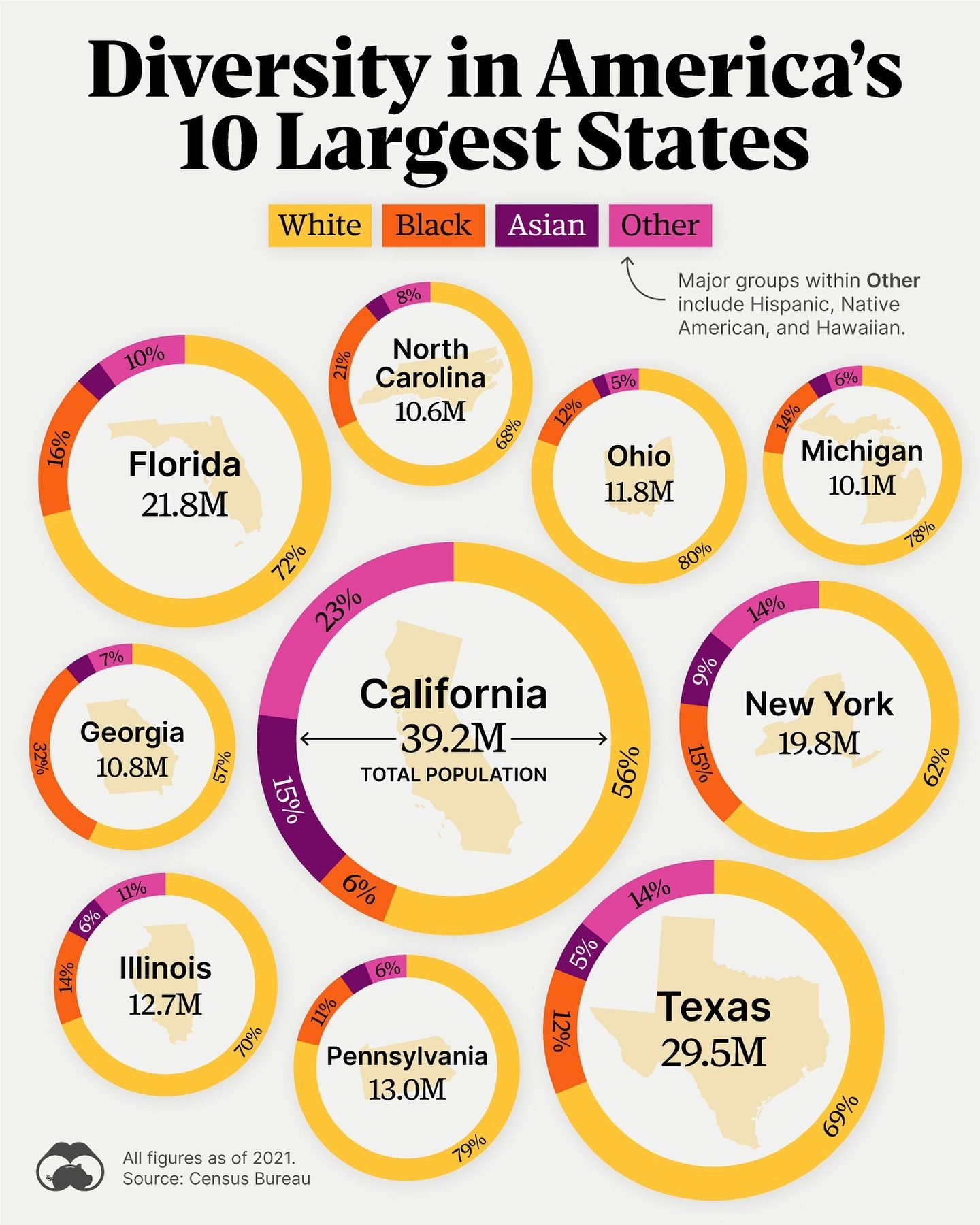
Over the last decade, America has become increasingly more diverse. As demographic patterns shift, understanding the racial diversity of the most populous states, particularly California and Texas, provides valuable insights into the evolving demographic landscape.
Context / Why This Matters
The demographics of the United States are continuously evolving, and California stands out as a microcosm of this diversity. With over 39 million people, it is the most populous state in the country and one of the most diverse. This diversity is not just a statistical fact but a significant factor in shaping the state's and the nation's cultural, economic, and political landscape.
Main Discussion
Diversity in America’s Largest States
The diversity within the 10 largest US states is striking. Data from the U.S. Census Bureau reveals a complex web of racial and ethnic backgrounds that contribute to the rich tapestry of the American population. The largest states by population—California, Texas, Florida, New York, Pennsylvania, Illinois, Ohio, Georgia, North Carolina, and Michigan—each have unique demographic profiles.
California: A Case Study in Diversity
California is a prime example of this demographic shift. The state's population is composed of a significant White population, a substantial Asian population, and smaller but significant percentages of Black, Hispanic, Native American, and other groups. This diversity is reflected in the state’s culture, politics, and economy, making it a major influence in national trends.
Texas: A Close Second
Texas, with over 29.5 million people, is the second most populous state and also highly diverse. The state's demographic makeup includes a large White population, a notable Hispanic population, and significant numbers of other ethnic groups. Texas's diversity is evident in its culinary scene, music, and festivals, making it a vibrant and dynamic state.
Other Large States
Florida, with 21.8 million people, is known for its diverse population, including a significant number of retirees and a growing Hispanic community. New York, with 19.8 million people, is a melting pot of cultures, with substantial populations from various racial and ethnic backgrounds. Pennsylvania, Illinois, Ohio, Georgia, North Carolina, and Michigan each have their unique demographic profiles, contributing to the broader narrative of American diversity.
The 'Other' Category
The 'Other' category in the demographic breakdown includes several major groups: Hispanic, Native American, and Hawaiian. This category highlights the complexity and depth of America's diversity. Understanding these groups is crucial for policating policies and programs that cater to the needs of all communities.
Practical Tips
For those interested in understanding and navigating this diverse landscape, here are some practical tips:
Stay Informed
Keep up-to-date with the latest demographic data from sources like the U.S. Census Bureau. This information can help you understand the changing demographics and plan accordingly.
Engage with Diversity
Engage with diverse communities through local events, cultural festivals, and community programs. This can provide valuable insights into different cultures and build stronger, more inclusive relationships.
Support Inclusive Policies
Advocate for policies that promote inclusivity and equality. This can help ensure that all communities have access to opportunities and resources.
Foster Cultural Competency
Develop cultural competency by learning about different cultures, traditions, and histories. This can help you communicate more effectively and build stronger, more respectful relationships.
Important Takeaways
Racial diversity is a defining feature of the United States, particularly in the 10 largest states. Understanding this diversity is essential for fostering a more inclusive and equitable society. The demographic data from the U.S. Census Bureau provides valuable insights into the racial and ethnic makeup of these states, highlighting the complexity and richness of America's population.
Conclusion
America's demographic landscape is diverse and dynamic, with California and Texas serving as key examples of this diversity. Understanding the racial and ethnic breakdown of the 10 largest states can provide valuable insights into the evolving demographic patterns of the country. By staying informed, engaging with diverse communities, supporting inclusive policies, and fostering cultural competency, we can all contribute to a more inclusive and equitable society.
Watch the Reel
Questions readers ask
Which states are considered to be the most diverse in America?
The 10 most populous states in America, including California, Texas, Florida, New York, and Illinois, are recognized for their high levels of racial and ethnic diversity. These states exhibit a rich mix of cultures, which significantly shape their societal dynamics.
What makes California a standout in terms of diversity?
California's diversity is exemplified by its large and varied population, which includes significant Hispanic, Asian, and multiracial communities. This diversity influences the state's cultural, economic, and political environments, making it a unique microcosm of America's broader demographic trends.
How does Texas's population diversity compare to other large states?
Texas is notable for its substantial Hispanic population, which is the largest minority group in the state. This, combined with significant African American, Asian, and White populations, contributes to a diverse demographic landscape similar to, but distinct from, other large states like California and New York.
How has the demographic landscape of America's largest states changed over the past decade?
Over the past decade, America's largest states have seen a notable increase in racial and ethnic diversity. This shift is characterized by growing minority populations, particularly Hispanic and Asian communities, which have significantly altered the demographic composition of these states.
What are some of the key implications of diversity in the most populous states?
The diverse population in states like California and Texas influences various aspects of life, including cultural expression, economic opportunities, and political representation. This diversity can lead to increased innovation, broader perspectives, and more inclusive policies, all of which contribute to the rich fabric of American society.
Related deep dives
Similar reads based on topic and creator.

Recent articles
Fresh deep dives from the latest Reels we unpacked.




Comments
Be the first to comment.