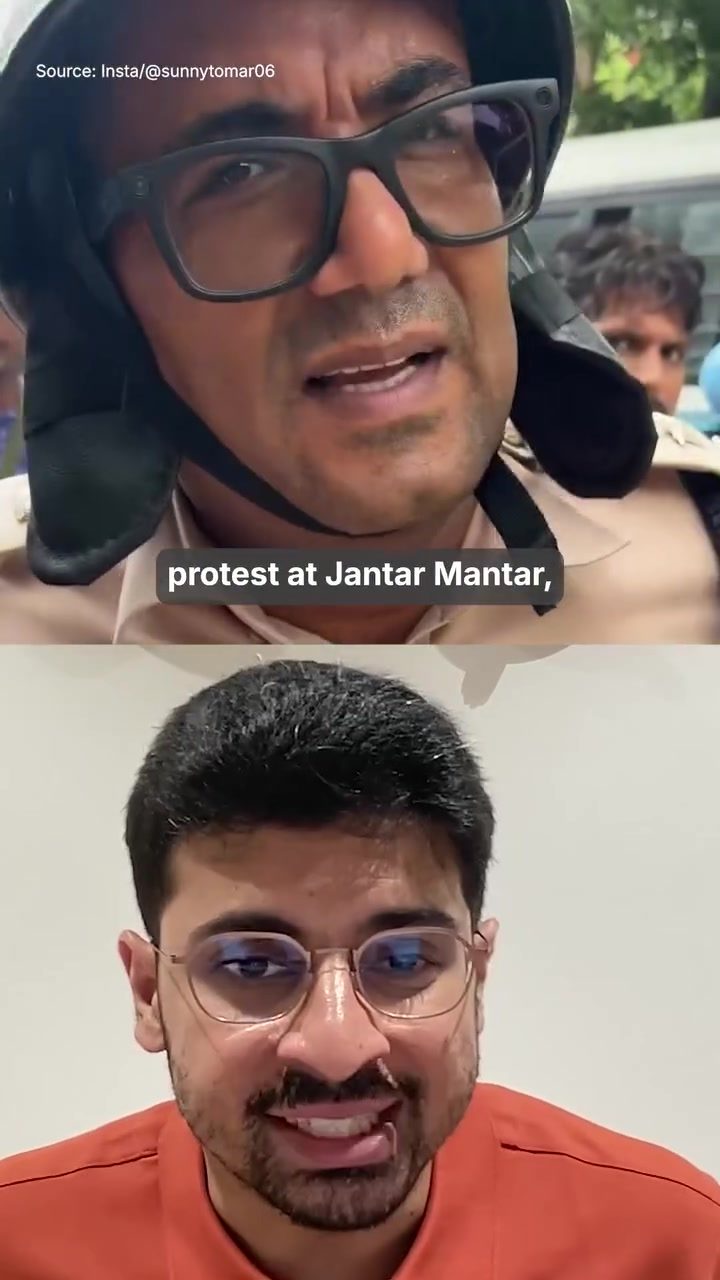
Delving into Advanced Surveillance: Delhi Police's AI-Powered Smart Glasses
AI-driven technology is revolutionizing law enforcement, and the Delhi Police are at the forefront of this transformation. The force is now equipped with AI smart glasses that offer real-time facial recognition capabilities. These glasses, made by Mumbai-based AjnaLens, are powered by "JARVIS," a sophisticated AI software developed by Gurugram's Staqu. The system is also supported by C-DOT and Innefu Labs, ensuring a robust and reliable network.
The Technology Behind the Glasses
The smart glasses are designed to scan and identify faces in milliseconds. When a police officer looks at an individual, the glasses swiftly scan the face and match it against a database of 65,000 criminal records stored within the device. This process happens in just 0.2 seconds, and the results are displayed as a red or green box around the person's face, indicating whether they are flagged in the system.
One of the standout features of these glasses is their ability to function off the grid. Since the database is stored locally, the glasses do not require an internet connection to operate. This makes them incredibly versatile and reliable, even in areas with limited or no network coverage.
The JARVIS Software: From Abhed to Advanced Surveillance
The technology powering these glasses is called "JARVIS," an AI video analytics platform developed by Staqu. Initially, JARVIS was known as "Abhed," a system designed to digitize criminal records and assist in searches for missing persons. Piloted with the Alwar police, Abhed laid the groundwork for what would become a comprehensive AI surveillance platform.
Over time, Abhed evolved into JARVIS, a broader AI video analytics system capable of monitoring faces, vehicles, and crowds in real-time. JARVIS can be integrated with existing CCTV cameras, transforming them into advanced surveillance tools. This integration enhances the capacity of law enforcement agencies to analyze and respond to various threats and situations.
More Than Just Surveillance: Enhanced Predictive Analytics
The AI smart glasses and JARVIS software are just part of a larger ecosystem of technologies supporting the Delhi Police. Innefu Labs plays a crucial role by providing a predictive analytics layer. This layer is designed to anticipate potential trouble spots before they escalate, thereby enabling proactive policing.
CDOT, the government's telecom research lab, also contributes significantly. In March this year, CDOT signed a formal agreement with the Delhi Police, covering nine different tools for surveillance, facial recognition, and secure communication. This collaboration ensures that the Delhi Police have access to cutting-edge technology and support for their operations.
Why Smart Glasses Matter for Law Enforcement
The integration of AI smart glasses into law enforcement operations marks a significant shift in how policing is conducted. Here are some key benefits:
- Real-Time Identification: The ability to identify individuals in real-time enhances the effectiveness of law enforcement operations, allowing officers to act swiftly and decisively.
- Enhanced Safety: By providing immediate feedback on individuals' criminal records, the glasses help officers make informed decisions, reducing the risk of danger to both officers and the public.
- Versatility and Reliability: The fact that these glasses can operate without an internet connection makes them ideal for use in remote or low-connectivity areas, ensuring consistent performance regardless of the environment.
- Predictive Capabilities: The predictive analytics layer adds a proactive dimension to policing, allowing authorities to identify and address potential trouble spots before they become critical issues.
Practical Tips for Effective Use of AI Smart Glasses
For law enforcement agencies considering the adoption of AI smart glasses, here are some practical tips:
- Training and Familiarization: Ensure that officers are adequately trained on how to use the glasses and understand their capabilities and limitations.
- Regular Updates: Keep the database of criminal records up-to-date to ensure the accuracy and reliability of the scans.
- Integration with Existing Systems: Ensure seamless integration with existing surveillance and communication systems to maximize the benefits of the technology.
- Continuous Evaluation: Regularly evaluate the performance and effectiveness of the glasses and make necessary adjustments to improve their utility.
Important Takeaways
The adoption of AI smart glasses by the Delhi Police signifies a monumental step in modernizing law enforcement. These glasses, powered by advanced AI software and supported by a robust technological ecosystem, offer real-time identification, enhanced safety, and predictive capabilities. As more law enforcement agencies consider integrating such technologies, the future of policing is poised to become more efficient, proactive, and effective.
Conclusion
The Delhi Police's AI smart glasses represent a key milestone in the evolution of law enforcement technology. By providing real-time identification, enhanced safety, and predictive analytics, these glasses are transforming how policing is conducted. As technology continues to advance, the integration of AI and surveillance tools will undoubtedly shape the future of law enforcement, making communities safer and more secure.
Watch the Reel
Questions readers ask
How do Delhi Police's AI smart glasses operate without an internet connection?
Delhi Police's AI smart glasses use advanced AI software that allows them to perform facial recognition tasks offline. The glasses have an internal database of criminal records, enabling real-time identification without the need for internet connectivity. This feature ensures that officers can identify individuals swiftly, even in areas with poor or no network coverage.
Who are the key partners involved in developing the AI smart glasses for Delhi Police?
The AI smart glasses used by Delhi Police are a collaborative effort involving several leading tech companies. AjnaLens, based in Mumbai, created the glasses, while the AI software, JARVIS, was developed by Gurugram's Staqu. Additionally, C-DOT and Innefu Labs have contributed to the technology, ensuring a robust and reliable system.
How quickly can the AI smart glasses identify an individual?
The AI smart glasses used by Delhi Police are designed for speed and efficiency. They can identify an individual from a database of criminal records in just milliseconds. This swift identification process enhances the officers' ability to respond to situations promptly and effectively.
What is the significance of the offline facial recognition feature in these smart glasses?
The offline facial recognition feature in Delhi Police's AI smart glasses is crucial for maintaining surveillance capabilities in areas with limited or no internet access. This feature ensures that officers can continuously monitor and identify individuals, making the technology more versatile and reliable in various operational environments.
How does the use of AI smart glasses benefit crime prevention efforts by Delhi Police?
The AI smart glasses benefit crime prevention efforts by enabling real-time identification of suspects. By quickly matching faces against a database of criminal records, officers can swiftly apprehend individuals with outstanding warrants or known criminal histories, thereby enhancing public safety and deterring criminal activities.
What is the capacity of the criminal records database integrated into the AI smart glasses?
The AI smart glasses used by Delhi Police have an internal database that stores approximately 65,000 criminal records. This extensive database allows officers to quickly identify individuals by comparing faces in real-time, making it an effective tool for law enforcement.
What are the advantages of using AI smart glasses over traditional surveillance methods?
The AI smart glasses offer several advantages over traditional surveillance methods. They provide real-time facial recognition, even in off-line mode, enabling rapid identification of suspects. Traditional methods often rely on post-event analysis, whereas the AI smart glasses allow for immediate action, enhancing the efficiency and accuracy of law enforcement operations.
Related deep dives
Similar reads based on topic and creator.


Recent articles
Fresh deep dives from the latest Reels we unpacked.




Comments
Be the first to comment.