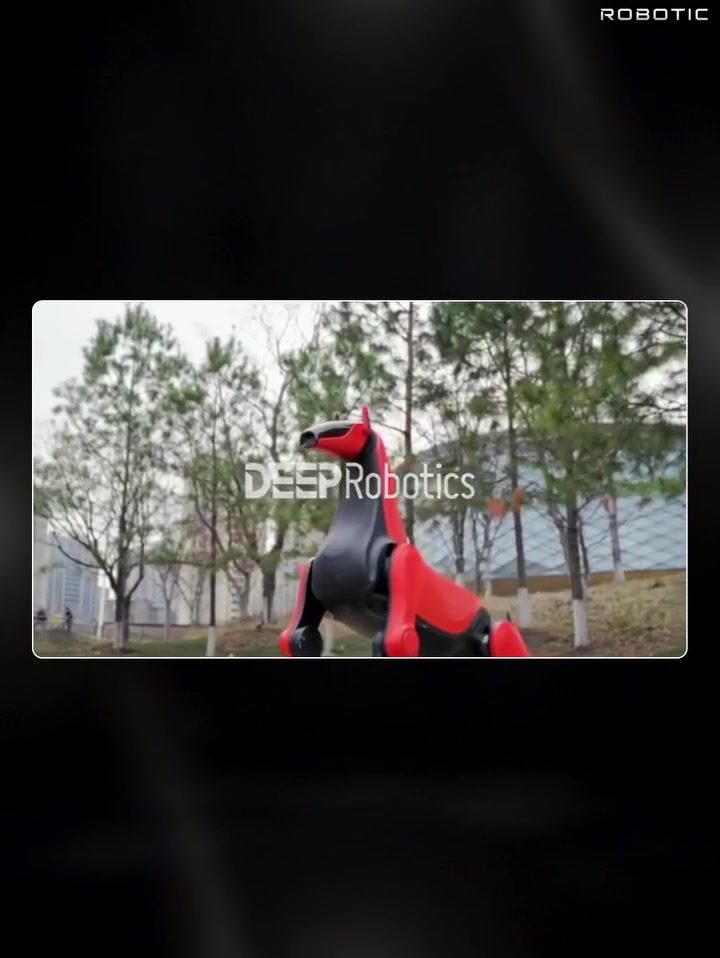
Robotic Horses in Action
Quadruped robotic horses are revolutionizing various industries with their unique design and capabilities. Manufactured by DEEP Robotics, these agile robots are designed for a range of applications, from industrial inspection to emergency rescue missions.
Why This Matters
The development of quadruped robotic horses represents a significant advancement in robotics technology. These robots can navigate challenging terrains and carry heavy loads, making them ideal for environments where conventional vehicles struggle.
Design and Capabilities
Agile Movement
The robotic horse by DEEP Robotics is designed to move with agility, mimicking the natural movements of a horse. This agility is crucial for navigating uneven and rough terrains, ensuring that the robot can perform its tasks efficiently. The horse's black and red color scheme is both visually appealing and functional, helping it stand out in various environments.
Payload and Weight
One of the standout features of this robotic horse is its ability to carry payloads of up to 50 kg (110 lb) while weighing only 30 kg (66 lb). This impressive weight-to-payload ratio makes it an excellent option for tasks that require carrying heavy loads. The robot's lightweight design also contributes to its agility and maneuverability, allowing it to traverse difficult terrains easily.
Sensors and Protection
Equipped with LiDAR and 360° obstacle avoidance, the robotic horse can detect and avoid obstacles in real-time. This feature is essential for ensuring the robot's safety and the integrity of its tasks. The IP66 protection rating means it is resistant to dust and water, making it suitable for use in harsh conditions. Additionally, the robot's battery life of up to three hours ensures it can operate for extended periods without frequent recharging.
Speed and Terrain
The robotic horse is built to navigate rough terrain at speeds of 5 m/s (18 km/h). This speed, combined with its agility, allows it to cover large areas quickly and efficiently. The ability to traverse various terrains is crucial for tasks ranging from industrial inspection to emergency rescue missions.
Applications
Industrial Inspection
One of the primary applications of the robotic horse is in industrial inspection. Its agility and ability to carry heavy loads make it ideal for inspecting hard-to-reach areas in industrial facilities. Whether it's checking pipelines, inspecting bridges, or monitoring equipment, the robotic horse can perform these tasks with ease.
Logistics
In the logistics industry, the robotic horse can be used for transporting goods in environments where conventional vehicles cannot operate. Its ability to navigate rough terrain and carry heavy loads makes it a practical tool for logistics operations, ensuring that goods are delivered efficiently and safely.
Emergency Rescue Missions
During emergency rescue missions, the robotic horse can be deployed to navigate through difficult terrains and carry essential supplies. Its agility and speed make it an invaluable asset in rescue operations, helping to save lives and provide critical support in emergencies.
Practical Tips
If you're considering using a robotic horse for your operations, here are some practical tips to keep in mind:
Understanding Terrain
Before deploying the robotic horse, it's essential to understand the terrain it will navigate. Knowing the type of terrain and any potential obstacles can help you program the robot to handle specific challenges effectively.
Training and Maintenance
Regular training and maintenance are crucial for keeping the robotic horse in optimal condition. Ensure that the robot is calibrated correctly and that all sensors and systems are functioning properly. Regular maintenance checks can help prevent unexpected breakdowns and ensure the robot performs reliably.
Safety Protocols
Implement safety protocols to ensure the robotic horse operates safely in various environments. This includes setting up clear communication channels and ensuring that the robot can be monitored and controlled remotely if necessary.
Important Takeaways
- The robotic horse by DEEP Robotics is designed for agile movement, making it ideal for navigating rough terrains.
- It can carry payloads of up to 50 kg (110 lb) while weighing only 30 kg (66 lb), providing an impressive weight-to-payload ratio.
- Equipped with LiDAR, 360° obstacle avoidance, and IP66 protection, the robot is suitable for harsh conditions.
- It can operate at speeds of 5 m/s (18 km/h) and is ideal for industrial inspection, logistics, and emergency rescue missions.
Conclusion
The robotic horse by DEEP Robotics is a groundbreaking innovation in the field of robotics. Its agility, payload capacity, and advanced sensors make it a practical tool for a variety of applications. From industrial inspection to emergency rescue missions, the robotic horse is transforming the way we approach tasks in challenging environments. As technology continues to evolve, we can expect to see even more advancements in the capabilities of these remarkable robots.
Watch the Reel
Questions readers ask
What makes the DEEP Robotics Agile Robotic Horse different from traditional robots?
The DEEP Robotics Agile Robotic Horse stands out due to its quadruped design and agile movement, which allows it to navigate uneven and rough terrains with ease. Unlike traditional robots, it can carry heavy payloads and operate effectively in harsh conditions, making it suitable for a variety of industries.
In which industries can the quadruped robotic horses by DEEP Robotics be applied?
These agile robots can be used in numerous industries. They are particularly useful in industrial settings for inspections, in emergency services for rescue missions, and in environments where conventional vehicles cannot operate due to challenging terrain or harsh conditions.
How does the DEEP Robotics horse mimic natural horse movements?
The robotic horse by DEEP Robotics is designed to replicate the natural gait and agility of a horse, which includes smooth transitions between movements and the ability to handle uneven surfaces. This biomimicry enhances its capability to traverse complex terrains efficiently, similar to a real horse.
What kind of payload can the robotic horse by DEEP Robotics carry?
The robotic horse is engineered to carry heavy loads, making it ideal for tasks that require transporting equipment or supplies in challenging environments. Specific payload capacities can vary, so it's best to check the technical specifications provided by DEEP Robotics for precise details.
Can the quadruped robot horse operate in extreme weather conditions?
Yes, the robotic horse is built to operate in harsh conditions, including extreme weather. Its robust design ensures that it can function effectively in environments where conventional vehicles might struggle, making it a reliable tool for various industrial and emergency applications.
How do the DEEP Robotics bionic horse robots navigate complex terrains?
The bionic horse robots use advanced sensors and algorithms to navigate complex terrains. These features enable the robots to assess the environment in real-time, adjust their movements accordingly, and maintain stability while traversing rough or uneven surfaces.
What role do these robotic horses play in emergency rescue missions?
Robotic horses can be crucial in emergency rescue missions by accessing areas that are difficult or dangerous for humans to reach. Their agility and ability to carry heavy loads allow them to transport essential supplies and equipment, aiding rescue teams in saving lives and mitigating risks.
Related deep dives
Similar reads based on topic and creator.



Recent articles
Fresh deep dives from the latest Reels we unpacked.




Comments
Be the first to comment.