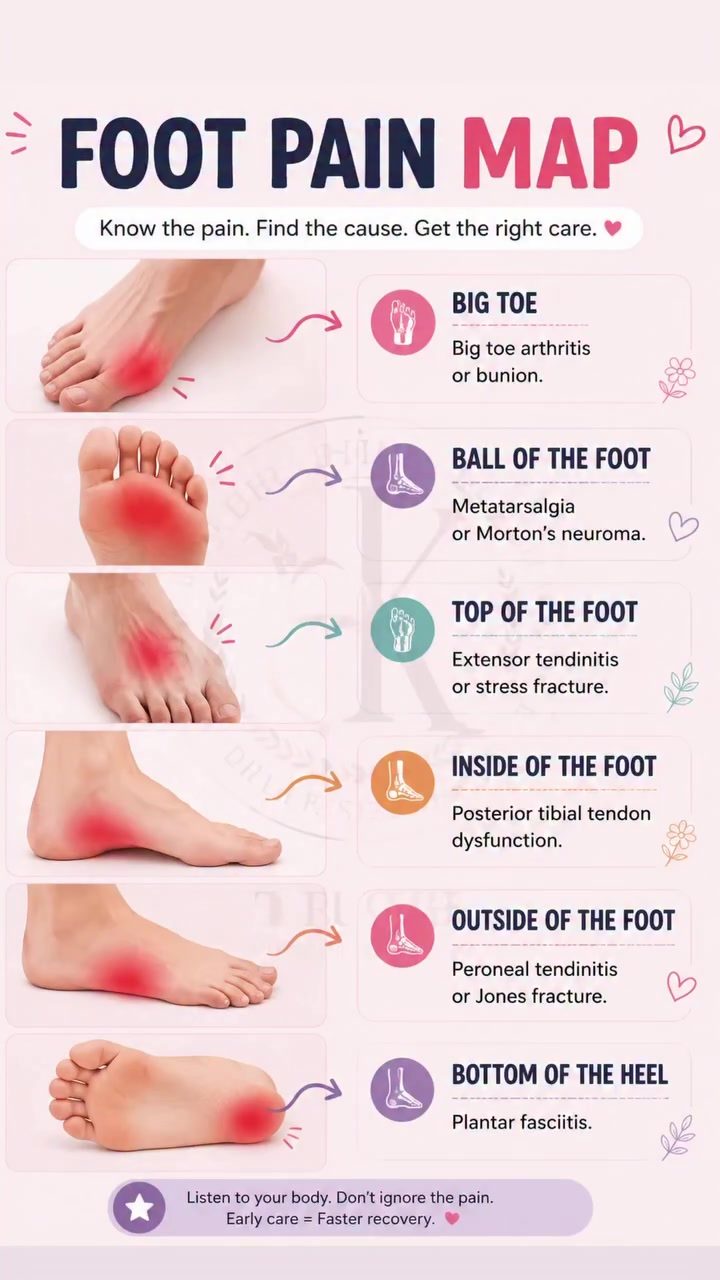
Foot Pain Map: Deciphering Your Foot Pain
Foot pain can be debilitating and confusing, with discomfort in different parts of the foot often indicating various underlying issues. A foot pain map can help you understand what your pain might mean, guiding you towards the right care and faster recovery.
Context: Why This Matters
Understanding the location and type of foot pain is crucial for proper diagnosis and treatment. Different areas of the foot can experience various types of pain, each with its own set of potential causes. Early care and attention to foot pain can lead to faster recovery and prevent long-term complications.
Main Discussion: Understanding the Foot Pain Map
A foot pain map is a visual tool that helps identify potential causes of pain in different areas of the foot. By recognizing the location of your discomfort, you can gain insights into what might be causing it and take the appropriate steps towards relief.
Common Areas of Foot Pain
Big Toe
Pain in the big toe can often be attributed to:
- Big Toe Arthritis: Inflammation and stiffness in the joint.
- Bunion: A bony bump that forms on the joint at the base of the big toe.
Ball of the Foot
Pain in the ball of the foot is commonly associated with:
- Metatarsalgia: Inflammation and pain in the ball of the foot, often due to high-impact activities.
- Morton's Neuroma: A thickening of the tissue around one of the nerves leading to your toes, causing pain and numbness.
Top of the Foot
Pain on the top of the foot may indicate:
- Extensor Tibialis Tendonitis: Inflammation of the tendon that runs along the top of the foot, often due to overuse.
- Stress Fracture: A small crack in a bone, typically caused by repetitive impact.
Inside of the Foot
Pain on the inside of the foot can be a sign of:
- Posterior Tibial Tendon Dysfunction: Weakness or inflammation in the tendon that supports the arch, leading to flat feet and pain.
Outside of the Foot
Pain on the outside of the foot might suggest:
- Peroneal Tendinitis: Inflammation of the tendons that run along the outside of the ankle.
- Jones Fracture: A specific type of fracture in the fifth metatarsal bone, often occurring from a twisting injury.
Bottom of the Foot
Pain on the bottom of the foot is frequently linked to:
- Plantar Fasciitis: Inflammation of the plantar fascia, a band of tissue that runs along the bottom of the foot, causing heel pain.
Causes of Foot Pain
Foot pain can stem from various sources, and identifying the underlying cause is essential for effective treatment. Some common causes of foot pain include:
- Arthritis: Inflammation and degeneration of the joints, leading to pain and stiffness.
- Neuromas: Thickened tissue around nerves, causing pain and numbness.
- Tendonitis: Inflammation of the tendons, often due to overuse or injury.
- Fractures: Breaks or cracks in the bones, typically from trauma or repetitive stress.
- Plantar Fasciitis: Inflammation of the plantar fascia, a common cause of heel pain.
Practical Tips
When to Seek Medical Attention
While a foot pain map can provide valuable insights, it is important to remember that it does not confirm a diagnosis. If you experience any of the following symptoms, seek urgent medical care:
- Severe swelling: Rapid or significant swelling in the foot or ankle.
- Inability to bear weight: Difficulty walking or standing on the affected foot.
- Foot deformity after an injury: Any noticeable changes in the foot's shape or structure.
- Fever with redness and warmth: Signs of infection, such as fever, redness, and warmth in the affected area.
- Numbness or loss of circulation: Lack of feeling or poor blood flow in the foot.
Preventing Foot Pain
Preventive measures can help reduce the risk of foot pain and promote overall foot health. Here are some practical tips:
- Wear Proper Footwear: Choose shoes that provide adequate support and cushioning.
- Maintain a Healthy Weight: Excess weight can put added pressure on the feet, leading to pain and discomfort.
- Stay Active: Regular exercise can help maintain foot strength and flexibility.
- Stretch Regularly: Incorporate foot and ankle stretches into your routine to prevent tightness and injury.
- Listen to Your Body: Pay attention to any signs of discomfort or pain, and seek care promptly.
Important Takeaways
Foot pain can be a complex issue, but understanding the different areas of the foot and their associated pain causes can help guide you towards the right care. Here are the key points to remember:
- Pain in different parts of the foot is commonly associated with different conditions.
- Early care and attention to foot pain can lead to faster recovery.
- Seek urgent medical care if you experience severe symptoms.
- Preventive measures, such as proper footwear and regular exercise, can help maintain foot health.
Conclusion
While a foot pain map can serve as a helpful guide, it is essential to consult a healthcare professional for an accurate diagnosis and appropriate treatment. By understanding the potential causes of foot pain and taking proactive steps, you can alleviate discomfort and promote long-term foot health.
Watch the Reel
Questions readers ask
What is a foot pain map and how can it help me?
A foot pain map is a visual guide that helps you locate and identify the type of pain you're experiencing in your foot. It can help you understand the potential causes of your discomfort, making it easier to communicate with healthcare professionals and guiding you towards appropriate foot pain treatment. By using a foot pain map, you can also track changes in your pain over time, aiding in a more accurate diagnosis and faster recovery.
What are some common causes of big toe pain?
Big toe pain can stem from various issues, including arthritis, bunion, or gout. A foot pain map can help you pinpoint whether the pain is at the base (bunion) or the joint (arthritis). Morton's neuroma can also cause big toe pain, but this is less common. If you're experiencing persistent big toe pain, it's important to seek medical attention for proper diagnosis and foot fracture care, if necessary.
How can I distinguish between plantar fasciitis pain and other types of heel pain?
Plantar fasciitis pain typically presents as a sharp, stabbing pain in the heel or arch, often worse in the morning or after long periods of rest. It may also feel like a burning sensation along the bottom of the foot. In contrast, heel pain from a fracture might be more intense and constant, possibly accompanied by swelling and bruising. A foot pain map can help you pinpoint the exact location of the pain and guide you towards the right heel pain diagnosis and treatment.
What are the causes of metatarsalgia and how can a foot pain map help identify it?
Metatarsalgia causes pain and inflammation in the ball of the foot, often due to high-impact activities, poorly fitting shoes, or specific foot conditions. A foot pain map can help identify this pain, allowing you to track the intensity and location of pain in the ball of the foot. By understanding the exact location and type of pain, you can guide your healthcare professional towards effective treatment and management strategies.
How does Morton's neuroma cause foot pain and where is it located?
Morton's neuroma foot pain is typically located between the third and fourth toes, but can also occur between the second and third toes. The pain often feels like a sharp, burning sensation, and can be accompanied by numbness or tingling. A foot pain map can help you pinpoint the pain, making it easier to discuss with your healthcare provider and guiding you towards the right diagnosis and treatment path.
What are the signs of tibial nerve pain and how can a foot pain map help?
Tibial nerve pain, often caused by tarsal tunnel syndrome, can present as a burning or tingling sensation, weakness, or numbness in the foot. This pain can radiate from the inside of the ankle down to the arch or toes. Using a foot pain map, you can document the location and type of pain, helping your healthcare provider differentiate it from other nerve-related issues and guiding you towards effective treatment.
How can I find relief from bunion pain?
Bunion pain relief can often be achieved through a combination of strategies, including wearing appropriate footwear, using orthotics, and applying ice. In more severe cases, your healthcare provider may recommend specific exercises, pain medication, or even surgery. A foot pain map can help track the location and severity of your bunion pain, aiding in a more accurate diagnosis and guiding you towards the right treatment options.
Related deep dives
Similar reads based on topic and creator.




Recent articles
Fresh deep dives from the latest Reels we unpacked.



Comments
Be the first to comment.