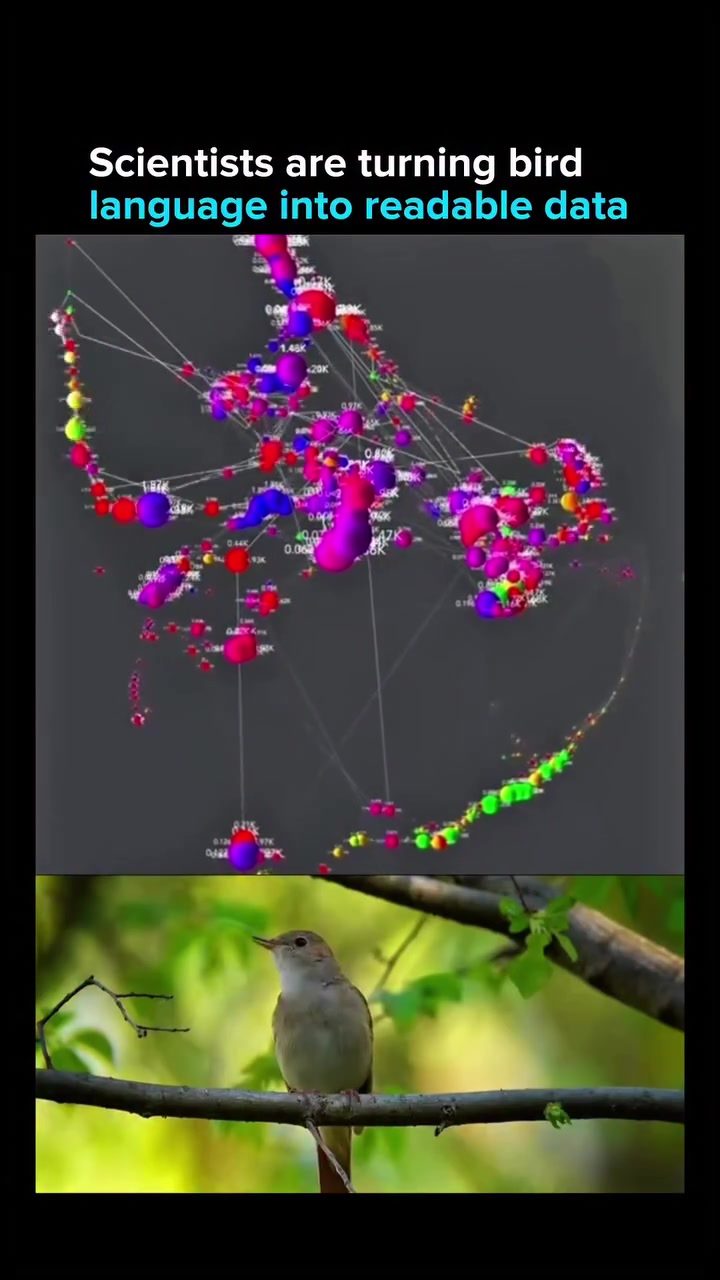
Bird communication, long considered an enigma, is now becoming more comprehensible, thanks to advancements in data analysis and visualization. Scientists are transforming the intricacies of bird language into structured visual data, revealing patterns and structures that were previously imperceptible to human ears.
Context / Why This Matters
Understanding bird communication goes beyond mere curiosity. It offers insights into the cognitive abilities of different species, their social structures, and how they respond to their environment. By translating bird calls into readable data, researchers can uncover hidden patterns, timing, and signal logic that govern these complex interactions. This shift from random noise to structured data is not just fascinating; it is a significant step in unraveling the complexities of non-human communication.
Bird calls often sound like random chatter to humans, but researchers are now beginning to map these sounds like a system, revealing structure and meaning. This transformation is crucial for conservation efforts, as it provides valuable data on how birds communicate and respond to environmental changes. Additionally, it opens new avenues for interdisciplinary research, combining biology, machine learning, and data visualization.
Main Discussion
The Process of Data Transformation
Translating bird language into structured visual data involves several steps. Initially, researchers record and analyze bird calls using advanced audio analysis tools. These tools convert the audio signals into digital data, which can then be processed and analyzed. The data is subsequently visualized using network graphs, where different nodes represent various calls, and connections illustrate the relationships between them.
Data visualization tools are essential in this process, as they convert complex datasets into easily interpretable visuals. By using various colors and connections, scientists can identify patterns, such as how calls cluster, repeat, and form recognizable structures. These patterns provide valuable insights into the communication dynamics of bird species, revealing how they exchange information and respond to their surroundings.
The Significance of Visual Patterns
Visualizing bird language data as a system helps in identifying patterns that would otherwise go unnoticed. These patterns are essential for understanding the structure and logic behind bird communication. For example, certain calls might cluster together, indicating a specific context or message. Repeated sequences of calls can signify important signals, such as warnings or mating calls. By mapping these patterns, researchers can decode the meaning behind bird communication and explore how it evolves over time.
The Role of Machine Learning
Machine learning plays a pivotal role in transforming bird language into readable data. Advanced algorithms can process vast amounts of audio data quickly and efficiently, identifying patterns and structures that human researchers might miss. These algorithms can also adapt and improve over time, becoming more accurate in interpreting bird calls. By making biology machine-readable, researchers can unlock new insights into the natural world, leading to a deeper understanding of communication systems.
Practical Tips
Conducting Bird Language Research
If you're interested in exploring bird language data, here are some practical steps to get started:
- Audio Recording: Invest in high-quality audio recording equipment to capture clear and detailed bird calls. Position the microphone strategically to avoid background noise.
- Software Tools: Utilize specialized software tools for audio analysis, such as Raven Pro or Audacity. These tools can help in processing and visualizing bird calls.
- Data Visualization: Use data visualization software like Gephi or Tableau to create network graphs. These visuals can reveal patterns and relationships within the data.
- Collaboration: Collaborate with researchers in fields like bioacoustics, machine learning, and data visualization. This interdisciplinary approach can provide valuable insights and resources.
Important Takeaways
The transformation of bird language into structured visual data is a groundbreaking development in our understanding of non-human communication. By revealing the hidden patterns and structures in bird calls, researchers are unlocking new insights into the natural world. This process not only enhances our knowledge of bird behavior but also opens up new avenues for conservation and interdisciplinary research. As we continue to decode these intricate communication systems, we move closer to a deeper appreciation and understanding of the complexities of bird language.
Conclusion
The journey from random bird calls to structured visual data highlights the power of technology in unraveling the mysteries of nature. By leveraging advanced data analysis and visualization techniques, scientists are turning the seemingly chaotic world of bird communication into a comprehensible system. This transformation not only sheds light on the intricate communication dynamics of birds but also paves the way for future research and conservation efforts.
Watch the Reel
Questions readers ask
How do scientists transform bird calls into visual data?
Scientists use advanced data analysis and visualization techniques to convert the acoustic properties of bird calls into structured visual formats, such as spectrograms. This process reveals patterns and structures in bird language that are not perceptible through auditory means alone.
What can we learn from visualizing bird communication?
By visualizing bird communication, researchers can gain insights into bird cognition, social structures, and environmental responses. This includes understanding how birds communicate within their communities, how they react to changes in their environment, and the underlying logic of their interactions.
What are some key benefits of decoding bird language into data?
Decoding bird language into data helps in identifying hidden patterns, timing, and signal logic in bird communication. This structured data is crucial for conservation efforts, providing a deeper understanding of bird behavior and ecology, and facilitating interdisciplinary research across fields like biology, linguistics, and environmental science.
What techniques do scientists use to decode bird calls?
Scientists employ various techniques, including spectrogram analysis, machine learning algorithms, and statistical modeling. These methods help in transforming the intricate sounds of bird calls into readable data, allowing for the identification of patterns and structures that can be studied and interpreted.
Why is understanding bird communication important for conservation?
Understanding bird communication can provide valuable insights into how birds respond to environmental changes. This information is essential for developing effective conservation strategies, monitoring population health, and preserving critical habitats.
How do researchers use bird call data in interdisciplinary studies?
Researchers use bird call data to engage in interdisciplinary studies that combine insights from fields like biology, linguistics, and environmental science. This collaborative approach helps in uncovering complex interactions and developing a more comprehensive understanding of bird behavior and ecology.
What are the next steps in the process of decoding bird language?
The next steps involve refining data analysis techniques, expanding the scope of research to include more species, and developing real-time monitoring systems. This ongoing work aims to provide a more detailed and nuanced understanding of bird language, further enhancing our knowledge of avian communication and its implications for conservation and research.
Related deep dives
Similar reads based on topic and creator.



Recent articles
Fresh deep dives from the latest Reels we unpacked.




Comments
Be the first to comment.