Academic Freedom Decline
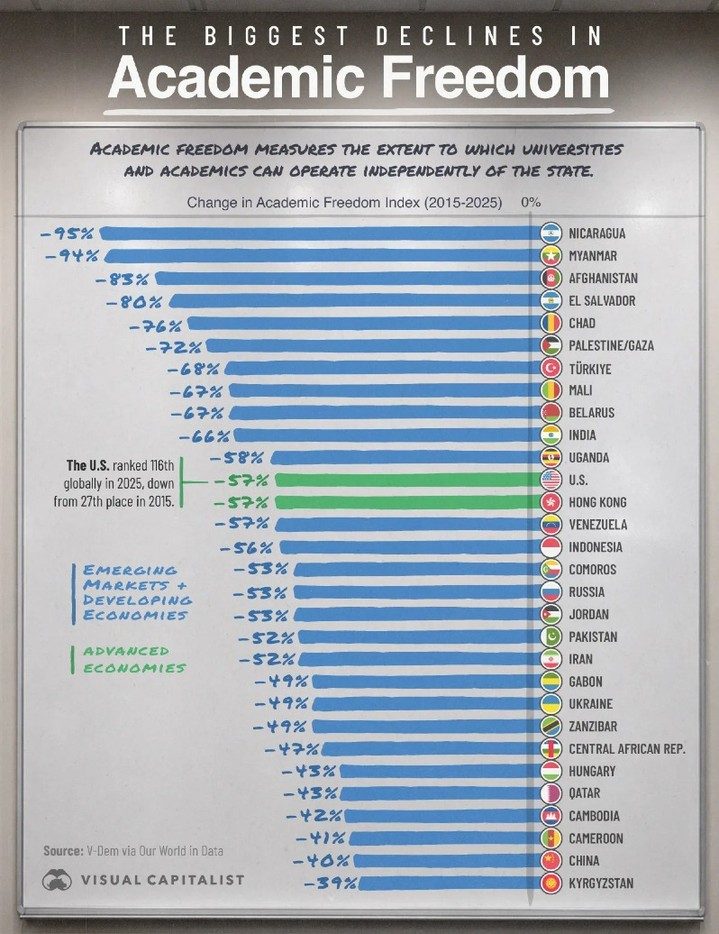
Academic freedom has seen a significant decline in 67% of countries over the past decade. According to a detailed infographic, countries like Nicaragua, Myanmar, and Afghanistan have experienced the steepest drops in academic freedom from 2015 to 2025. This data comes from the V-Dem Institute and is visualized through Our World in Data.
Why This Matters
Academic freedom is a cornerstone of higher education, enabling independent research and free expression. It's measured by the extent to which universities and academics can operate independently of the state. This freedom is crucial for fostering innovation, critical thinking, and the transfer of knowledge. Declines in academic freedom can stifle these processes, potentially leading to broader societal and economic impacts.
Main Discussion
Global Trends
The data reveals a stark reality: over the past decade, academic freedom has decreased significantly in many parts of the world. This trend is particularly pronounced in emerging markets and developing economies, but even advanced economies have seen notable declines. For instance, the United States, once a leader in academic freedom, has fallen from 27th to 116th globally, marking one of the most significant drops among advanced economies.
Regions with the Most Significant Decline
Several countries stand out for their dramatic decreases in academic freedom:
- Nicaragua (-95%): This Central American nation has seen the most dramatic decline, indicating severe restrictions on academic independence.
- Myanmar (-94%): Political turmoil and conflict have severely impacted academic freedom in this Southeast Asian country.
- Afghanistan (-83%): Decades of conflict and instability have led to a significant erosion of academic independence.
- El Salvador (-80%) and Chad (-76%): These countries also experienced substantial declines, reflecting broader challenges in academic freedom.
Advanced Economies and Decline
While the most dramatic declines are seen in emerging markets and developing economies, even advanced economies have not been immune to this trend. The United States’ decline, for example, raises questions about the broader global trends affecting academic freedom. Other advanced economies, such as Hungary (-43%), have also experienced notable decreases, indicating that even countries with established democratic institutions are facing challenges in maintaining academic independence.
Developing Economies and Emerging Markets
Emerging markets and developing economies show some of the most substantial declines. Countries like Turkiye (-67%), Malí (-67%), and Belarus (-67%) have seen significant drops, reflecting broader political and social issues that impact academic freedom.
Specific Countries and Their Declines
The infographic highlights specific countries and their respective declines in academic freedom:
- India (-66%): A notable decline in what is one of the world's largest democracies, raising concerns about the state of academic independence.
- Russia (-53%): Political tensions and conflicts have led to a significant reduction in academic freedom.
- China (-40%): The country's stringent control over academic institutions and researchers has resulted in a substantial decline in academic independence.
- Iran (-49%) and Pakistan (-52%): Both countries have faced significant restrictions on academic freedom, reflecting broader political and social challenges.
Practical Tips
For academics and researchers concerned about the state of academic freedom, here are some practical steps to safeguard and promote academic independence:
- Engage in Advocacy: Join or support organizations that advocate for academic freedom and human rights. These groups often work to raise awareness and pressure governments to improve conditions for academics.
- Document and Share: Keep detailed records of incidents that restrict academic freedom. Share these findings with international organizations and media outlets to raise awareness.
- Build International Networks: Establish connections with academics and researchers in other countries, as international collaboration can provide support and protection.
Important Takeaways
Academic freedom is under threat in many countries, affecting the ability of universities and academics to operate independently. The significant declines in countries like Nicaragua, Myanmar, and Afghanistan highlight the severity of the issue. Even advanced economies like the United States are not immune to this trend, indicating a global challenge. To address this, academics and researchers can engage in advocacy, document incidents, and build international networks to safeguard academic independence.
Conclusion
The decline in academic freedom is a pressing issue that affects countries worldwide, from emerging markets to advanced economies. The data from the V-Dem Institute via Our World in Data underscores the urgency of addressing these challenges. By raising awareness, advocating for change, and building international support, academics and researchers can help safeguard academic freedom for future generations.
Watch the Reel
Questions readers ask
Which countries have experienced the most significant declines in academic freedom from 2015 to 2025?
The countries with the steepest declines in academic freedom over the past decade include Nicaragua, Myanmar, and Afghanistan. These nations have seen notable restrictions on independent research and free expression within their academic institutions.
How is academic freedom measured and why is it important?
Academic freedom is measured by the independence of universities and academics from state control. It's vital for encouraging innovation, critical thinking, and the exchange of knowledge. A decline in academic freedom can hinder these processes and have broader societal impacts.
What does the data from the V-Dem Institute and Our World in Data show about global academic freedom trends?
The data reveals that 67% of countries worldwide have experienced a significant decline in academic freedom from 2015 to 2025. This trend highlights a worrying global pattern of increasing restrictions on academic independence and free expression.
How does the decline in academic freedom affect emerging economies and democracies differently?
The decline in academic freedom can have varied impacts. In emerging economies, it may hinder economic growth and development by stifling innovation. In democracies, it can erode public trust and weaken democratic institutions by limiting open discourse and research.
What are the primary concerns related to academic freedom in Nicaragua, Myanmar, and Afghanistan?
In these countries, primary concerns include severe restrictions on academic independence, censorship of research and publications, and interference from state authorities in university affairs, all of which undermine the ability of academics to conduct and share their work freely.
How can universities and academics advocate for academic freedom amidst these declines?
Universities and academics can advocate for academic freedom by raising awareness about its importance, engaging in open dialogue with policymakers, and collaborating with international organizations to promote academic independence and free expression. Additionally, documenting and publicizing violations can help draw attention to these issues.
What role do international organizations like the V-Dem Institute play in monitoring academic freedom?
International organizations like the V-Dem Institute play a crucial role in monitoring academic freedom by collecting and analyzing data on academic independence and free expression. They provide valuable insights into global trends and help raise awareness about declines in academic freedom, enabling policymakers and academics to take informed actions.
Related deep dives
Similar reads based on topic and creator.

Recent articles
Fresh deep dives from the latest Reels we unpacked.




Comments
Be the first to comment.