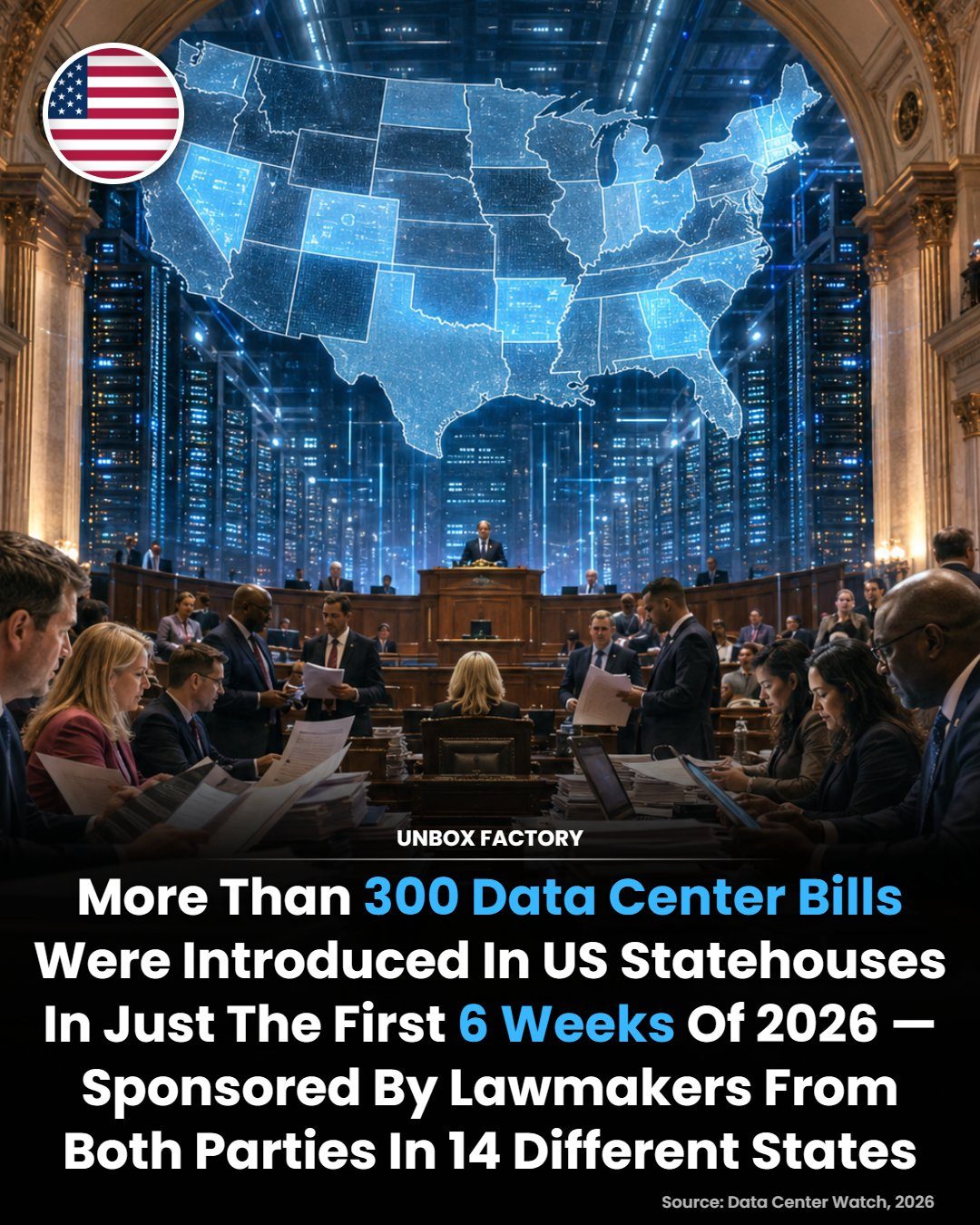
Data Center Bills: A Wave of Legislation Across US States
State legislatures nationwide have introduced more than 300 bills related to data centers in the first six weeks of 2026, marking a significant policy shift in managing the rapid expansion of AI infrastructure. This legislative surge, backed by both major political parties in 14 different states, aims to address critical issues such as electricity costs, water consumption, tax incentives, environmental permitting, transmission infrastructure, community zoning, and public transparency. The unprecedented volume of these bills reflects growing concerns over data centers' escalating electricity demand, forecasted to consume up to 12% of total U.S. electricity by 2028.
Why This Matters
Data centers are the backbone of the digital age, powering everything from cloud services to artificial intelligence. Their rapid growth, however, presents substantial challenges, particularly in terms of energy consumption and environmental impact. The recent wave of legislation underscores the urgent need for comprehensive policy frameworks to manage this growth sustainably.
Understanding the Legislative Wave
The Scope of the Legislation
The 300+ bills introduced in 2026 cover a broad range of issues, reflecting the multifaceted nature of data center operations. Key areas of focus include:
- Electricity Costs: As data centers consume vast amounts of electricity, states are exploring ways to manage and mitigate these costs.
- Water Consumption: Data centers require significant water resources for cooling, prompting legislation aimed at sustainable water use.
- Tax Incentives: Policies are being proposed to incentivize energy-efficient data center operations and investments.
- Environmental Permitting: Stringent environmental regulations are being considered to limit the ecological footprint of data centers.
- Transmission Infrastructure: Enhancements to power transmission infrastructure are crucial to support the growing energy demands of data centers.
- Community Zoning: Legislation is addressing community concerns by setting guidelines for data center locations and zoning.
- Public Transparency: Increased transparency is being mandated to keep the public informed about data center operations and their impacts.
The Role of AI Infrastructure
The rapid expansion of AI infrastructure is a significant driver behind this legislative wave. Artificial intelligence, with its heavy computational demands, relies on data centers for processing power. As AI technologies advance, the demand for data center capacity is expected to skyrocket, prompting states to proactively address the associated challenges.
Bipartisan Support
One of the most noteworthy aspects of this legislative push is the bipartisan support it has garnered. Lawmakers from both major parties in 14 states have joined forces to address data center issues, highlighting the non-partisan nature of the challenges posed by growing data center infrastructure.
Practical Tips for Stakeholders
Data Center Operators
For data center operators, this legislative wave presents both challenges and opportunities. Operators should:
- Stay Informed: Keep abreast of evolving legislation in their states to ensure compliance.
- Engage with Lawmakers: Participate in public consultations and engage directly with policymakers to shape regulations.
- Invest in Sustainability: Prioritize energy-efficient technologies and sustainable practices to align with emerging regulations.
Policy Makers
Policy makers should focus on:
- Balancing Regulations: Craft policies that balance environmental and economic considerations.
- Encouraging Innovation: Promote technologies that can mitigate the environmental impact of data centers.
- Fostering Dialogue: Engage with stakeholders, including data center operators and environmental groups, to create well-rounded policies.
Public and Communities
For communities and the public, it’s essential to:
- Stay Informed: Understand the implications of new legislation on local data center operations.
- Engage in Public Consultations: Participate in public hearings and consultations to ensure community concerns are addressed.
- Promote Transparency: Advocate for clear and transparent communication from data center operators and policymakers.
Important Takeaways
- Data centers are a critical component of modern infrastructure, supporting everything from cloud services to AI.
- The rapid growth of AI infrastructure is driving significant changes in data center legislation across the U.S.
- Legislation is addressing multiple facets of data center operations, including electricity costs, water consumption, and environmental impact.
- Bipartisan support for these bills highlights the widespread recognition of the challenges and opportunities presented by data centers.
Conclusion
The introduction of more than 300 data center bills in the first six weeks of 2026 marks a significant milestone in U.S. policy-making. As data centers continue to grow in importance, driven by the expanding AI infrastructure, it is crucial for stakeholders—from operators to policymakers and communities—to engage proactively. By addressing key issues such as electricity costs, environmental impacts, and public transparency, these legislative efforts aim to ensure sustainable growth and mitigate the challenges posed by data centers. The bipartisan support underscores the urgency and importance of these policies in shaping the future of data center infrastructure and AI development.
Watch the Reel
Questions readers ask
What is driving the surge in data center bills across U.S. states in 2026?
The rapid expansion of data centers, particularly to support AI infrastructure, has led to a significant increase in electricity consumption and water use. This has prompted state legislatures to introduce over 300 bills to address these concerns and manage the growth of data centers.
Which issues are the state bills primarily focusing on?
The bills introduced in 2026 cover a wide range of issues, including electricity costs, water consumption, tax incentives, environmental permitting, transmission infrastructure, community zoning, and public transparency, reflecting a comprehensive approach to data center regulation.
Which political parties are involved in this legislative push?
Both major political parties have backed this legislative surge, demonstrating a bipartisan effort. The bills have been introduced in 14 different states, highlighting a collective concern over the environmental and resource impacts of data centers.
Why is the electricity demand of data centers a concern?
Data centers are projected to consume up to 12% of total U.S. electricity by 2028. This escalating demand raises concerns about energy costs, availability, and environmental impact, making it a critical focus of the new legislation.
What are some of the key policies being proposed in these bills?
The proposed policies include regulations on energy consumption, water use, and environmental impact. Additionally, the bills address tax incentives, permitting processes, and community zoning to ensure that data centers operate sustainably and responsibly.
How does the bipartisan support for these bills impact their potential success?
Bipartisan support can significantly increase the likelihood of these bills being passed, as it shows a broad consensus on the need for regulation. This support can also help in overcoming political obstacles and ensuring that the legislation is implemented effectively.
What role do state legislatures play in managing the growth of AI infrastructure?
State legislatures are at the forefront of managing the growth of AI infrastructure by introducing bills that address the resource demands and environmental impacts of data centers. These legislative efforts aim to create policy frameworks that balance technological advancement with sustainable resource use.
Related deep dives
Similar reads based on topic and creator.



Recent articles
Fresh deep dives from the latest Reels we unpacked.




Comments
Be the first to comment.