Infection-Detecting Sutures
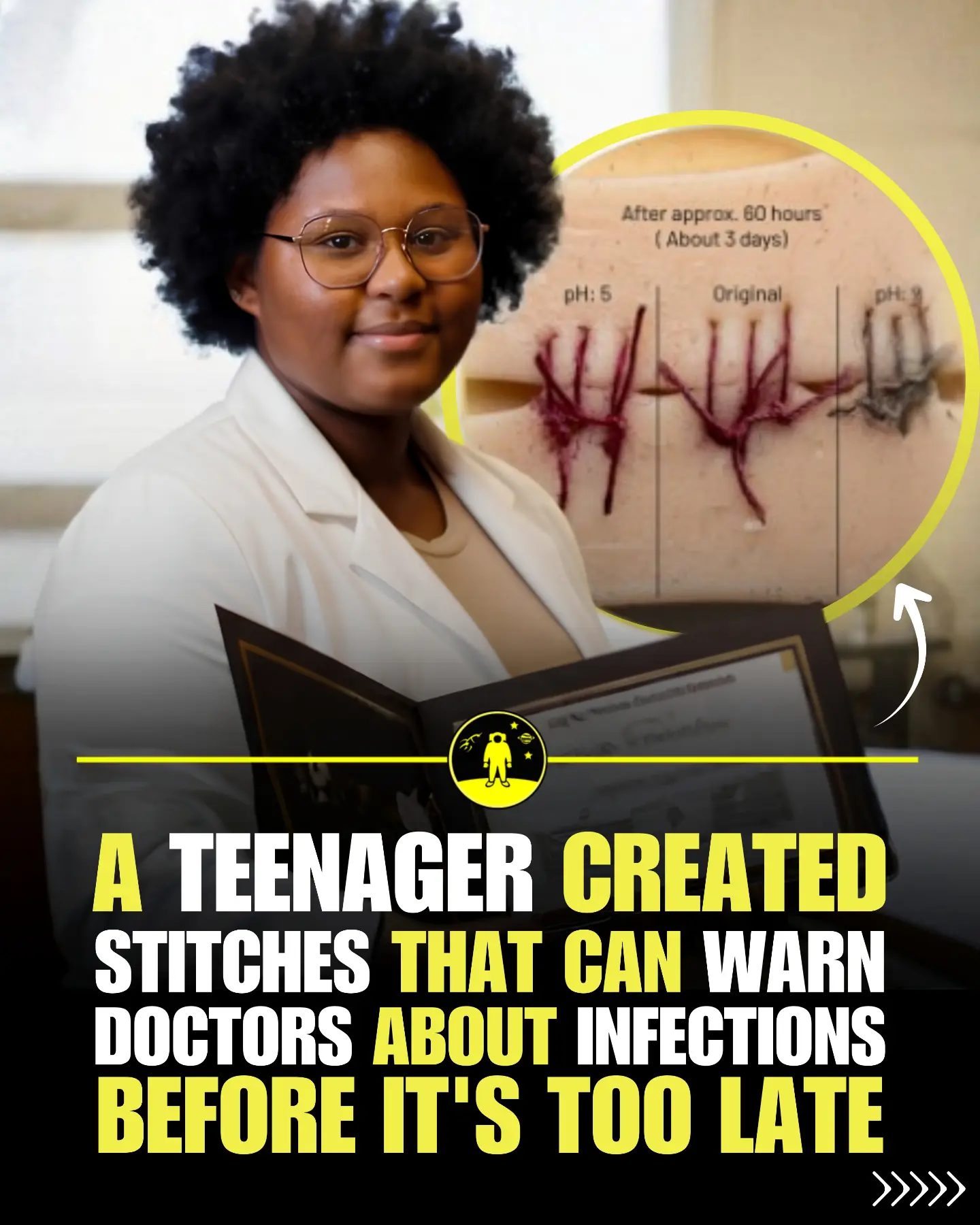
Medical sutures are a staple in healthcare, used to close wounds and promote healing. Traditionally, monitoring wound health has relied on visual inspections and costly laboratory tests. However, a groundbreaking innovation by a young scientist has introduced a new dimension to wound care. Dasia Taylor, a 17-year-old high school student from Iowa, developed surgical sutures that change color in response to infection.
Context / Why this matters
Taylor’s invention addresses a critical need in healthcare: the early detection of infections in wounds. Traditional methods often require waiting for symptoms to become more severe, which can delay treatment and lead to complications. Her sutures, however, offer a proactive approach by providing a visible warning of infection before it escalates.
Early detection of infections is particularly vital in settings with limited resources, where advanced diagnostic tools may not be readily available. Taylor's innovation can make a significant difference in hospitals and clinics that struggle with resource constraints, potentially saving lives and reducing healthcare costs.
Main discussion
The Science Behind the Invention
Taylor's sutures work by responding to changes in pH levels around a healing wound. Certain bacterial infections cause the wound environment to become more acidic. The sutures are designed to detect this shift and change color, providing an early visual warning that medical attention may be needed.
The pH sensitivity of the sutures is achieved using beetroot extract as a natural pH-sensitive dye. This choice of material made the invention more affordable and accessible. By using a natural, cost-effective indicator, Taylor ensured that her solution could be implemented in various healthcare settings, not just those with advanced technology and abundant resources.
The Innovation Process
Taylor's journey began with a simple yet powerful goal: making healthcare more accessible. She combined her knowledge of science and creativity to develop a practical solution. The process involved exploring different materials and testing their pH sensitivity. The use of beetroot extract was a key breakthrough, as it provided a reliable and affordable way to monitor wound health.
Through her research, Taylor demonstrated that innovation doesn’t always require complex technology or extensive resources. Sometimes, the most effective solutions come from simple, practical thinking.
Recognition and Impact
Taylor's groundbreaking research earned international recognition and made her a finalist in the prestigious Regeneron Science Talent Search. This achievement highlights the potential of young innovators to solve real-world problems and inspire others.
The Regeneron Science Talent Search is a renowned program that recognizes and supports young scientists. Since 1942, it has been a platform for discovering and nurturing future innovators. Taylor's inclusion as a finalist underscores the significance of her work and its potential to impact the medical field.
Practical tips
For healthcare professionals and researchers interested in implementing or further developing infection-detecting sutures, here are some practical tips:
Material Selection
When exploring materials for pH-sensitive sutures, consider natural and cost-effective options like beetroot extract. This approach can make the technology more accessible and affordable, benefiting a wider range of healthcare settings.
Testing and Validation
Conduct thorough testing to ensure the reliability and accuracy of the pH-sensitive sutures. Validate the results in various clinical settings to understand how the sutures perform under different conditions.
Collaboration and Support
Collaborate with medical professionals, researchers, and institutions to further develop and implement the technology. Engaging with the medical community can provide valuable insights and support for scaling the innovation.
Education and Awareness
Educate healthcare providers and the public about the benefits and uses of infection-detecting sutures. Raising awareness can increase acceptance and adoption of the technology, ultimately improving patient outcomes.
Important takeaways
- Early detection of infections in wounds is crucial for timely intervention and better patient outcomes.
- Natural and cost-effective materials, such as beetroot extract, can be used to create pH-sensitive sutures.
- Collaborating with the medical community and conducting thorough testing are essential for developing and implementing effective infection-detecting sutures.
- Education and awareness can increase acceptance and adoption of innovative medical technologies.
Conclusion
Dasia Taylor's invention of infection-detecting sutures is a testament to the power of practical thinking and creativity in solving real-world problems. By leveraging natural and affordable materials, Taylor has developed a solution that can make a significant difference in wound care, particularly in settings with limited resources. Her work serves as an inspiration for young innovators and a reminder that life-saving technologies can come from simple, yet impactful ideas.
Watch the Reel
Questions readers ask
How do Dasia Taylor's color-changing sutures work?
Dasia Taylor's sutures are embedded with specific molecules that react to changes in pH levels and enzymes released by bacteria. When an infection is present, these molecules trigger a color change, alerting healthcare professionals to potential issues.
What is the significance of early infection detection in wound care?
Early infection detection is crucial in wound care as it allows for prompt intervention. This can prevent complications, reduce the need for more invasive treatments, and improve overall patient outcomes, especially in resource-limited settings.
Can these sutures be used in any type of wound?
While Dasia Taylor's sutures are designed to be versatile, their effectiveness can vary depending on the type of wound and the specific bacteria present. They are most effective in wounds where bacterial infections are a primary concern.
How do these sutures benefit healthcare professionals in resource-limited settings?
In resource-limited settings, access to advanced diagnostic tools may be restricted. Taylor’s sutures provide a simple, visual cue that an infection is present, enabling healthcare professionals to take action without relying on expensive laboratory tests.
What inspired Dasia Taylor to develop these infection-detecting sutures?
Dasia Taylor was motivated by the challenges faced in wound care, particularly the need for an easy and reliable way to detect infections early. Her goal was to create a solution that could improve patient outcomes and reduce the burden on healthcare systems.
Are there any plans to further develop or commercialize this technology?
Dasia Taylor's innovation has garnered significant attention, including winning the Regeneron Science Talent Search. While specific plans for commercialization have not been detailed, the potential impact of her work has sparked interest in the medical community, suggesting further development is likely.
How can healthcare providers start using these sutures in their practice?
To start using these sutures in practice, healthcare providers would need to stay informed about the availability and regulatory approvals of Taylor's sutures. As they become more widely available, integrating them into standard wound care protocols can provide an additional layer of infection monitoring.
Related deep dives
Similar reads based on topic and creator.




Recent articles
Fresh deep dives from the latest Reels we unpacked.




Comments
Be the first to comment.