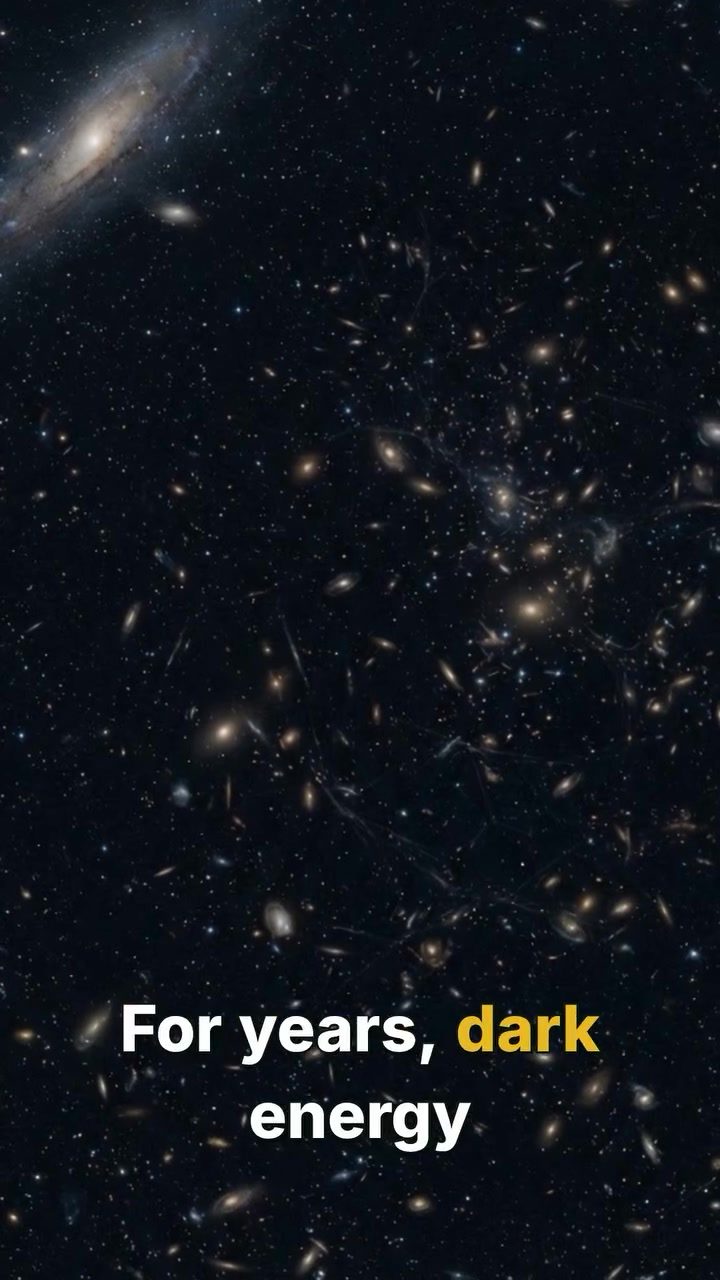
Unraveling the Dark Energy Mystery
The Universe seems to have a mind of its own. Long held as a cosmic force, dark energy drove the acceleration of space-time expansion. However, this dominant model came into question. Researchers at Oxford and India’s Tata Institute have constructed a fresh look at over 1,700 supernovae: exploding stars that emit uniform light levels. For decades, these Type Ia supernovae have been "standard candles" — distance markers guiding our cosmic map. A precise count of their numbers and light patterns were essential markers for calculating the Universe's speed. The new analysis focused on correcting for the age of the stars behind each supernova explosion. Oxford researchers addressed a long-standing challenge by accounting for the stars' varying ages. The team underscored that earlier acceleration signals might have been misinterpreted due to the age disparity. They claimed the observed acceleration faded with distance, indicating that our Universe may not be speeding up. Their conclusion: the speeding acceleration isn't necessarily caused by dark energy.
Cosmologists’ Response
When discussing academic change, it is like moving a mountain. The claim that the universe may be slowing down was received with skepticism in research circles. While Oxford and Tata Institute researchers favor their analysis, other cosmologists remain unconvinced. They contended different techniques or data sets could yield similar results. A small sample of distant supernovae and potential biases in Type Ia explosions themselves could lead to misinterpretations. Their point was clear: dark energy remains the cosmonaut’s guiding star.
The National Survey
At Oxford, research was already underway for challenging the investigation. The team aims to conduct a more comprehensive survey, with a greater number of Type Ia stars than 1,700. As far as supernova parameters go, using even stellar measurements versus varying energy emissions, could reinforce Oxford’s contention.
Might the Universe Become a Sluggish Entity?
These developments raise questions about the universe's fundamental behavior. If the analysis holds, dark energy's perception could change dramatically. After the Big Bang, scientists anticipate the Universe will reach terminal velocity. Still, we might be witnessing a contrast — the universe slowing down. For example, scientists are already looking towards a possible universe deceleration. Oxford’s research might be in line with what is called the "reverse static observer": the universe could be slamming on the brakes after a cosmic rally. The milestone will directly affect the structure of space, time, and energy. Despite the roadblocks, discovering an opposing relationship between dark energy and its effects marks an arena of fruitful discourse.
Watch the Reel
Related deep dives
Similar reads based on topic and creator.

Recent articles
Fresh deep dives from the latest Reels we unpacked.


Comments
Be the first to comment.