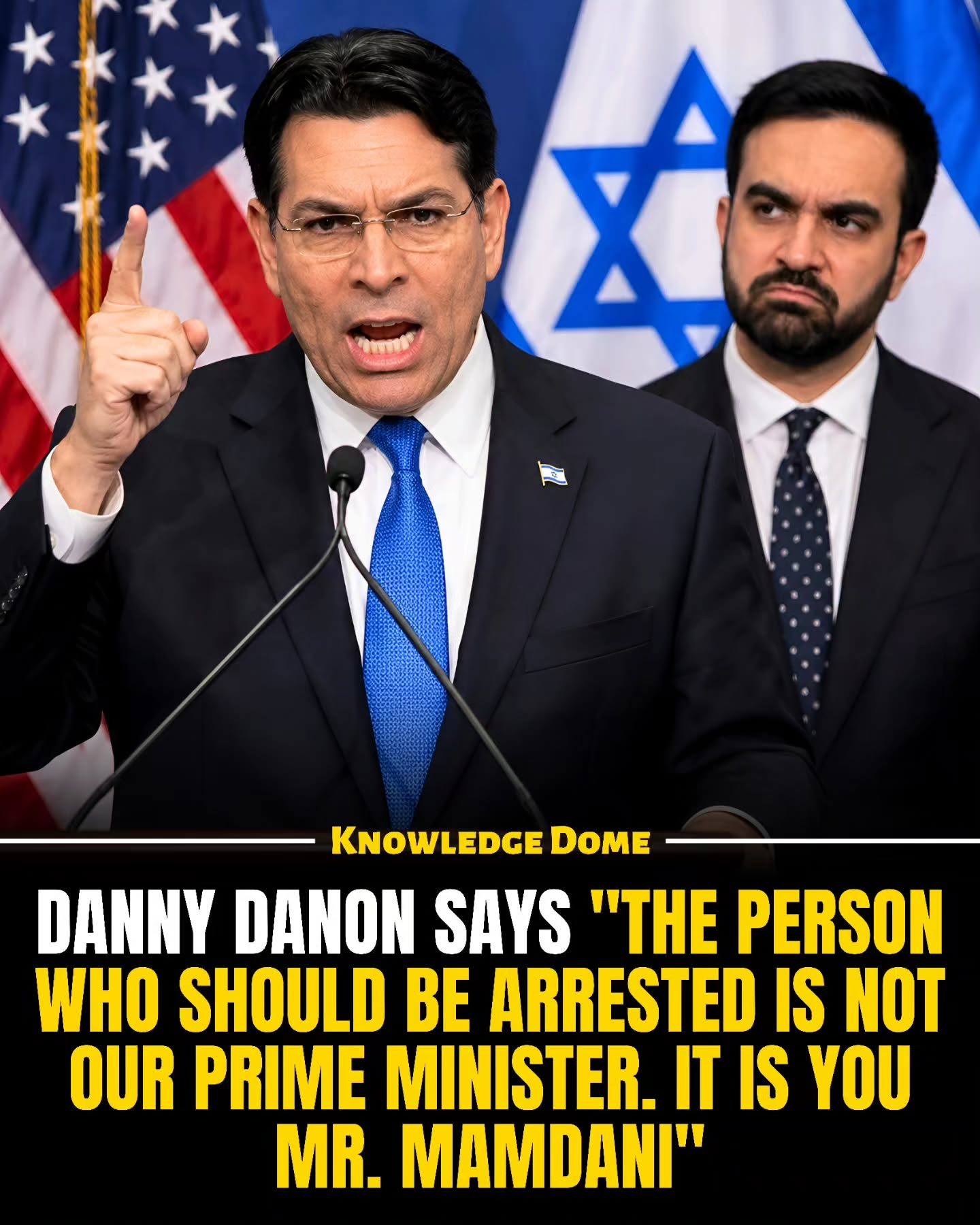
The conflict between Israel’s UN Ambassador, Danny Danon, and New York City Mayor Zohran Mamdani in July 2026 became a focal point of international diplomacy and legal debates. The dispute centered around Mamdani's assertion that he would direct the NYPD to arrest Israeli Prime Minister Benjamin Netanyahu if he visited New York City.
Mamdani's position was rooted in the arrest warrants issued by the International Criminal Court (ICC) for alleged war crimes in Gaza. He argued that no political leader should be above the law and that city resources should be used to support justice and human rights. This stance raised several critical issues, including the jurisdiction of the ICC, the role of local authorities in federal foreign policy, and the concept of diplomatic immunity.
However, Danny Danon strongly countered Mamdani’s position, asserting that the mayor had no legal authority to make such a decision. Danon emphasized that Netanyahu would still come to New York to speak at the United Nations, and notably stated that the person who should be arrested is not Netanyahu, but Mamdani himself.
Context / Why This Matters
This argument highlights the complex interplay between international law, domestic politics, and diplomatic protocols. The ICC's role in prosecuting war crimes is a contentious issue, especially when it involves leaders of nations that do not recognize the court's jurisdiction. The United States, for instance, does not formally recognize the ICC's authority, which complicates matters when foreign leaders visit the UN in New York.
The dispute also raises questions about the scope of a local mayor's powers in handling international affairs. While Mamdani's stance reflects a strong commitment to justice, it also underscores the limitations of local authority in matters of foreign policy. The federal government, not local city leaders, has the jurisdiction to make decisions about issues involving foreign nations and their leaders.
Main Discussion
The International Criminal Court and Its Role
The ICC is an independent international tribunal established to prosecute individuals for the most serious crimes of international concern, such as genocide, war crimes, and crimes against humanity. However, the court's jurisdiction is not universally accepted, and several countries, including the United States, have chosen not to recognize it. This lack of recognition adds layers of complexity to cases involving leaders from non-member states.
Diplomatic Immunity and Protocol
Diplomatic immunity is a principle of international law that ensures diplomats are not subject to the jurisdiction of the host country in certain legal matters. This principle is crucial for the smooth functioning of international relations, as it allows diplomats to perform their duties without fear of legal repercussions. However, when it comes to leaders accused of war crimes, the balance between justice and diplomacy becomes particularly delicate.
Local Authority vs. Federal Policy
In the United States, foreign policy is largely directed by the federal government, not by local authorities. This principle ensures a unified approach to international relations. However, local leaders, like Mamdani, can express strong views and take actions within their jurisdiction. The conflict between Mamdani and Danon highlights the potential for friction between local and federal authorities when it comes to international affairs.
Practical Tips
Understanding the ICC
To grasp the nuances of the ICC's role, it's important to understand its mandate and the limitations of its jurisdiction. The ICC can only prosecute individuals from countries that have accepted its authority or have been referred to the court by the UN Security Council. Furthermore, the ICC operates independently of national legal systems, which can create jurisdictional conflicts.
Navigating Diplomatic Immunity
Diplomatic immunity is a cornerstone of international relations, but it's not absolute. There are cases where immunity can be waived, such as when a diplomat is accused of serious crimes. Understanding the conditions under which immunity can be waived is crucial for navigating such complex legal and diplomatic terrains.
Balancing Local and Federal Authority
Local authorities have a significant role to play in shaping public discourse and policy within their jurisdictions. However, they must also respect the boundaries set by federal law, especially in matters of foreign policy. Engaging with the public and other stakeholders while adhering to legal constraints is essential for effective governance.
Important Takeaways
The Complexity of International Justice
The dispute between Danon and Mamdani underscores the intricate nature of international justice. The ICC's role, diplomatic immunity, and the balance between local and federal authority are all critical factors that shape how justice is pursued on a global scale.
The Role of Local Leaders
Local leaders, such as city mayors, have a significant influence on public opinion and can play a crucial role in advocating for justice. However, they must also recognize the limits of their authority, especially in matters of international law and diplomacy.
The Interplay of Law and Diplomacy
The conflict highlights the delicate balance between legal principles and diplomatic considerations. Pursuing justice while respecting diplomatic protocols and the rule of law is a complex but necessary task in the modern world.
Conclusion
The clash between Danny Danon and Zohran Mamdani in 2026 brought to the forefront several critical issues in international law, diplomacy, and governance. The ICC's jurisdiction, the limits of local authority, and the principles of diplomatic immunity are all essential components of this complex debate. Understanding these issues is vital for navigating the intricate landscape of global politics and international justice.
Watch the Reel
Questions readers ask
What prompted the clash between Danny Danon and Zohran Mamdani?
The dispute began when NYC Mayor Zohran Mamdani stated he would direct the NYPD to arrest Israeli Prime Minister Benjamin Netanyahu if he visited, based on ICC arrest warrants, and Danny Danon, Israel's UN Ambassador, responded to defend Netanyahu and diplomatic immunity.
Why did Zohran Mamdani want to arrest Benjamin Netanyahu?
Mamdani cited arrest warrants issued by the International Criminal Court (ICC) for alleged war crimes in Gaza as the reason for his stance on arresting Netanyahu, emphasizing that no political leader should be above the law.
What is the role of diplomatic immunity in this situation?
Diplomatic immunity is a principle of international law that exempts diplomats from the jurisdiction of the host country's laws. In this context, it would potentially shield Benjamin Netanyahu from local arrest if he visited the U.S. as a foreign head of state.
How does this situation highlight the tension between local and federal interests?
The conflict underscores the balance between local authority (NYC Mayor's power to direct law enforcement) and federal foreign policy (U.S. government's approach to international relations, including diplomatic immunity and recognition of the ICC).
What are the implications of the ICC's involvement in this dispute?
The ICC's arrest warrants for Netanyahu raise questions about the court's jurisdiction and the extent to which local authorities should enforce its directives, particularly when they involve foreign leaders with diplomatic immunity.
Why did Danny Danon argue against Zohran Mamdani's position?
Danon, as Israel's UN Ambassador, defended Netanyahu and the principle of diplomatic immunity. He argued that local authorities should not interfere with federal foreign policy and that the ICC's warrants do not supersede diplomatic immunity.
What are the potential legal consequences of Mamdani's stance for the city of New York?
If NYC authorities attempted to arrest Netanyahu, it could lead to significant legal and diplomatic repercussions, including strained relations with Israel and potential intervention from the federal government to assert its control over foreign policy matters.
Recent articles
Fresh deep dives from the latest Reels we unpacked.




Comments
Be the first to comment.