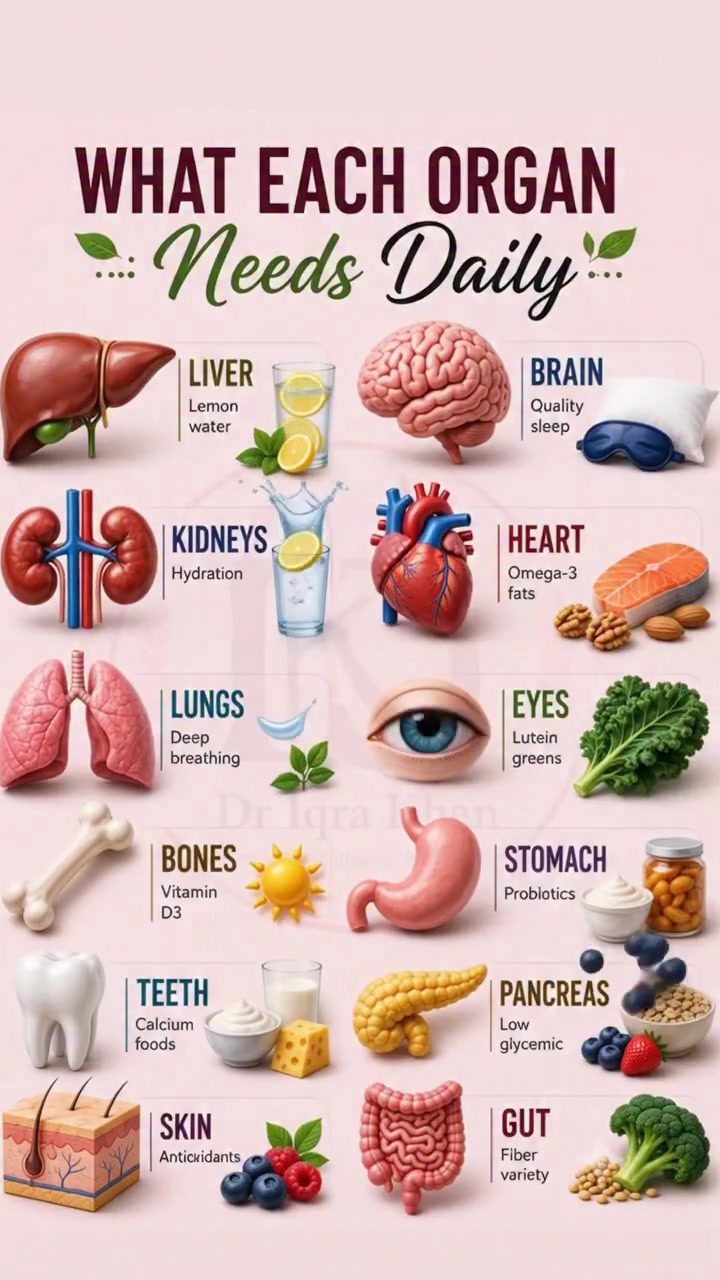
Organ Health Needs
Daily habits play a crucial role in maintaining the health of our organs. While no single food can act as a miracle cure, incorporating specific nutrients and lifestyle factors into our daily routines can significantly enhance organ function. By focusing on hydration, quality sleep, and a balanced diet, we can support our organs' optimal performance.
Why This Matters
Organ health is vital for overall well-being. Each organ in the body has specific needs that, when met, contribute to long-term health. Understanding these needs and incorporating them into daily routines can prevent chronic diseases and enhance the quality of life. Small, consistent changes in diet and lifestyle can lead to substantial improvements over time.
Main Discussion
The Internal Plumbing: Liver and Kidneys
The liver and kidneys play essential roles in detoxification and waste removal. To support these organs, it's crucial to stay hydrated and maintain a healthy weight.
Liver Health: The liver requires adequate water intake and a balanced diet to function optimally. Hydration helps the liver filter toxins and perform its metabolic functions efficiently. Maintaining a healthy weight is also crucial, as excess fat can impair liver function and lead to conditions like non-alcoholic fatty liver disease.
Kidney Health: The kidneys need sufficient hydration to filter waste, excess fluids, and toxins from the body. Proper hydration helps prevent kidney stones, urinary tract infections, and chronic kidney disease. A diet rich in fruits, vegetables, and lean proteins further supports kidney health by reducing the risk of hypertension and diabetes, which are common causes of kidney damage.
Brain and Sleep
Quality sleep is vital for brain health. During sleep, the brain consolidates memories, repairs itself, and eliminates toxins. Adequate sleep also supports cognitive functions, emotional well-being, and learning abilities. Aim for 7–9 hours of quality sleep per night to maintain optimal brain health.
Heart and Lung Health
The heart and lungs work together to supply the body with oxygen and remove carbon dioxide. Supporting these organs through a healthy lifestyle can prevent cardiovascular and respiratory diseases.
Heart Health: The heart needs omega-3 fats, found in fatty fish, flaxseeds, and walnuts. Omega-3s help reduce inflammation, lower triglycerides, and decrease the risk of heart disease. Regular physical activity and maintaining a healthy weight are also essential for heart health.
Lung Health: Deep breathing exercises and regular physical activity improve lung function and capacity. Avoiding smoking and exposure to pollutants are crucial for maintaining lung health. Deep breathing exercises, such as those practiced in yoga and meditation, can help improve lung function and reduce stress.
Eyes, Bones, and Teeth
The eyes, bones, and teeth require specific nutrients to maintain their health and function. Incorporating these nutrients into the diet can prevent vision problems, bone disorders, and dental issues.
Eyes: Lutein and zeaxanthin, found in leafy greens, are essential for eye health. These antioxidants protect the eyes from age-related macular degeneration and cataracts. Regular eye check-ups and protecting the eyes from UV rays can further prevent vision problems.
Bones: Vitamin D and calcium are crucial for bone health. Vitamin D, obtained from sunlight and fortified foods, helps the body absorb calcium, which is essential for maintaining bone density and preventing osteoporosis. Weight-bearing exercises, such as weightlifting and running, also support bone health.
Teeth: Calcium-rich foods, like dairy products, leafy greens, and fortified plant-based milks, are essential for maintaining strong teeth. Regular dental care, including brushing twice daily and flossing, can prevent cavities, gum disease, and tooth loss.
Digestive Health: Stomach, Pancreas, and Gut
A healthy digestive system relies on a balanced diet and regular physical activity. Supporting the stomach, pancreas, and gut through proper nutrition and lifestyle choices can prevent digestive disorders and enhance overall health.
Stomach: Probiotics, found in yogurt, kefir, and fermented foods, support a healthy stomach by promoting beneficial gut bacteria. A balanced diet and regular exercise can help maintain a healthy weight and reduce the risk of stomach ulcers and other digestive issues.
Pancreas: The pancreas needs a diet rich in fiber and low in glycemic carbohydrates to function optimally. Fibrous foods, such as whole grains, fruits, and vegetables, help regulate blood sugar levels and support pancreatic health. Regular exercise and maintaining a healthy weight further reduce the risk of pancreatitis and diabetes.
Skin and Gut: For radiant skin and a healthy gut, focus on antioxidants and a variety of fiber-rich foods. Skin health benefits from a diet rich in fruits and vegetables, which provide essential antioxidants that protect the skin from damage. A diverse range of fiber-rich foods supports gut health by promoting a healthy microbiome and preventing digestive disorders.
Antioxidants for Skin
Antioxidants play a crucial role in protecting the skin from damage caused by free radicals. Free radicals are unstable molecules that can damage skin cells and accelerate aging. Fruits and vegetables, rich in antioxidants like vitamin C and E, help neutralize free radicals and protect the skin.
Probiotics for the Gut
Probiotics are beneficial bacteria that support a healthy gut microbiome. A balanced gut microbiome is essential for proper digestion, nutrient absorption, and immune function. Incorporating probiotic-rich foods, such as yogurt and fermented vegetables, into the diet can help maintain a healthy gut microbiome.
Practical Tips
Hydration
Staying hydrated is essential for overall organ health. Aim for at least 8 glasses of water daily, and adjust intake based on activity level and climate. Incorporate water-rich foods, such as fruits and vegetables, to meet hydration needs.
Quality Sleep
Prioritize sleep by creating a consistent sleep schedule and a relaxing bedtime routine. Avoid screens before bed, and create a sleep-conducive environment with comfortable bedding, a cool temperature, and minimal noise.
Balanced Diet
Eat a variety of nutrient-dense foods, including fruits, vegetables, whole grains, lean proteins, and healthy fats. Limit processed foods, sugary drinks, and excessive salt and sugar intake. A balanced diet provides the essential nutrients needed to support organ health.
Regular Exercise
Incorporate regular physical activity into daily routines. Aim for at least 150 minutes of moderate-intensity or 75 minutes of vigorous-intensity exercise per week, along with strength training exercises.
Stress Management
Manage stress through mindfulness practices, such as meditation, deep breathing, and yoga. Chronic stress can negatively impact organ health, so prioritizing stress management techniques can support overall well-being.
Avoid Smoking
Avoid smoking and exposure to secondhand smoke. Smoking increases the risk of chronic diseases, including heart disease, lung cancer, and respiratory disorders. Seek support to quit smoking if needed.
Important Takeaways
Organ health relies on a combination of diet, physical activity, and lifestyle factors. By incorporating specific nutrients and habits into daily routines, you can support optimal organ function and enhance overall health. It is essential to understand that no single food can act as a miracle cure. Instead, a balanced diet, regular exercise, and healthy habits are the keys to long-term health.
Conclusion
Maintaining organ health requires a holistic approach that includes a balanced diet, regular exercise, and healthy lifestyle habits. By focusing on hydration, quality sleep, and specific nutrients, you can support your organs' optimal function and enhance overall well-being. Small, consistent changes in daily habits can lead to significant improvements in organ health and contribute to a healthier, happier life.
Watch the Reel
Questions readers ask
How does hydration impact organ function?
Hydration is crucial for optimal organ function as it helps in the absorption and transportation of nutrients, removal of waste, and regulation of body temperature. Dehydration can lead to a decrease in organ performance. Aim for at least 8 glasses of water daily to support your organs.
What are some key nutrients for organ health?
Incorporating a balanced diet rich in vitamins, minerals, and antioxidants can significantly enhance organ function. Foods high in calcium support bone and heart health while vitamin C supports both organ and immune function. Leafy greens, fatty fish, and whole grains are excellent choices.
How does sleep quality affect organ health?
Quality sleep is essential for organ health as it allows the body to repair and regenerate tissues. During sleep, the liver detoxifies the body, the brain consolidates memories, and the kidneys flush out toxins. Aim for 7-9 hours of uninterrupted sleep per night to support organ function.
What are some daily habits to support liver health?
To support your liver, maintain a balanced diet low in processed foods, sugars, and alcohol. Include foods rich in antioxidants like berries, nuts, and leafy greens. Regular exercise also aids in liver detoxification by promoting blood circulation and reducing fat accumulation.
Why is fiber important for organ health?
Fiber is crucial for gut health as it aids in digestion, prevents constipation, and supports a healthy gut microbiome. Foods rich in fiber, such as fruits, vegetables, and whole grains, also help regulate blood sugar levels and lower cholesterol, benefiting overall organ health.
What are some daily routines to improve brain health?
Maintaining a balanced diet and staying hydrated are key to supporting brain health. Additionally, engaging in regular exercise and getting quality sleep can significantly enhance cognitive function. Stimulating your mind with puzzles and learning new skills can also improve brain health.
Related deep dives
Similar reads based on topic and creator.




Recent articles
Fresh deep dives from the latest Reels we unpacked.




Comments
Be the first to comment.