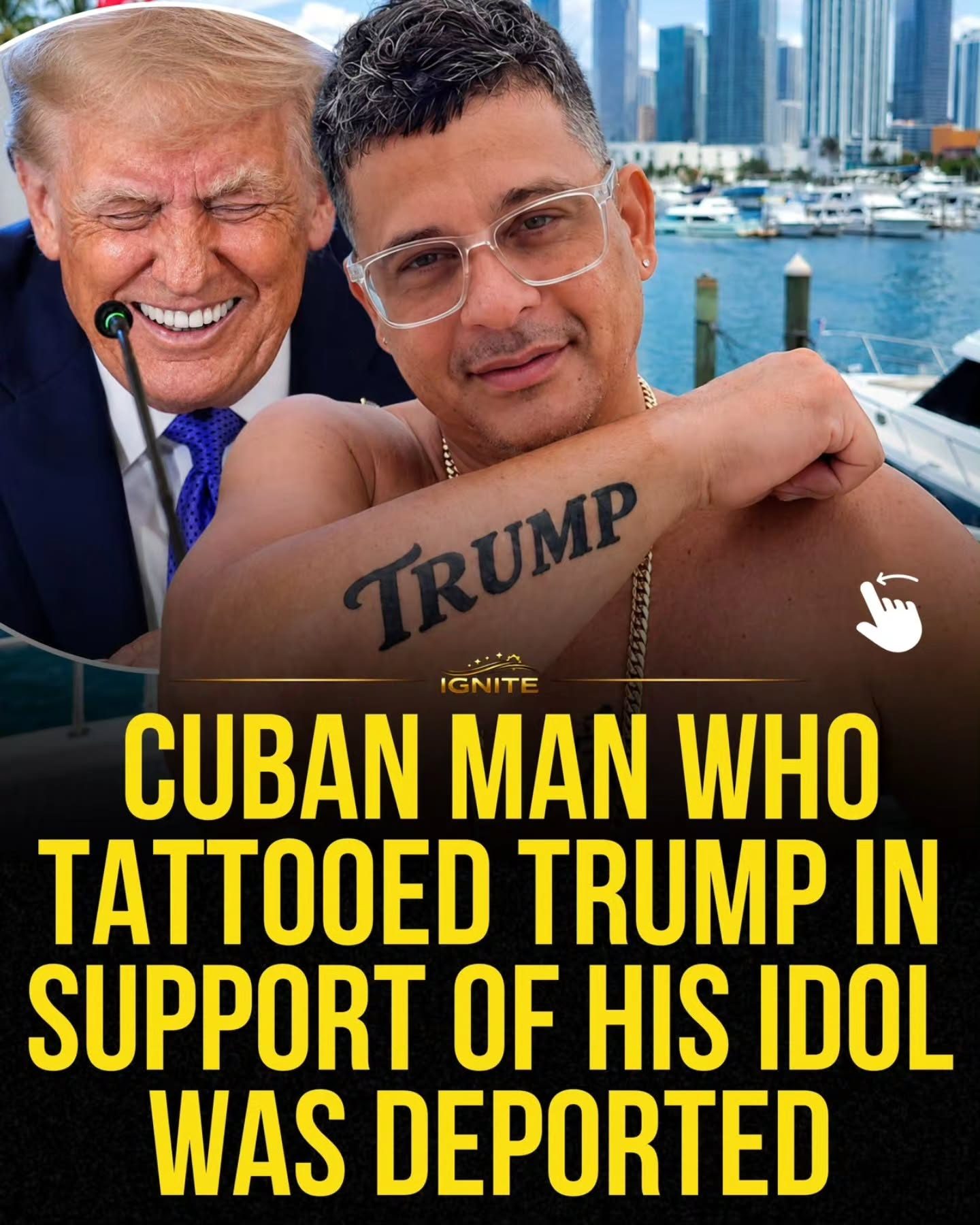
Man with Trump Tattoo
A man's journey to publicly display his admiration for a political figure has led to his deportation. This isn't a fictional tale, but a real-life account of a Cuban man who was deported due to a Trump tattoo on his arm. The tattoo, a bold declaration of his support for Donald Trump, has sparked an intricate web of legal and political intricacies.
Context / Why This Matters
In understanding the gravity of this situation, it is imperative to delve into the legal and political landscapes that have led to such an outcome. The interplay between immigration laws, political ideologies, and public expressions of support or dissent can have profound consequences, especially for individuals who are not citizens of the country they reside in.
Main Discussion
The Tattoo and Its Significance
The man in question had a large, visible tattoo of the word "Trump" on his arm. Tattoos, in general, are a form of self-expression, and political tattoos, in particular, can be a bold statement of one's beliefs and affiliations. However, in this case, the tattoo was more than just a personal expression; it became a catalyst for a series of events that led to the man's deportation.
The Legal Implications
The deportation of this man raises several legal questions. The most pressing is the role of tattoos in immigration law. Typically, immigration decisions are based on factors such as criminal history, employment status, and adherence to visa regulations. However, the visible display of a political allegiance on one's body, especially one that is deemed controversial or divisive, can complicate matters significantly.
Immigration Policies and Political Opinions
Immigration policies often intersect with political ideologies in complex ways. For instance, the United States, under various administrations, has had different stances on political dissidents and exiles. While political asylum can be sought by individuals fleeing persecution in their home countries, the reverse scenario—where a person's political leanings lead to deportation—is less commonly discussed.
The Role of Public Display
The fact that the tattoo was prominently displayed on his arm adds another layer of complexity. Public expressions of political allegiance can be dual-edged swords. While they can serve as powerful statements of conviction, they can also invite scrutiny and potential repercussions, particularly in a political climate that is highly polarized.
Cuban Heritage and Deportation
The man's Cuban heritage also plays a significant role in this story. The history of Cuban immigration to the United States is complex, marked by waves of exiles and refugees seeking asylum from political and economic turmoil. The deportation of a Cuban national who has lived in the United States for some time highlights the ongoing tensions and the delicate balance between immigration policies and political asylum.
Practical Tips
For those who are considering getting a political tattoo or who have tattoos of political nature, it's essential to be aware of potential repercussions. Some practical tips to keep in mind:
-
Understand Local Laws: Research and understand how the law in your country or the country you reside in treats visible political expressions. This is particularly important for immigrants and non-citizens.
-
Consider the Long-Term Impact: Think about how a political tattoo might affect your future, including employment opportunities, travel, and potential legal issues.
-
Public vs. Private Display: Consider where and how you display your tattoo. A tattoo that is visible only in certain contexts may have less impact than one that is always on display.
-
Support Systems: If you are an immigrant, ensure you have access to legal support and community resources that can help you navigate any potential issues.
Important Takeaways
This case serves as a stark reminder of the intricate intersection between personal expression, immigration law, and political ideologies. It underscores the importance of understanding the potential repercussions of public displays of political allegiance, especially in a polarized political climate. For immigrants and non-citizens, the stakes can be particularly high, and it is crucial to be well-informed and prepared for potential challenges.
Conclusion
The story of the man with the Trump tattoo is a complex narrative that touches on various aspects of immigration law, political expression, and personal freedom. It serves as a cautionary tale for anyone considering a political tattoo, highlighting the potential risks and challenges that may arise. Whether you support or oppose the political figure in question, the broader implications of this story are undeniable, and they warrant careful consideration.
Watch the Reel
Questions readers ask
Why was the Cuban man deported due to his Trump tattoo?
The Cuban man was deported due to his visible Trump tattoo, which authorities interpreted as a sign of political association. This association raised concerns about his potential alignment with controversial policies, leading to his removal from the country. Specifically, immigration authorities deemed his public display of support for a polarizing political figure as a risk to the social and political stability of their country.
Can non-citizens face deportation for expressing political views?
Yes, non-citizens can face deportation for expressing political views, especially if those views are deemed controversial or if they align with policies that are unfavourable to the host country. Public expressions of political support, such as tattoos, can be scrutinized by immigration authorities, potentially leading to deportation.
What role do political tattoos play in immigration decisions?
Political tattoos can significantly impact immigration decisions as they are seen as permanent and public displays of political affiliation. Authorities may view such tattoos as indicative of an individual's political leanings and potential risks to national security or social cohesion. This can result in closer scrutiny of the individual's immigration status and potentially lead to deportation.
How does this case highlight the intersection of immigration laws and political expression?
This case illustrates how immigration laws and political expression can intersect in complex ways. It demonstrates that non-citizens' public displays of political support can have serious legal consequences, as their actions are viewed through the lens of potential risks and alignment with controversial policies. It underscores the importance of understanding the potential repercussions of political expressions for individuals who are not citizens.
What are the potential consequences for non-citizens who publicly display controversial political views?
Non-citizens who publicly display controversial political views may face severe consequences, including deportation. Immigration authorities may interpret such displays as indicative of alignment with policies that are perceived as a threat to national security or societal harmony. This can result in the individual being deemed a risk and subsequently removed from the country.
How does the Trump tattoo case serve as a cautionary tale for non-citizens?
The Trump tattoo case serves as a cautionary tale for non-citizens, highlighting the potential risks of publicly displaying controversial political views. It underscores the need for individuals to be aware of the legal and political implications of their actions, as well as the importance of considering the potential consequences of expressing support for polarizing political figures.
Recent articles
Fresh deep dives from the latest Reels we unpacked.




Comments
Be the first to comment.