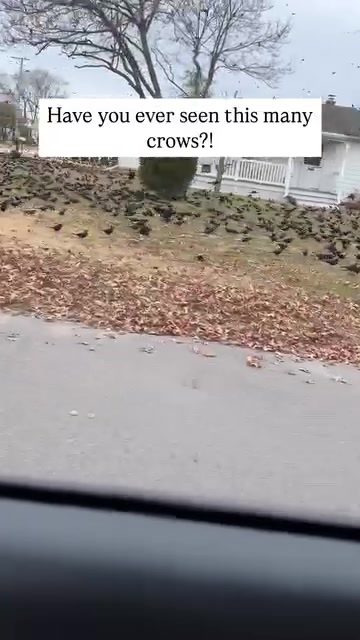
Crow Gatherings in Residential Areas
Crows are fascinating birds, known for their intelligence and adaptability. While it's not uncommon to see a few crows in urban and suburban areas, witnessing a large gathering can be quite a spectacle. These gatherings, often referred to as "murders," can be both intriguing and somewhat unsettling. Let's explore why crows might congregate in large numbers in residential areas and what it means for those living nearby.
Why This Matters
Understanding why crows gather in large numbers can help demystify their behavior and provide insights into their ecological role. These gatherings can also impact local communities, influencing everything from noise levels to potential health concerns. By delving into the reasons behind these gatherings, residents can better appreciate and coexist with these intelligent birds.
The Behavior of Crows
Social Structure and Communication
Crows are highly social birds and often live in groups, or murmurations. These groups can range from a few birds to large flocks numbering in the hundreds. The social nature of crows means they often communicate through a variety of vocalizations and body language, which can sometimes result in large gatherings. These flocks can be seen as a way for crows to protect each other, share resources, and coordinate activities.
Roosting Sites
Crows often congregate in large numbers at specific roosting sites, usually in trees or on power lines. These sites can become communal areas where crows spend the night. In residential areas, roosting sites can sometimes shift, causing crows to move from their usual spots and gather in new locations. This relocation can be influenced by changes in the environment or disturbances that make their previous roosting sites less desirable.
Scavenging for Food
Crows are opportunistic feeders and will scavenge for food in both urban and rural settings. Residential areas can be particularly rich in food sources, including pet food left outside, garbage, and carrion. This abundance of food can attract large numbers of crows, leading to significant gatherings. Additionally, crows have been known to remember the locations of food sources, which can result in repeated visits and larger congregations over time.
Potential Threats
Large gatherings of crows can sometimes indicate the presence of potential threats, such as predators or environmental hazards. When crows sense danger, they may gather in large numbers to defend their territory or seek safety. This behavior can be observed in residential areas where there might be a perceived threat that prompts the crows to band together.
Environmental Changes
Environmental changes, such as new construction or land clearing, can also lead to large gatherings of crows. Birds may be displaced from their natural habitats and forced to seek new areas to live and feed. In urban and suburban settings, this can result in more frequent sightings and larger groups of crows in residential areas.
Practical Tips for Coexisting with Crows
Managing Food Sources
One of the most effective ways to manage crow populations in residential areas is by controlling food sources. Ensure that pet food is not left outside, secure garbage cans, and clean up any spilled food. Reducing the availability of food can make the area less attractive to crows, decreasing the likelihood of large gatherings.
Providing Alternative Roosting Sites
If there are specific trees or areas where crows tend to gather, consider providing alternative roosting sites. Planting tall trees or erecting structures that mimic natural roosting sites can encourage crows to use these areas instead. This can help distribute the crow population and reduce the concentration of birds in any single location.
Creating a Deterrent
There are several methods to deter crows from gathering in residential areas. Visual deterrents, such as reflective tape or predator decoys, can sometimes be effective. Sound deterrents, like noisemakers or recorded distress calls, can also be used to scare crows away. However, it is important to note that crows are intelligent and can adapt to these methods over time, so a combination of strategies may be necessary.
Community Efforts
Collaborating with neighbors and local authorities can also help manage crow populations. By working together, residents can implement consistent strategies to deter crows and reduce the impact of large gatherings. Community-wide efforts can be more effective than individual actions and can help ensure that the problem is addressed in a comprehensive manner.
Important Takeaways
Large gatherings of crows in residential areas are a natural occurrence driven by various factors, including social behavior, food availability, and environmental changes. Understanding these factors can help residents better appreciate the behavior of crows and implement practical strategies to coexist peacefully. By managing food sources, providing alternative roosting sites, and using deterrents, residents can reduce the impact of crow gatherings and create a more harmonious environment for both humans and birds.
Crows are fascinating creatures that play an important role in their ecosystems. While their large gatherings can sometimes be perceived as a nuisance, these birds are an essential part of the natural world. By adopting a proactive approach and using the tips outlined, residents can coexist with crows in a way that benefits both parties.
Watch the Reel
Questions readers ask
What is a 'murder of crows' and why do they gather in large numbers?
A 'murder of crows' is a term used to describe a large gathering of crows. They congregate for various reasons, including finding food, socializing, and safety in numbers. These gatherings are often influenced by the availability of resources and suitable roosting spots in an area.
Why do crows often gather in residential areas?
Crows are attracted to residential areas due to the abundance of food sources, such as garbage, pet food, and bird feeders. Additionally, these areas often provide suitable roosting spots like tall trees and buildings, making them ideal locations for large gatherings.
Are large crow gatherings a sign of a problem?
Large crow gatherings are usually not a sign of a problem, but rather a natural behavior. However, they can be noisy and may cause concerns about health and cleanliness due to the accumulation of droppings. Implementing measures to manage food waste and secure garbage can help mitigate these issues.
What role does social behavior play in large crow gatherings?
Social behavior is a significant factor in large crow gatherings. Crows are intelligent and social creatures that communicate and interact with each other. They often gather in large groups to exchange information, reinforce social bonds, and coordinate activities, such as foraging and roosting.
How do crows benefit from gathering in large numbers?
Crows benefit from gathering in large numbers in several ways. These gatherings provide safety from predators, increase the chances of finding food, and offer opportunities for social learning and communication. Additionally, large gatherings help crows to maintain their social structure and hierarchy.
Why are crow gatherings often noisy?
Crow gatherings can be quite noisy, as crows are highly vocal birds. They use a variety of calls and sounds to communicate with each other, especially when in large groups. The noise levels can be particularly high during dawn and dusk, when crows are most active and socializing.
Do large crow gatherings have an impact on the environment?
Large crow gatherings can have both positive and negative impacts on the local environment. On the one hand, they help disperse seeds and control insect populations. However, they can also lead to an increase in noise levels and create messes due to droppings, which may cause concern for local residents. Addressing these issues involves understanding crow behavior and implementing appropriate management strategies.
Recent articles
Fresh deep dives from the latest Reels we unpacked.




Comments
Be the first to comment.