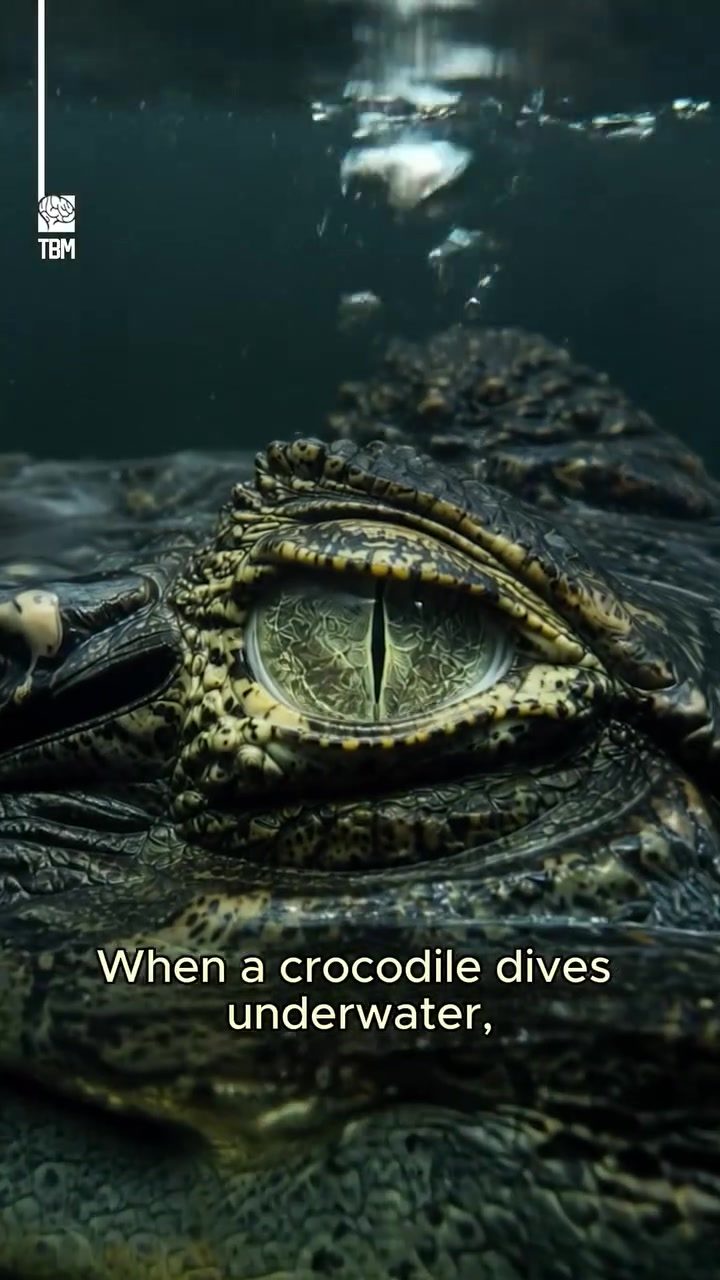
Crocodile Underwater Adaptation
Crocodiles are fascinating creatures known for their powerful jaws and formidable hunting skills. One of the most intriguing adaptations is their ability to see clearly underwater without damaging their eyes. This is made possible by a unique feature: the nictitating membrane, a third eyelid designed for survival.
Nictitating membrane is a transparent eyelid that slides across the eye when a crocodile dives underwater. This membrane acts as natural underwater armor, protecting the eye from mud, debris, and violent currents. Unlike human eyelids, which close vertically, the nictitating membrane moves sideways, shielding the cornea while allowing the crocodile to maintain clear vision. This adaptation is crucial for predators that spend much of their time in murky waters, where visibility can be extremely low.
When a crocodile dives, the upper and lower eyelids also close, protecting the eye from dust, sunlight, and sudden impacts. This triple-layered protection ensures that the crocodile's eyes remain safe from a variety of potential hazards. The nictitating membrane is particularly effective in keeping the eye moist. This is essential for crocodiles that often wait motionless above the water's surface, as the membrane helps prevent the eye from drying out.
Why This Matters
The nictitating membrane serves multiple purposes, enhancing both the crocodile's vision and survival capabilities. For predators like crocodiles, clear underwater vision is crucial for spotting prey and navigating their environment. The membrane's ability to allow for clear vision while protecting the eye from debris and currents makes it an invaluable adaptation. Additionally, the membrane's moisture-retaining properties are vital for maintaining eye health, especially when the crocodile is in a wait-and-ambush position above the water's surface.
Main Discussion
The Nictitating Membrane: A Hidden Third Eyelid
The nictitating membrane, commonly known as the third eyelid, is a transparent layer that slides across the crocodile's eye. This membrane is built for survival, moving sideways to shield the cornea from various underwater threats. Unlike the vertical movement of human eyelids, the nictitating membrane's horizontal movement provides a unique advantage. It protects the eye from debris, violent currents, and struggling prey while still allowing the crocodile to see clearly. This adaptation is particularly useful in the murky waters where crocodiles often hunt.
Upper and Lower Eyelids: Double Protection
In addition to the nictitating membrane, crocodiles have upper and lower eyelids that function similarly to human eyelids. These eyelids protect the eye from dust, sunlight, and sudden impacts. Together, the three eyelids provide a robust defense system for the crocodile's eyes, ensuring clear vision and protection in various environments.
Moisture Retention and Vision
The nictitating membrane plays a crucial role in keeping the eye moist, especially when the crocodile waits motionlessly above the water's surface. This moisture retention is essential for maintaining eye health and clear vision. The membrane's ability to keep the eye moist ensures that the crocodile can maintain its vigilant hunting posture without compromising its vision.
Practical Tips
While humans do not have a nictitating membrane, understanding this adaptation can provide insight into designing protective eyewear for extreme conditions. For example, sports goggles and diving masks can benefit from incorporating transparent, protective layers that mimic the nictitating membrane. These innovations could enhance vision and safety for athletes and divers, similar to how the membrane benefits crocodiles.
Important Takeaways
- The Nictitating Membrane: This transparent eyelid slides across the eye, shielding it from debris and currents while allowing for clear vision.
- Triple Protection: The nictitating membrane, along with the upper and lower eyelids, provides a robust defense system for the crocodile's eyes.
- Moisture Retention: The membrane helps keep the eye moist, ensuring clear vision and maintaining eye health, especially during long waits above the water's surface.
- Adaptive Design: The horizontal movement of the nictitating membrane is a unique adaptation that provides superior protection and vision in murky waters.
Crocodiles are nature's master predators, and their unique adaptations are a testament to their evolutionary success. The nictitating membrane is just one of the many fascinating features that make these reptiles such formidable hunters. Understanding these adaptations can inspire innovative designs in protective eyewear and provide valuable insights into the natural world.
Watch the Reel
Related deep dives
Similar reads based on topic and creator.




Recent articles
Fresh deep dives from the latest Reels we unpacked.




Comments
Be the first to comment.