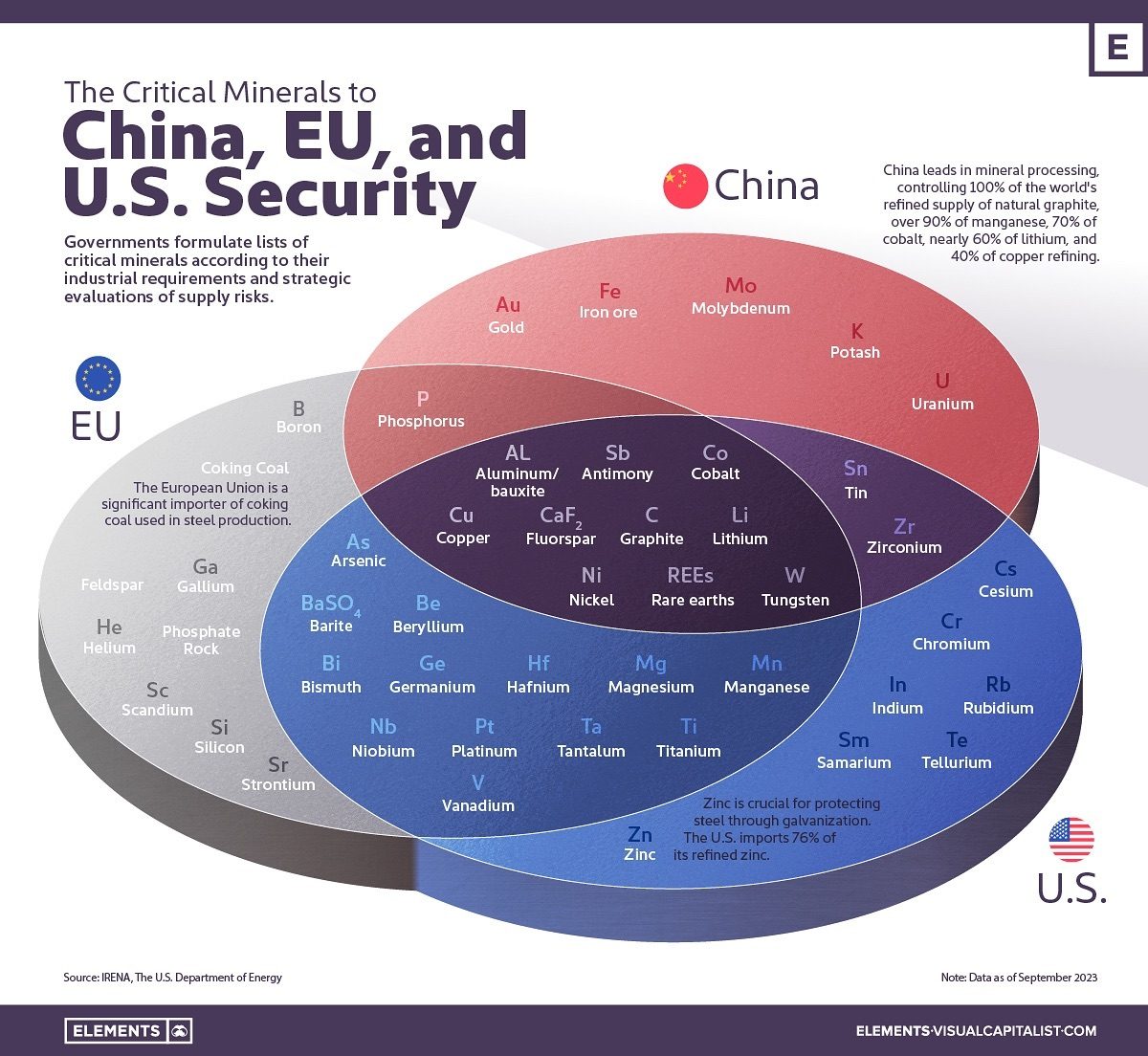
Critical Minerals and Global Security
Critical minerals play a pivotal role in global security and industrial development. Governments worldwide prioritize these minerals based on their strategic importance and supply risks. Over the past decade, minerals such as nickel, copper, and lithium have been identified as essential for clean technologies, including electric vehicle (EV) batteries and solar and wind power.
Context / Why This Matters
Critical minerals are fundamental to various industries, from technology and defense to renewable energy. Understanding their global distribution, control, and strategic importance is crucial for governments and industries to ensure sustainable supply chains and technological advancements.
Global Distribution and Control
The global distribution of critical minerals is uneven, with certain countries holding significant control over specific resources. This control affects global supply chains and can influence geopolitical dynamics.
-
China: China is a dominant player in the global supply of critical minerals. It controls 100% of the refined supply of natural graphite, a crucial component in lithium-ion batteries. Additionally, China has significant control over rare earth elements, which are essential for various high-tech applications, including wind turbines and electric vehicles.
-
European Union (EU): The EU is a significant importer of coking coal, which is used in steel production. The EU is also a major consumer of lithium and cobalt, both of which are critical for battery technologies. The region's industrial requirements make it strategically important to secure reliable supplies of these minerals.
-
United States (U.S.): The U.S. imports 76% of its refined zinc, a critical metal used in various industrial applications, including galvanization and alloy production. The U.S. also relies on imports for many other critical minerals, highlighting the need for a robust supply chain strategy.
Main Discussion
Key Minerals and Their Applications
Lithium
Lithium is a cornerstone of modern clean energy technologies. It is essential for manufacturing rechargeable batteries used in EVs, mobile devices, and energy storage systems. The demand for lithium is expected to rise significantly as the world transitions to electric vehicles and renewable energy sources.
Cobalt
Cobalt is another critical mineral, primarily used in the production of lithium-ion batteries. It enhances the energy density and stability of these batteries, making them suitable for high-performance applications like electric vehicles. Cobalt is also used in aerospace, defense, and medical industries.
Nickel
Nickel's properties make it a valuable component in stainless steel production and in rechargeable batteries. Its ability to withstand high temperatures and corrosion makes it ideal for various industrial and technological applications, including renewable energy systems and electric vehicles.
Strategic Importance for Industries
Critical minerals are vital for several key industries, each with its unique requirements and strategic considerations.
Renewable Energy
The transition to renewable energy sources relies heavily on critical minerals. For instance, lithium and cobalt are essential for producing batteries that store energy generated from solar and wind power. Similarly, nickel is used in the production of steel for wind turbine components.
Electric Vehicles
Electric vehicles (EVs) are a rapidly growing segment of the automotive industry, driven by the need for sustainable transportation. Key minerals like lithium, cobalt, and nickel are indispensable for the production of EV batteries, which are pivotal for the performance and range of these vehicles.
Defense and Aerospace
The defense and aerospace industries require critical minerals for various applications, including the production of high-performance alloys, electronics, and advanced materials. These minerals ensure the durability, reliability, and performance of military and aerospace technologies.
Practical Tips
Here are some practical tips for businesses and governments seeking to navigate the complexities of critical minerals:
-
Diversify Supply Chains: Relying on a single source for critical minerals can pose significant risks. Diversifying supply chains and establishing partnerships with multiple suppliers can help mitigate these risks.
-
Invest in Research and Development: Investing in R&D can help identify alternative sources for critical minerals or develop new materials that can replace them. This can ensure long-term sustainability and reduce dependence on specific resources.
-
Enhance Recycling Efforts: Recycling critical minerals from end-of-life products can help reduce the demand for newly mined resources. This not only conserves natural resources but also minimizes environmental impacts.
Important Takeaways
- Critical minerals like lithium, cobalt, and nickel are essential for various industries, including renewable energy, electric vehicles, and defense.
- The global distribution and control of these minerals have significant geopolitical and economic implications.
- Diversifying supply chains, investing in research, and enhancing recycling efforts are crucial for ensuring sustainable access to critical minerals.
Conclusion
Critical minerals are indispensable for modern industrial and technological advancements. Understanding their global distribution, control, and strategic importance is essential for governments and industries to navigate the complexities of supply chains and geopolitical dynamics. By adopting practical strategies, such as diversifying supply chains, investing in research, and enhancing recycling efforts, stakeholders can ensure sustainable access to these vital resources and support long-term technological progress.
Watch the Reel
Questions readers ask
What are the key critical minerals for the energy transition?
Critical minerals such as lithium, nickel, and copper are essential for the energy transition. These minerals are crucial for the development of electric vehicle batteries, solar panels, and wind turbines, making them vital for the shift towards renewable energy and reduced carbon emissions.
Why is the global distribution of critical minerals a concern for governments?
The uneven distribution of critical minerals around the world presents a significant concern for governments. Concentrations in certain countries, such as China, can lead to supply chain vulnerabilities and geopolitical tensions. This makes it essential for countries to secure reliable sources of these minerals and maintain strong supply chains.
How do critical minerals impact national security?
Critical minerals are crucial for national security as they are integral to various military technologies and defense systems. For instance, minerals like tungsten and cobalt are used in aerospace, electronics, and other defense applications. Ensuring a stable supply of these minerals is vital for maintaining national defense capabilities.
What role do the European Union and the United States play in the global supply of critical minerals?
The European Union and the United States are key players in the global supply of critical minerals. Both regions are actively working to diversify their sources of critical minerals and reduce dependency on other countries. They are investing in domestic mining and recycling efforts, as well as negotiating international partnerships to secure a stable supply of these essential resources.
Which minerals are vital for the production of electric vehicles and why?
Nickel, lithium, and cobalt are vital for the production of electric vehicles. These minerals are essential components of the batteries that power electric vehicles. The demand for these minerals is increasing rapidly as more countries transition to electric vehicles, making their supply chain a critical focus for automotive manufacturers and governments alike.
How does the United States' mineral strategy support the clean tech industry?
The United States' mineral strategy aims to secure a reliable supply of critical minerals, which are essential for the clean tech industry. By promoting domestic mining, recycling, and strategic partnerships, the U.S. aims to ensure a stable supply of minerals such as lithium, nickel, and cobalt. This strategy supports the development of technologies like electric vehicles and renewable energy systems, reducing dependence on foreign sources and enhancing national security.
What potential challenges do countries face in securing a stable supply of critical minerals?
Countries face several challenges in securing a stable supply of critical minerals, including geopolitical tensions, environmental concerns, and the need for sustainable mining practices. Additionally, the uneven distribution of these minerals can lead to supply chain disruptions and price volatility, making it crucial for countries to develop diversified sourcing strategies and invest in domestic production and recycling efforts.
Related deep dives
Similar reads based on topic and creator.

Recent articles
Fresh deep dives from the latest Reels we unpacked.




Comments
Be the first to comment.