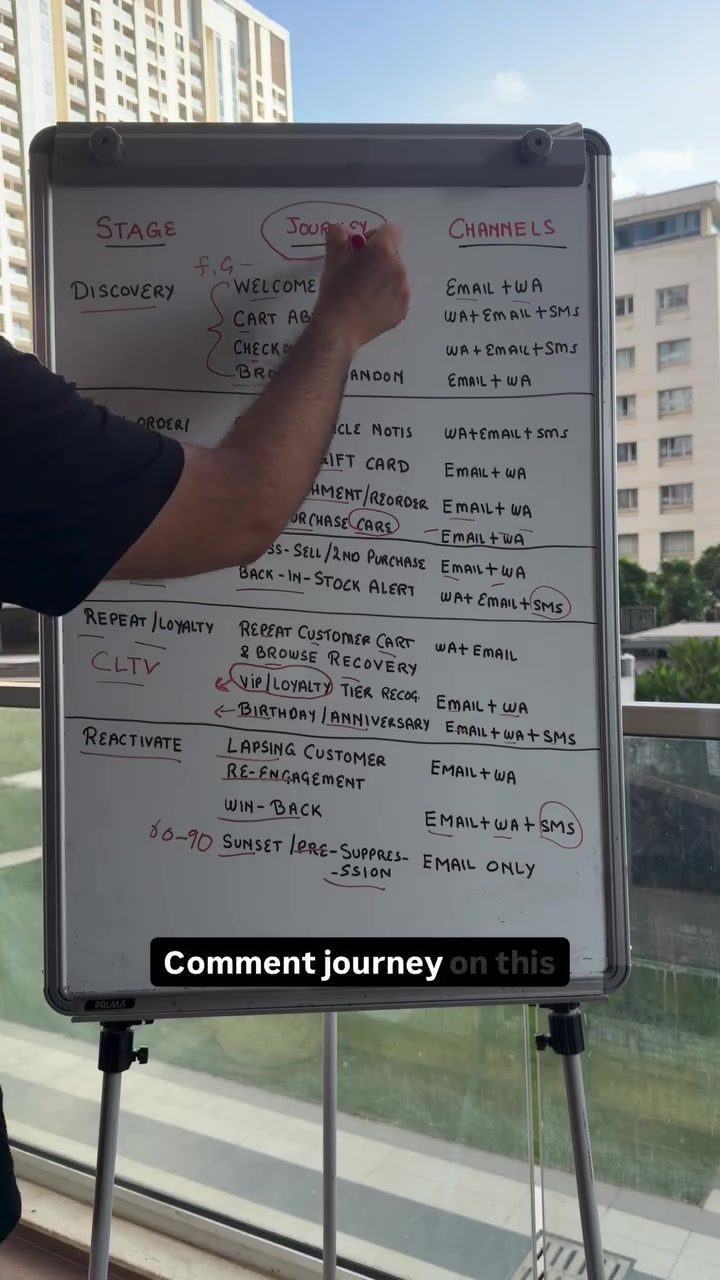
Customer Journey Mapping for E-commerce
Mapping the customer journey is a critical aspect of e-commerce marketing. Understanding and optimizing the various touchpoints a customer has with your brand can significantly enhance customer experience and drive revenue. If you're working in e-commerce, focusing on five key customer journeys can greatly improve your marketing strategy. These journeys include discovery, first order, second order, repeat and loyalty, and reactivation. Each journey involves different communication channels and strategies to engage customers effectively.
Why This Matters
Customer journey mapping helps e-commerce businesses identify where to invest resources to maximize customer engagement and revenue. By tracing the path a customer takes from initial awareness to repeat purchases, businesses can pinpoint areas of improvement and optimize their marketing efforts.
Main Discussion
1. The Discovery Journey
The discovery journey is the initial stage where potential customers become aware of your brand. This journey includes a welcome series which can be sent via email and WhatsApp. The welcome series is crucial as it sets the tone for future interactions. It should be personalized and informative, guiding new customers through your product offerings and highlighting any promotions or discounts.
Communication Channels:
Key Strategies:
- Welcome series
- Personalized greetings
- Promotional offers
2. Cart and Checkout Abandonment
Cart and checkout abandonment are common issues in e-commerce. Customers often add items to their cart or initiate the checkout process but leave before completing the purchase. This can be due to various reasons like high shipping costs, complicated checkout processes, or technical issues.
Communication Channels:
- SMS
Key Strategies:
- Automated reminders
- Discount codes for completion
- Simplified checkout process
3. The First Order or Onboarding Journey
The first order or onboarding journey is crucial for building a lasting relationship with the customer. This journey involves sending order lifecycle notifications, restock alerts, and post-purchase care recommendations. It's a phase where customers are most receptive to additional information about your products and services.
Communication Channels:
- SMS
Key Strategies:
- Order confirmation and tracking
- Product recommendations
- Customer support availability
4. The Second Order Journey
The second order journey focuses on cross-selling and back-in-stock alerts. This phase is about re-engaging customers who have already made one purchase and encouraging them to buy again.
Communication Channels:
- SMS
Key Strategies:
- Personalized product recommendations
- Back-in-stock alerts
- Loyalty programs
5. Repeat and Loyalty
The repeat and loyalty journey is where businesses can drive customer lifetime value. This journey includes repeat customer browse and cart abandonment recovery, loyalty programs, and special offers. It's essential to have a loyalty program if you are a mature player, as it gives revenue stability.
Communication Channels:
- SMS
Key Strategies:
- Loyalty rewards
- Exclusive discounts
- Regular communication
6. Reactivation Journey
The reactivation journey is the final stage where businesses attempt to re-engage lapsing customers. This involves win-back strategies and sunset or pre-suppression journeys for customers who have not responded to communication for an extended period.
Communication Channels:
- SMS
Key Strategies:
- Win-back offers
- Personalized messages
- Exclusive deals
Communication Channels:
- SMS
Practical Tips
-
Use a Customer Journey Map: A visual representation of the customer journey can help you identify gaps and opportunities. Tools like a whiteboard can be used to map out different stages and communication channels.
-
Segment Your Audience: Different customers have different needs. Segmenting your audience based on their behavior and preferences can help you tailor your communication more effectively.
-
Automate Where Possible: Automating your communication can save time and ensure consistency. Use tools to send automated emails, WhatsApp messages, and SMS notifications.
-
Measure and Analyze: Track the performance of your communication strategies. Use analytics to understand what works and what doesn't. Regularly update your strategies based on the data.
Important Takeaways
-
Discovery and Onboarding: Focus on making a strong first impression and providing a seamless onboarding experience.
-
Abandonment Strategies: Address cart and checkout abandonment with personalized reminders and offers.
-
Loyalty and Retention: Building a loyal customer base is crucial for long-term success. Use loyalty programs and exclusive offers to retain customers.
-
Reactivation: Don't ignore lapsing customers. Implement win-back strategies to re-engage them.
Conclusion
Effective customer journey mapping can transform your e-commerce marketing strategy. By focusing on the key journeys—discovery, first order, second order, repeat and loyalty, and reactivation—you can enhance customer engagement and drive significant revenue. Utilize multiple communication channels and personalize your messages to create a seamless and enjoyable customer experience.
Watch the Reel
Questions readers ask
What are the key stages of e-commerce customer journey?
The key stages of an e-commerce customer journey typically include discovery, first order, second order, repeat and loyalty, and reactivation. Each stage represents a different phase of the customer's interaction with your brand, from initial awareness to long-term loyalty.
How can mapping the customer journey benefit my e-commerce business?
Customer journey mapping helps you visualize and understand the various touchpoints a customer has with your brand. This enables you to optimize these interactions, enhance the customer experience, and ultimately drive more revenue by identifying areas for improvement and investment.
Which communication channels are most effective for e-commerce customer journeys?
Effective communication channels for e-commerce customer journeys can vary depending on the stage. For instance, discovery might rely heavily on social media and search engines, while first order and repeat purchases could benefit from targeted email marketing and WhatsApp for customer service. Abandoned cart strategies often involve retargeting ads and follow-up emails.
What is a customer journey tracker and how does it help e-commerce?
A customer journey tracker is a tool that allows you to monitor and analyze the path a customer takes from initial awareness to purchase and beyond. It helps e-commerce businesses understand customer behavior, identify pain points, and optimize touchpoints to improve overall customer experience and increase conversions.
How can I use email marketing to enhance the e-commerce customer journey?
Email marketing can be highly effective at various stages of the e-commerce customer journey. You can use it to onboard new customers, send personalized product recommendations, offer discounts for repeat purchases, and even re-engage inactive customers with special offers. Tailoring your emails to the specific stage of the customer journey can significantly boost engagement and sales.
What role can WhatsApp play in enhancing e-commerce customer service?
WhatsApp can serve as a direct and personal communication channel for customer service in e-commerce. It allows for real-time interactions, making it ideal for resolving issues quickly, answering queries, and even sending order updates. Integrating WhatsApp into your customer service strategy can greatly enhance customer satisfaction and loyalty.
Why is analyzing customer journey analytics essential for e-commerce?
Analyzing customer journey analytics provides valuable insights into customer behavior and preferences. By understanding where customers drop off, what channels they prefer, and which touchpoints drive the most engagement, you can make data-driven decisions to optimize the customer journey, improve retention, and increase overall revenue.
Recent articles
Fresh deep dives from the latest Reels we unpacked.




Comments
Be the first to comment.