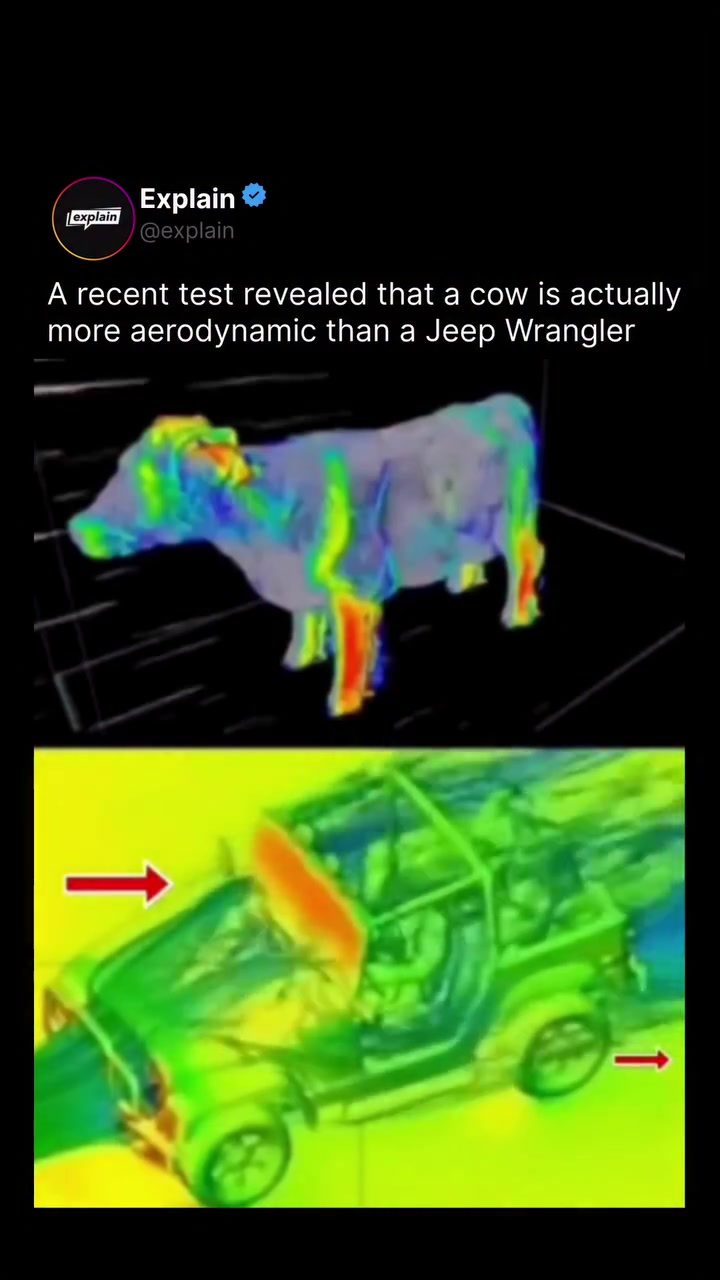
Aerodynamics: Why a Cow is More Aerodynamic than a Jeep Wrangler
Aerodynamics is the study of how objects move through the air. It’s a crucial aspect of design in fields ranging from automotive engineering to aviation. Surprisingly, nature often provides designs that are remarkably efficient, as seen in the comparison between a cow and a classic Jeep Wrangler. A cow’s body, with its smooth, rounded contours, is actually more aerodynamic than the boxy shape of a classic Jeep Wrangler.
Context: Why Aerodynamics Matters
Aerodynamics plays a vital role in the efficiency and performance of vehicles. A streamlined shape reduces drag, allowing for smoother airflow and less resistance. This makes a big difference in fuel efficiency, stability, and overall performance. Understanding aerodynamic principles can help in designing more efficient vehicles, reducing energy consumption, and minimizing environmental impact.
Main Discussion
The Role of Shape in Aerodynamics
The shape of an object significantly influences its aerodynamic properties. The cow’s natural, streamlined form allows air to flow around it more smoothly compared to the sharp edges and flat surfaces of a Jeep Wrangler. The Wrangler’s upright windshield, flat front, and sharp edges create greater aerodynamic drag, disturbing the airflow and producing a larger turbulent wake behind the vehicle.
The cow’s body, on the other hand, exhibits characteristics that minimize these disturbances. Its smooth, rounded body contours reduce drag, making it more efficient in moving through the air. This is a clear example of how nature has evolved shapes that are inherently aerodynamic.
Thermal Imaging in Aerodynamics
Thermal imaging technology was used to visualize and compare the heat distribution on both the cow and the Jeep Wrangler. This comparison revealed the different heat signatures and airflow patterns around the two objects. The images showed that the Jeep Wrangler had a higher concentration of heat, indicating greater resistance to airflow, while the cow’s heat distribution was more evenly spread, demonstrating less resistance.
Thermal imaging helps scientists and engineers understand the aerodynamic properties of objects by visualizing the heat patterns that result from airflow. This technology can be used to optimize the design of vehicles, buildings, and other structures to be more aerodynamic.
Natural vs. Engineered Designs
The comparison between a cow and a Jeep Wrangler highlights the efficiency of natural designs. While neither the cow nor the Wrangler is specifically designed for maximum aerodynamic efficiency, the cow’s naturally streamlined form offers less resistance to moving air. This is a fascinating reminder that nature often arrives at remarkably efficient designs without the need for modern engineering.
It illustrates how natural processes and evolutionary adaptations often lead to highly efficient and effective solutions. Understanding these natural designs can inspire innovations in various fields, including automotive, aerospace, and architecture.
Practical Applications of Aerodynamics
Many industries benefit from the principles of aerodynamics. In automotive design, reducing aerodynamic drag can significantly improve fuel efficiency and performance. Streamlined vehicle shapes help minimize energy losses, making vehicles more efficient.
In aviation, aerodynamics is crucial for the design of aircraft wings and bodies. The shape of an aircraft wing is optimized to reduce drag and increase lift, enabling smoother and more efficient flight.
Practical Tips for Improving Aerodynamics
In Automotive Design
When designing a vehicle, consider the following tips to improve aerodynamics:
- Streamlined Shapes: Opt for smoother, more rounded shapes that reduce drag.
- Aerodynamic Accessories: Use spoilers, air dams, and other aerodynamic accessories to improve airflow.
- Windscreen Angle: A more slanted windscreen can help reduce drag and improve fuel efficiency.
- Underbody Panels: Use underbody panels to minimize turbulence and reduce drag.
In Aviation
For aircraft design, focus on the following aspects to enhance aerodynamics:
- Wing Design: Optimize the shape and angle of the wings to maximize lift and minimize drag.
- Fuselage Shape: Use a streamlined fuselage to reduce aerodynamic drag.
- Surface Smoothness: Ensure that the surfaces of the aircraft are smooth to minimize turbulence.
In Architecture
In building design, consider these factors to improve aerodynamic efficiency:
- Shape Optimization: Design buildings with streamlined shapes to reduce wind resistance.
- Roof Design: Use aerodynamic roof designs to minimize turbulence and reduce wind loads.
- Natural Ventilation: Incorporate natural ventilation methods to take advantage of airflow patterns.
Important Takeaways
Understanding the principles of aerodynamics and applying them in various fields can lead to significant improvements in efficiency and performance. Here are the key takeaways:
- Shape Matters: The shape of an object significantly influences its aerodynamic properties.
- Natural Designs: Nature often provides highly efficient designs, which can inspire innovations.
- Thermal Imaging: This technology is valuable for visualizing airflow patterns and optimizing designs.
- Applications: Aerodynamics plays a crucial role in automotive, aviation, and architecture.
Conclusion
Aerodynamics is a fascinating field that combines principles of physics and design to create more efficient and effective solutions. The comparison between a cow and a Jeep Wrangler highlights the importance of shape in aerodynamics and the efficiency of natural designs.
By understanding and applying the principles of aerodynamics, we can create more efficient vehicles, improve flight performance, and design more effective buildings. It’s a fascinating reminder of how nature and science work together to create remarkable solutions.
Watch the Reel
Questions readers ask
Why is a cow's body shape considered more aerodynamic than a Jeep Wrangler's?
A cow's body is smooth and rounded, which allows air to flow around it more efficiently, reducing drag. In contrast, a Jeep Wrangler has a boxy design that creates more turbulence and resistance as air flows around it.
How does aerodynamics impact the performance of vehicles?
Aerodynamics plays a significant role in vehicle performance by influencing factors such as fuel efficiency, stability, and speed. A more aerodynamic design reduces drag, which means the vehicle can move through the air more smoothly, requiring less energy and improving overall performance.
What makes the airflow around a cow more efficient than around a Jeep Wrangler?
The cow's natural, rounded shape allows air to flow smoothly around it, minimizing turbulence and drag. A Jeep Wrangler, with its angular and boxy design, creates more air resistance and turbulence, making it less aerodynamic.
Can the aerodynamic principles seen in cows be applied to vehicle design?
Yes, the aerodynamic principles observed in nature, such as the streamlined shape of a cow, can inspire vehicle design. By mimicking these natural shapes, designers can create more efficient and aerodynamic vehicles that consume less fuel and perform better.
Why is a cow's body shape more aerodynamic than a boxy car design?
A cow's body shape is more aerodynamic because it is smooth and rounded, which reduces drag by allowing air to flow around it with minimal resistance. In contrast, a boxy car design like the Jeep Wrangler creates more turbulence and drag due to its sharp angles and flat surfaces.
How does the shape of a classic Jeep Wrangler affect its aerodynamics?
The classic Jeep Wrangler has a boxy design with sharp angles and flat surfaces, which can create significant wind resistance and turbulence. This design is less efficient in terms of airflow, resulting in more drag and reduced performance compared to a rounded, streamlined shape like that of a cow.
What are some surprising facts about aerodynamics in nature and vehicles?
One surprising fact is that a cow, with its smooth and rounded body, is more aerodynamic than a Jeep Wrangler. This highlights how nature often provides efficient designs that can inform and improve vehicle aerodynamics, leading to better performance and fuel efficiency.
Related deep dives
Similar reads based on topic and creator.



Recent articles
Fresh deep dives from the latest Reels we unpacked.




Comments
Be the first to comment.